Will blood-minds the police officers investigating Clara
The RadleysWill blood-minds the police officers investigating Clara when their interview with her is going wrong. The intervention shows how he converts supernatural influence into practical protection: he removes the officers’ notes and directs them to leave, recasting the missing boy’s case as an unsolved mystery. The episode links his private history of predatory violence to his capacity to alter the course of a human investigation.
Background and Immediate Stakes
The scene begins at Will’s camper van, where Helen comes to tell him that the police are interviewing Clara and that the interview is going badly. He is awake, looking at old, dried blood drops on the van’s ceiling. He reads them as a kind of map of his past, while seven leather-bound journals beneath his mattress record nights of feeding. These objects place the intervention beside the accumulated evidence of his former conduct: the van is at once his immediate shelter and a space marked by a history he has written down and cannot erase.
Helen’s appeal establishes the urgency of the moment. Clara is speaking to the police, and Will understands that he can intervene directly. The scene does not detail what Clara has told them or what evidence they have gathered. Instead, it narrows attention to Will’s decision and the means he believes are available to him. The risk is immediate: the officers’ questions may connect Clara to the missing boy, while Will’s ability to influence them offers a way to interrupt that process.
The Blood-Minding Intervention
Will expects the two officers to be easy to control because he regards them as young, obedient Unbloods. He thinks the effect will take only a sentence or two, enough for his words to erase and rewrite their minds. His reasoning makes the power sound almost procedural: he assesses the officers, anticipates their submission, and treats their independent judgment as something he can replace. The confidence is not merely a claim about supernatural ability; it shows how readily he views other people as objects to be managed.
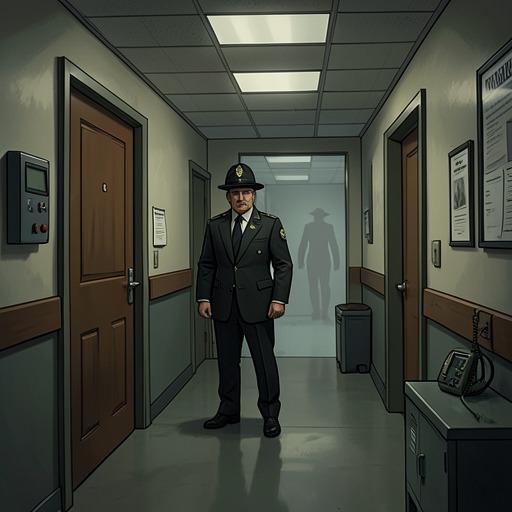
At the interview, Will approaches the policewoman and holds out his hand. She gives him her notepad, and he tears out the pages she has written on before handing the pad back. This is a concrete act alongside the less visible mental coercion. The notes are the physical record of the interview; removing them makes the destruction of the inquiry legible even as he works to alter the officers’ understanding. The scene thus joins two methods of interference: he takes away what has been recorded and directs the people who recorded it to abandon their purpose.
Orders and Outcome
Will tells the officers to leave and to conclude that they have nothing to pursue. He frames the missing boy’s disappearance as one more mystery among many, then instructs them to walk out and not interfere again. The command does more than end their presence in the room. It supplies a ready-made interpretation of the case, one that turns the absence of a resolution into a reason not to continue investigating.
The officers comply. The policewoman’s blank-faced handover of the notepad and Will’s ensuing instructions present the encounter as an imposed outcome, not a conclusion reached through ordinary questioning. The immediate consequence is that the interview is interrupted and the officers are made to leave with their inquiry redirected. The evidence establishes this interference, but does not specify what happens to the investigation afterward or how long the officers remain affected.
Significance
The episode makes Will’s blood-minding a means of shielding Clara from scrutiny. His intervention follows Helen’s urgent request, but it is Will who decides how to act: he uses his power on the officers, destroys the interview notes, and dictates what they should believe about the case. Protection and domination therefore coincide. He helps Clara by overriding the people investigating her, while treating their minds and professional judgment as instruments he can command.
The contrast between the journals and the missing case sharpens the scene’s significance. Will’s own feeding history has been preserved in seven volumes, and its traces remain visible above him; the policewoman’s account of the interview, by contrast, is torn from the pad before it can serve as a record. The scene does not establish that Will erases every trace of the investigation. It does show him trying to control which traces remain and what meaning the officers assign to them. His intervention turns the power that marks his past into a present defense of Clara, while exposing the danger that the same power poses to any human search for the truth.