Will's camper van hideout
The RadleysWill's camper van hideout is a private space near the Radley home that changes meaning as the story's secrets pass from Will to Rowan. It is first associated with Will's search for a remnant of his past with Helen; later, Rowan enters it and takes away the letters and childhood photographs that expose that past. The van thus links Will's attempt to preserve an old attachment with Rowan's decision to protect his family by destroying its evidence.
Setting and appearances
The camper van is visible during surveillance of 17 Orchard Lane. Alison Glenny and Geoff Hodge watch Rowan leave the house and head toward it. He climbs inside, then leaves a little later. The brief observation gives the van a place in the Radleys' immediate surroundings without presenting it as part of ordinary family life: it is a separate space Rowan can enter and leave while others watch from a distance.
The van appears again as a scene of private searching. Will is on his hands and knees in its back, looking desperately for what he regards as his most prized possession. He finds a sleeping bag and reaches inside, but discovers only its soft cotton padding. Relief gives way to frantic searching. The empty sleeping bag makes the absence of the object palpable: the van's familiar contents offer no substitute for what Will wants to recover.
Will's search and the family archive
Will's search is tied to his wish to preserve an earlier version of Helen and their relationship. He wants to taste her as she was on the night he remembers as a whole and perfect dream, before the years of lies and hypocrisy that, in his view, changed her. The van therefore holds more than the practical traces of a hideout. For Will, it is associated with the attempt to return to an idealized past, even as the missing object and the discovered papers expose how that past is bound up with concealed family history.
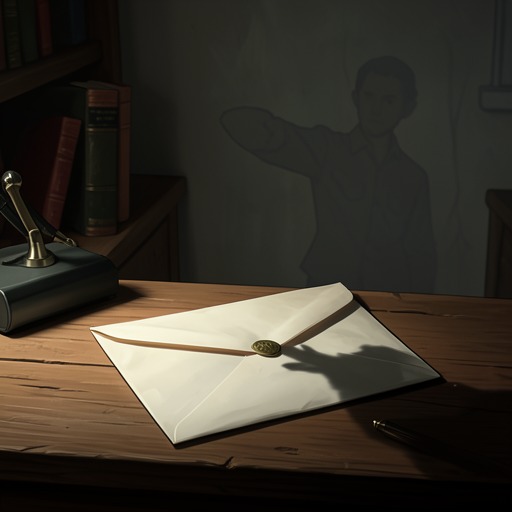
In the course of searching, Will finds an open shoebox, a letter on the floor, and a photograph of Rowan. He studies the child's face but does not see innocence in it; instead, he interprets the four-year-old as a spoiled boy using his smile to win Helen's affection. That reaction makes the photograph more than a piece of family memorabilia. It reveals Will's hostility toward Rowan and turns the child's image into a focus for Will's resentment over Helen's love. The van brings private documents and a private grievance into the same confined scene.
Rowan's return and the destruction of evidence
Later, after the Unnamed Predator Unit has removed Will's head and body from the Radleys' pond, Rowan enters the camper van for the second time that day. He is no longer simply the boy observed approaching it: he acts on the knowledge preserved in the letters and photographs. He takes them, along with the box of matches he had used to light the fire on Friday night, slips through a gap in the bushes, and burns the papers in the field behind Orchard Lane.
Rowan understands the destruction as a way of protecting Helen. Having tasted her blood, he feels complete empathy with her and recognizes that she hid the documents to protect him. His response is to keep the secret in turn. The act also has a consequence for his sense of family: burning the evidence feels to him as though it might make Peter his father again. The van is therefore a point of transfer. What Will sought there as a link to his past becomes material Rowan removes so that the past cannot further disrupt his present family.
Narrative significance
The camper van's significance rests on this reversal of purpose. Will's search is backward-looking: he wants to recover an idealized intimacy and sees Rowan's childhood image through jealousy and blame. Rowan's later use of the van is directed toward what comes next. He leaves with the evidence and destroys it, accepting secrecy as a form of care and as a means of preserving his bond with Peter. The same secluded space consequently frames both Will's fixation on what has been lost and Rowan's deliberate choice about what the family must conceal.
The van also marks a shift in who can act upon the family archive. The letters and photographs begin as concealed traces of Helen's history with Will; in the van, Will encounters Rowan's photograph, and Rowan later takes the documents beyond the house and burns them. Their movement from shoebox to field turns a hidden past into an immediate choice. Rather than resolving the history by exposing it, Rowan makes the van the setting for a transfer of responsibility: he understands why Helen kept the secret and takes on the work of keeping it himself.