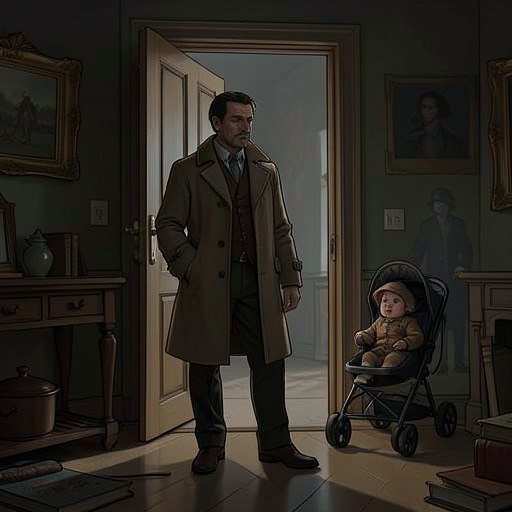
Will’s murder of Tess Copeland
The RadleysWill’s murder of Tess Copeland is both a personal killing and an instance of institutional concealment: he kills a university student, is seen by her husband, and nevertheless escapes consequences when the incident is treated as a disappearance. The event returns in broken recollections and belated testimony, linking Will’s impunity to the damage inflicted on Tess’s family and to growing strain between the vampire community and the police.
Causes and Background
Tess is a mature student and the wife of a police detective. Will is her tutor, and their university connection is later recalled through a night when they had drinks in the union bar and discussed her dissertation. She had wanted to return to her husband; Will remembers her as unsure about being out late with him. The later memory places their academic familiarity beside the lethal act that followed, but does not establish that their conversation itself caused the murder.
The killing also belongs to Will’s longer history of violence. In Manchester, vampires had discussed him for months. He had once been regarded as an effective example of how a blood-dependent vampire could evade consequences by choosing the right kind of human victim. The murder of a detective’s wife made that arrangement harder to sustain: the detective had witnessed her death, and the police response required more than simply relying on him not to be believed.
What Happens
Tess is killed on the university campus, on the lawn outside the English Department. She had told Jared she was working late in the library. When he went to collect her and could not find her there, he searched the campus. He later tells their daughter, Eve, that he saw Will across a body of water, running toward them, and witnessed Will kill Tess and take her away. Jared’s account identifies the event not as a disappearance but as a murder he had seen and been unable to stop.
The murder also returns to Will through another encounter with Tess’s husband. When the man identifies Tess as his wife and the mother of his child, her name jolts Will into remembering the night on campus. He recalls killing her and hearing someone running nearby. The sound had belonged to Jared. The two recollections thus meet at the same moment from opposite directions: for Jared, the sound and pursuit mark his attempt to reach Tess; for Will, they become a detail in a memory he has tried to bury.
Concealment and Consequences
The Unnamed Predator Unit, a technically nonexistent branch of Greater Manchester Police, ensured that the case was presented as a missing-person matter, despite a detective inspector having witnessed the killing. This intervention protected Will from a conventional investigation and left Jared’s account without public recognition as evidence of murder. The institutional handling of the case shows that Will’s escape depended not only on his own abilities but also on a covert arrangement that could neutralize a witness’s credibility.
The concealment put pressure on relations between the police and the vampire community. Those relations had been maintained through dialogue between the Unnamed Predator Unit and the Manchester-based UK wing of the Sheridan Society. For a time, other vampires continued to support Will, and none yielded to police pressure to kill him. His blood-minding abilities and his studies of Lord Byron and Elizabeth Barrett Browning helped preserve his standing among members of the Sheridan Society, even as the Copeland affair strained the accommodation on which that standing depended.
Recollection and Significance
The murder is disclosed in stages rather than presented as a single, uninterrupted scene. Will’s memory surfaces when Tess’s husband names her; Jared later gives Eve a direct account of what he witnessed. That delayed convergence changes the meaning of the earlier disappearance: what had been hidden behind an official classification is confirmed within the family as a witnessed killing. The fragmented return of the event also makes its consequences persist beyond the night itself, as the truth remains attached to the people left to carry it.
Will attempts to suppress the conscience that emerges with the memory. He minimizes Tess’s death by placing it among the many killings he claims to have committed, and shifts blame toward the husband who could not protect her. This self-exculpation stands against the facts the recollection supplies: Jared went looking for Tess, found the killer, and tried to reach her. The event therefore exposes the distance between Will’s practiced justifications and the human relationships his violence has destroyed.