Acute myeloid leukemia (AML)
The RainmakerAcute myeloid leukemia (AML) is the disease that makes the Black family’s insurance dispute a question of life and death. The novel presents it through Dr. Walter Kord’s medical testimony and Donny Ray Black’s treatment history: his leukemia is expected to return after chemotherapy, while a bone marrow transplant from his identical twin offers a substantial chance of survival. Great Benefit Life Insurance Company refuses to fund the transplant, leaving a potentially treatable illness entangled with the family’s ability to obtain care.
The disease as explained at trial
Dr. Walter Kord identifies AML as a form of acute leukemia that affects the bone marrow, where the body produces blood cells. In his explanation to the jury, malignant white blood cells multiply rapidly; their growth suppresses red blood cells and interferes with the production of platelets. He connects that process to weakness and paleness, as well as bruising, bleeding, and headaches. When Donny Ray first came to his office, he reported dizziness, shortness of breath, fatigue, fever, and flu-like symptoms. Kord describes the disease’s cause as generally unknown and says that it occurs in young adults, as well as in older people, usually over seventy. These details are presented as expert testimony in the case, not as a diagnosis inferred from the family’s account alone.
Kord confirms Donny Ray’s diagnosis through a bone marrow aspiration. The procedure takes a sample from the hip: after numbing a small area, Kord inserts a needle into the bone and draws out liquid marrow for testing. The examination of the blood cells leaves no doubt about the leukemia. The test costs about a thousand dollars. Kord’s office checks with Great Benefit, verifies that Donny Ray is covered under a medical policy, and proceeds with treatment; the insurer later denies the claim, and the bill is eventually written off while Dot Black pays fifty dollars a month.
Treatment and the prospect of transplantation
Kord describes Donny Ray’s initial treatment as induction therapy, intended to destroy the marrow cells and create a temporary opportunity for normal cells to grow back. The regimen includes continuous chemotherapy with ara-C for seven days and idarubicin for the first three. Donny Ray also receives medication to address the effects of cell destruction, intravenous fluids, antibiotics, and antifungal treatment. Amphotericin B causes a high fever and uncontrolled shaking, but Kord says Donny Ray handles the treatment well. The apparent remission cannot be relied upon: Kord tells the jury that leukemia will return unless the patient undergoes a bone marrow transplant.
That prospect is unusually concrete for Donny Ray because his identical twin, Ron Black, is a suitable donor. Kord explains that transplant involves extracting marrow from a compatible donor and infusing it into the recipient, transferring a new population of marrow cells. He says the procedure would have been straightforward for the twins and testifies that Ron was a match. Kord had been ready to perform the transplant in August 1991. In his account to the jury, transplantation would raise the chance of surviving acute leukemia to 80–90 percent; without it, he gives the chance as zero. He also notes that relatively few patients receive transplants, not because the treatment lacks value, but because suitable donors are difficult to find. Donny Ray, with his identical twin available, had one.
Diagnosis, denial, and the family’s claim
When Rudy Baylor first hears the case from Dot Black, she says that Donny Ray has acute leukemia, was diagnosed eight months earlier, and has been given about a year to live. She believes that the opportunity for transplantation may already be closing. Ron is prepared to donate, but the family cannot meet the estimated cost of about $150,000. Dot maintains that the policy covers the treatment and that Great Benefit has no stated bone marrow transplant exclusion. She recounts that the insurer has instead offered different grounds for refusing payment, including that Donny Ray is an adult and that his leukemia was a preexisting condition.
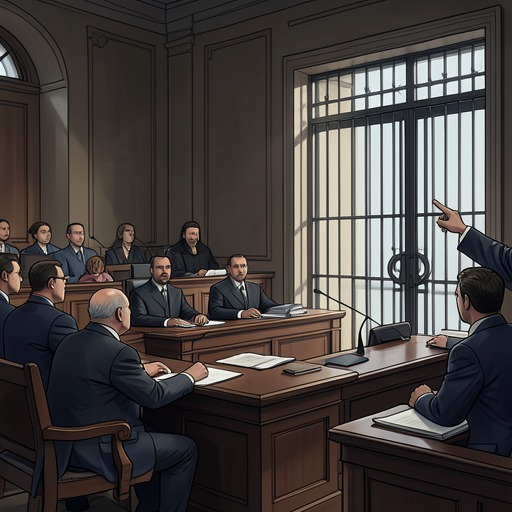
At trial, the denial letters give that shifting dispute a documentary form. Dot reads the first seven letters to the jury: the reasons include outright denial, referral between claims and underwriting, Donny Ray’s adult status, an alleged preexisting condition, and claims that bone marrow transplantation is excluded or experimental. The defense argues that the policy does not cover the transplant. Kord’s testimony counters its description of the procedure as experimental, while the policy’s wording becomes central to the disagreement over what Great Benefit had promised to pay. The disease is therefore not merely background to a contract dispute: its diagnosis, expected course, and available treatment determine what the refusal means for Donny Ray.
Illness as evidence and consequence
The illness also exposes how access to treatment depends on more than medical possibility. Donny Ray’s family has a policy, and Ron is willing and medically suitable to donate, but the transplant remains beyond their means without insurance payment. Kord’s testimony establishes the medical stakes in terms the jury can follow; the denial file shows the repeated reasons offered by the company. Together, these strands make the question of coverage inseparable from the chance to treat the leukemia.
By the time Dot testifies, Donny Ray has died. His recorded deposition is played for the jury as the plaintiff’s final witness, placing the person whose treatment was disputed before them after the medical and insurance evidence. In closing, Rudy asks the jurors to consider that the transplant could have saved Donny Ray and points to the absence of defense evidence rebutting Kord on the procedure. AML thus anchors both the case’s clinical argument and its human cost: the testimony describes a disease with a possible treatment, while the record of denial gives the family’s loss its legal context.