Barriers to Legal Remedies for the Poor
The RainmakerBarriers to Legal Remedies for the Poor are shown in The Rainmaker as practical and structural obstacles that can keep a valid claim from becoming an effective remedy. The Black family has paid premiums for years, yet Great Benefit Life Insurance Company repeatedly refuses coverage for Donny Ray Black’s leukemia treatment. The family’s limited resources, unfamiliarity with lawyers, and the insurer’s ability to delay and divide the claims process leave them carrying the cost and urgency of a dispute they cannot readily compel the company to resolve.
A Claim Without Ready Access to Counsel
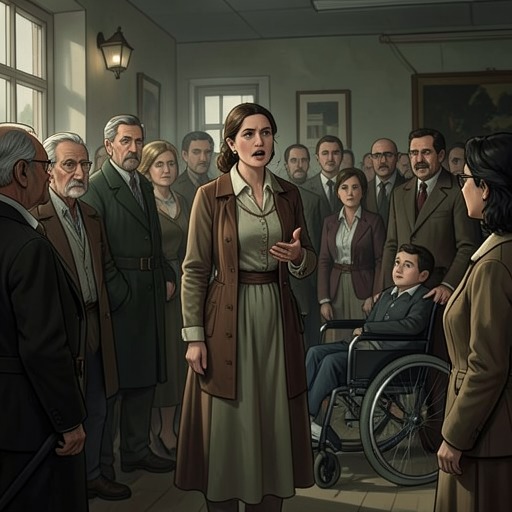
Dot Black approaches Rudy Baylor at the law school’s legal clinic with a bundle of worn insurance papers bound by rubber bands. She says the family does not have much money and needs a lawyer. Their medical policy was bought five years earlier, when their sons were seventeen, and Dot says the family never missed a premium. Now Donny Ray is dying of acute leukemia, and the family cannot obtain the bone marrow transplant it believes the policy covers.
The claim is not difficult to understand in human terms, but the paperwork has accumulated into a maze of competing explanations. Great Benefit has invoked preexisting conditions and other exclusions; Dot insists that the policy contains no rule ending Donny Ray’s coverage when he became an adult and no exclusion for bone marrow transplants. She has read the policy repeatedly, but the family’s persistence has not made the company pay. Even the company’s eighth denial letter insults her, turning an ordinary demand for contracted benefits into a demonstration of how little respect a poor claimant may expect.
The obstacles are compounded by the family’s inexperience with legal institutions. Dot says she has never used a lawyer and had continued writing to the insurer because she believed it would honor the policy and pay the bills. She waited months after the first denial, hoping the company would come through. That delay is not presented as indifference to Donny Ray’s needs: Dot has been trying to resolve the matter herself, while his condition worsens and the family struggles to afford medical care. Her eventual request that Rudy hurry reflects the narrowing time available to make the policy meaningful.
Money, Delay, and the Economics of Denial
Max Leuberg places the Blacks’ experience within a wider market in which low-cost door-to-door policies are sold to low-income customers and premiums are collected regularly, while claims are often denied. He explains that companies know most claimants will not sue. His estimate is that only about one in thirty bad-faith denials reaches court. In his account, the low likelihood of litigation is part of the economic calculation: denying a claim can save money when many insured people are afraid of lawyers or the legal system and cannot afford to contest the decision.
The potential difference between a legitimate medical claim and a meaningful penalty further weakens deterrence. Leuberg describes a hypothetical claimant with $5,000 in covered medical bills suing an insurer worth $200 million. A jury might award the benefits but only $10,000 in punitive damages, leaving the company with little reason to fear similar claims. He also warns Rudy that Tennessee juries are conservative and that Memphis is particularly difficult for obtaining a substantial verdict. A legally sound claim, then, does not guarantee an award large enough to change corporate behavior; local expectations and the scale of the defendant’s resources shape what justice may cost the company.
The later account of Great Benefit’s internal process makes delay itself visible as a method. A claim handler first sends a denial, then orders five years of medical records; another letter says the claim is denied pending review. The file passes to underwriting, which instructs claims not to pay until further notice. Claims and underwriting exchange paperwork and dispute clauses even though they work for the same company. The insured, meanwhile, receives letters and waits. The departments’ separation leaves the claimant confronting a stream of decisions without an apparent, accountable route to payment. As described, most people give up; only about one in twenty-five consults a lawyer.
The Human Cost and the Cost of Representation
For the Black family, the consequences are immediate rather than statistical. Dot tells Rudy that Donny Ray has lost weight, is sometimes too sick to walk, and could not continue treatment after the hospital was told it could not afford a transplant. She has been carrying the insurance correspondence while coping with Buddy Black’s alcoholism and the family’s limited means. The dispute is therefore not simply whether a policy clause applies: the company’s refusal places medical urgency on one side and a claimant’s limited ability to challenge a large insurer on the other.
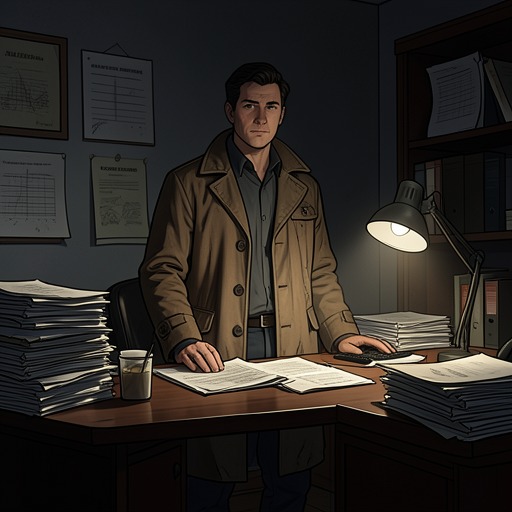
Rudy’s position also exposes a gap between needing a lawyer and being able to provide lawful representation. When Dot first brings the papers, he is a third-year law student who admits he does not know much about leukemia. He plans to research the claim and initially expects to send the family to an experienced insurance litigator. After consulting Leuberg, he is told to make calls on their behalf and refer them to a prominent trial lawyer. But when Rudy later decides he wants to handle the case, he still has not passed the bar. He tells Dot that he would need another lawyer associated with the matter until he is admitted.
The proposed contingency fee makes representation possible without money up front, but it also shows how much the family must trust a novice lawyer’s promises. Rudy offers to take a third of any recovery, after Donny Ray’s medical expenses are paid, and says there will be no fee if they recover nothing. Dot accepts because she wants Great Benefit challenged, not because she expects a windfall. Rudy recognizes that he cannot ethically sign a representation agreement before licensure, so the ordinary mechanism for securing counsel is itself complicated by his status. The family’s need is immediate; the lawyer’s authority is not yet complete.
Litigation as a Partial Counterweight
The novel does not treat access to justice as a matter of simply identifying a good claim. The company can use procedural complexity, delay, and the low probability of suit to make an insured person’s rights expensive to enforce. Rudy’s decision to continue matters because he spends time reviewing the records, researching the law, and persuading Dot that suit is warranted, even after explaining that the case may take months or years. Her son may not have that long. The formal right to sue and the practical ability to obtain relief are therefore sharply separated.
At trial, evidence about the company’s broader 1991 policy converts an individual denial into a pattern that a jury can assess. Jackie Lemancyzk testifies that Great Benefit initially denied every claim over $1,000 during a twelve-month experiment, regardless of whether it was legitimate; larger claims were generally paid only after a lawyer became involved and began making threats. She says the scheme generated about $40 million in extra income. The mechanism Leuberg described as a bet on claimants’ reluctance to sue is thus connected to an institutional policy, not merely a single disputed interpretation of Donny Ray’s coverage.
Rudy’s closing argument makes the corporation’s resources legible to jurors by putting the figures on a chalkboard. Using Great Benefit’s own financial statements, he presents $475 million in available cash, reserves, and undistributed surpluses, alongside an admitted net worth of $450 million. This accounting answers, in concrete terms, the question of whether a penalty could affect a company of that scale. The scene offers a counterweight to the earlier imbalance: a claimant’s case can gain force when evidence exposes the economics of denial and a lawyer translates complicated records into an intelligible public argument. But the need for that work underscores the central barrier. The remedy becomes reachable only after the family finds representation, sustains a lawsuit, and makes a hidden corporate process visible.