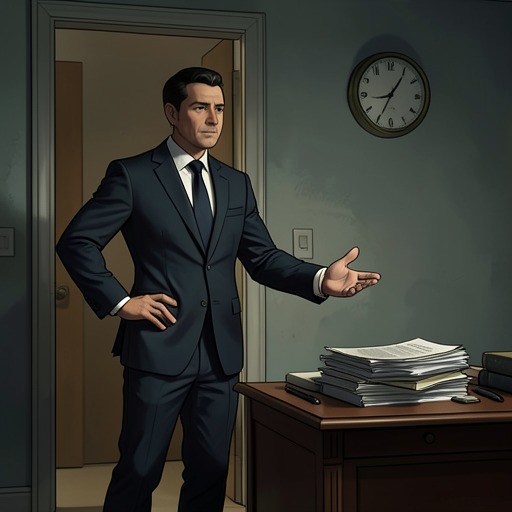
Barry X. Lancaster
The RainmakerBarry X. Lancaster is a rising trial lawyer in Jonathan Lake’s firm, a young associate whose recent multimillion-dollar verdict gives him both courtroom credibility and a place in the firm’s competitive structure. His encounter with Rudy Baylor brings that professional ambition into contact with a job seeker’s desperation: Barry initially considers Rudy for a paralegal position, but Rudy’s account of the Black family’s insurance dispute redirects the interview toward a potentially valuable case.
Position and Background
Barry is thirty-four, divorced, and lives at the office. He studied law at Memphis State University and has recently been promoted to trial associate after winning two million dollars from a doctor in Arkansas. The account presents him as a rising star rather than a senior figure: he has established courtroom success, but he still works within the firm’s demanding hierarchy and is responsible for generating business.
Lake’s practice is organized into autonomous trial units. Seven trial associates each have a staff that includes a secretary and a paralegal, while five other lawyers are described as younger, general-practice associates. Associates manage their own personnel and must bring in cases; their income depends in part on the business they generate. Although nearly eighty percent of the firm’s work comes through referrals, that system does not make new business irrelevant. Barry’s own record and position therefore combine courtroom performance with the ability to recognize and develop a promising claim.
The firm’s surroundings make its wealth and scale visible. Its offices occupy a renovated warehouse near Memphis’s medical district, with exposed beams, hardwood floors, brickwork, antiques, and an open library extending beneath upper walkways. Barry’s own office is long and narrow, with brick walls and creaking floors. He is associated with the firm’s amenities, including a gym, sauna, and steam room, but during Rudy’s visit his attention is pulled toward work: his phone lights blink, and he repeatedly glances at his watch.
The Interview with Rudy Baylor
Rudy arrives at Barry’s office after seeing an advertisement for a paralegal in The Daily Record. He has researched the firm and knows that Barry is looking for help. Rudy is newly graduated but not yet licensed, and he does not present himself as an experienced paralegal. Instead, he argues that three years of law school and prior litigation experience could let him learn the work quickly. Barry initially responds with skepticism, directing him toward the ordinary application process and noting the firm’s expectations for the position.
Rudy presses the case for hiring him in practical terms. He tells Barry that he has been displaced after Brodnax and Speer and expresses his hostility toward large firms, while emphasizing that he needs work and will accept a low salary. When Barry proposes twenty-one thousand dollars, Rudy agrees immediately and promises to stay for a year, work long hours, and sign a contract. The exchange reveals a negotiation in which Rudy counters the prestige of his legal education with the affordability and availability of his labor. Barry does not simply accept the pitch: he says personnel rules require him to consult Jonathan Lake because Rudy does not meet the firm’s usual specifications.
Barry’s initial reserve is also shaped by the circumstances of the meeting. Rudy has secured an appointment ostensibly connected to a case, but announces that he wants a job. Barry is irritated by the maneuver and by the secretary’s apparent mistake, and he is visibly busy. Rudy recognizes the risk that Barry may dismiss him, yet continues with a rehearsed argument. Barry listens, considers the proposal, and offers only to take it to Lake; the scene does not establish that Rudy is hired.
The Black Family’s Case
The interview changes when Rudy says he has a case of his own: an insurance bad-faith claim involving the Black family. Barry becomes suspicious and asks what kind of case it is, whether Rudy is the client, and what the claim might be worth. Rudy answers that he is the lawyer who found it, then hands over a two-page summary. The document is not a neutral account: Rudy has worked on it repeatedly and has modified and sensationalized it after other lawyers turned him down.
Barry reads the summary carefully, then reads it a second time. His concentrated attention contrasts with his earlier impatience, and Rudy notices a gleam that suggests the case has caught his interest. Barry quickly identifies the bargain he thinks Rudy is proposing: a job in exchange for a share of the case. Rudy corrects him. He wants the job, but says the case belongs to Barry’s firm; he wants to work on it and handle the client, while the fee belongs to the firm. Barry replies that Lake will receive most of the fee, a detail Rudy accepts without trying to negotiate a percentage.
This offer ties Barry’s role to the firm’s business model. He is both a courtroom advocate and a potential recipient of new business, and Rudy has brought him a claim that might serve both purposes. The case’s appeal is not established as a guaranteed outcome: Barry calls it promising, but the interview records interest rather than a verdict, settlement, or final hiring decision. Rudy’s proposal gives Barry a chance to assess both a possible client matter and the resourcefulness of the person offering it.
Narrative Role and Limits of the Record
Barry functions as a professional threshold for Rudy. The young graduate enters the office seeking an ordinary foothold in legal work, prepared to accept a paralegal’s salary and duties. By presenting the Black family’s claim, he makes himself harder to assess as merely an applicant: he is also the source of a substantial case and wants to remain involved in its handling. Barry’s shift from impatience to close attention marks the moment that this strategy has a chance of working.
The scene also distinguishes opportunity from security. Barry cannot independently promise Rudy the position because Lake controls personnel decisions, and the book excerpt does not report Lake’s response. Nor does the encounter itself show Barry taking the case to trial or establish what becomes of his relationship with Rudy. What it does show is Barry making a consequential assessment: he reads the case twice, recognizes its potential, and agrees to raise the employment question with Lake. His part in the story is brief, but it connects Rudy’s struggle to enter the profession with the firm’s need for cases and the competitive incentives governing its young trial lawyers.