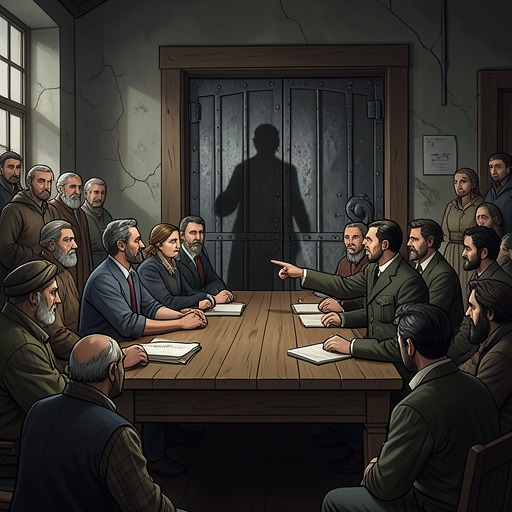
Black Case Jury Verdict
The RainmakerThe Black Case Jury Verdict was the culmination of Rudy Baylor’s lawsuit against Great Benefit Life Insurance Company over its refusal to pay for Donny Ray Black’s bone marrow transplant. After a trial that brought the insurer’s denial practices before a jury, the verdict awarded the Black family $200,000 in actual damages and $50 million in punitive damages. It was, by a wide margin, the largest verdict in Tennessee history—and a judgment on a corporate practice that the evidence showed had treated denied claims as a source of profit.
Background and Stakes
The dispute began with an $18-a-week insurance policy that the Black family had bought through weekly visits from agent Bobby Ott. When Donny Ray Black developed acute leukemia, his parents sought coverage for a transplant. The policy excluded various organ transplants but did not expressly exclude bone marrow transplants; a later policy supplied to Rudy Baylor did include such an exclusion. The gap in the original policy became central to the case: Great Benefit Life Insurance Company had denied treatment that, according to the plaintiffs, its contract covered.
The claim was caught in the larger system described at trial as post-claim underwriting. A claim could first be denied, followed by a request for medical records and further review between the claims and underwriting departments. Their instructions could keep the claim unpaid while the departments exchanged paperwork. The evidence presented by Baylor’s side connected this process to Section U, a set of procedures present in both departments’ manuals. The complete manuals obtained from Cooper Jackson contained sections missing from the versions Great Benefit Life Insurance Company had produced in discovery.
The trial also placed the individual claim in the context of a company-wide policy. Jackie Lemancyzk testified that, beginning January 1, 1991, Great Benefit Life Insurance Company initially denied every claim over $1,000 for a twelve-month experiment, regardless of whether it was legitimate. Some smaller claims were later paid, but larger claims generally remained unpaid unless an insured hired a lawyer. Lemancyzk estimated that the scheme generated about $40 million in additional returns. Her testimony connected the Black family’s experience to an intentional strategy rather than an isolated mistake.
Evidence and Closing Arguments
Baylor’s presentation joined documents, testimony, and Donny Ray Black’s recorded deposition into a single account of the claim. Dot Black described the family’s efforts to obtain care, including repeated letters and calls to the insurer, appeals to public officials and hospitals, and attempts to raise money through friends and neighbors. She read seven denial letters to the jury. They gave incompatible explanations, including that the claim was subject to review by the other department, that Donny Ray was not a household member, that the condition was preexisting, and that bone marrow transplants were not covered or were too experimental. The Stupid Letter was read twice; the courtroom fell silent as jurors absorbed its contents.
The corporate evidence sharpened the contrast between the family’s need and the insurer’s resources. During his closing argument, Baylor put Great Benefit Life Insurance Company’s available cash, reserves, and undistributed surpluses on a chalkboard, calculating a total of $475 million; the company’s admitted net worth was $450 million. He explained punitive damages through a comparison between a fine and the amount of money a person or company could afford to lose. His point was that a penalty had to matter to a wealthy corporation if it was to deter future misconduct. He left the amount to the jurors, noting that the complaint’s $10 million demand did not bind them.
Leo F. Drummond answered by conceding that the claim should have been paid and that the denial letters were seriously wrong, while portraying the conduct as mistakes in a large company rather than a deliberate scheme. He proposed paying the $200,000 transplant cost and argued that a larger award would unfairly change the Black family’s circumstances. His proposed calculation began with the family’s monthly income of $746 and treated the $200,000 payment as an investment that could provide additional income. Baylor’s rebuttal challenged the timing of the concession: Great Benefit Life Insurance Company had not acknowledged its error in its opening statement, before the jury heard the evidence. He urged the jurors to reject the $200,000 if they concluded the company’s conduct deserved punishment.
Verdict and Immediate Aftermath
The jury deliberated for several hours. As the foreperson, Ben Charnes, read the decision, he first announced $200,000 in actual damages. After a pause, he read the punitive award: $50 million. The jurors had awarded both the cost of the treatment that was not provided and a penalty vastly exceeding the insurer’s settlement proposal of $75,000 discussed earlier in the litigation.
Baylor recorded the figures on his legal pad and wrote Donny Ray Black’s name beneath them. The award could not restore Donny Ray’s life, and the verdict’s legal significance did not erase Dot Black’s loss. Dot was composed as the decision was announced, having already heard Great Benefit Life Insurance Company admit in court that it was wrong. After the trial ended, she wept beside Baylor and Deck Shifflet in the emptied courtroom. The scene distinguishes the money awarded from the remedy the family could not receive: Dot wanted her son back, not compensation in his place.
Significance and Uncertainty
The verdict marked a rare and consequential use of punitive damages in a state where, as Max Leuberg had explained to Baylor, juries were often reluctant to award large sums against corporations. Earlier, Leuberg had described how a company might weigh the cost of paying a legitimate claim against the small proportion of denials likely to result in lawsuits. Lemancyzk’s account supplied a concrete version of that economic logic: deny claims, pay some after legal pressure, and retain the savings from those that never reach court. The jury’s award gave that strategy an unusually forceful answer.
The courtroom victory was not the end of the case. Judge Tyrone Kipler scheduled post-trial motions, and Baylor expected the award to face a vigorous challenge on appeal, which could take a year or two. Still, the verdict carried immediate weight: Great Benefit Life Insurance Company had been held responsible not only for a single unpaid claim but also for evidence of a broad denial experiment. For Baylor, a novice trial lawyer, the judgment confirmed that a case dismissed by some as a modest insurance dispute could become a public reckoning when the family’s documents, the company’s procedures, and its own financial figures were brought together before a jury.