Cypress Gardens Senior Citizens Building
The RainmakerCypress Gardens Senior Citizens Building is a small, cheerless gathering place whose daily routines make it both a social refuge for older residents and an improvised setting for legal advice. Its unadorned rooms contrast with the importance its regulars give to the meals, songs, company, and attention they find there. For Rudy Baylor, a law student sent there as part of a course on legal problems affecting older people, the building becomes the doorway to his first client conference and to his relationship with Miss Birdie Birdsong.
Setting and daily life
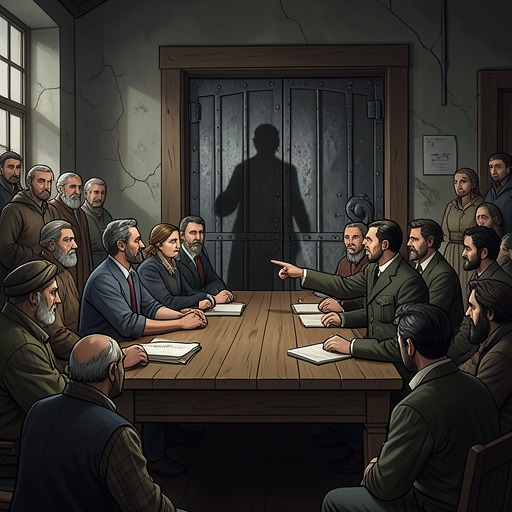
The building is a hot, damp metal structure, small and somber enough to seem assembled with whatever money was left over. A hand-painted sign gives it a grander identity than its surroundings: inside, the walls are bare and drab, broken only by a fading photograph of Ronald Reagan and two small flags, the Stars and Stripes and Tennessee’s state flag. There is no greenery to match the name. The room’s modest, worn character is not incidental to its use: this is a place sustained less by its physical comforts than by the people who return to it.
Around fifty residents sit in folding chairs, a roughly equal number of Black and white seniors, with an average age estimated at seventy-five or older. Some are blind, about a dozen use wheelchairs, and many wear hearing aids. The regulars come at noon for a hot meal, songs, and time together; now and then, a political candidate visits. They socialize for a couple of hours, then go home to wait until they can come back. Professor Howard L. Smoot describes the center as the highlight of their day, a judgment that lends weight to the unassuming repetition of its schedule.
The students’ first visit makes the gap between an educational exercise and the residents’ ordinary day visible. They arrive in time for lunch and are seated together in a corner, where the seniors watch them eat. The food includes chicken and icy peas; Rudy’s yellow Jell-O attracts attention. The meal is not a polished welcome for visiting students but part of the center’s daily gathering, and the visitors are conspicuous within it. Afterward, Professor Howard L. Smoot speaks at a podium about health care, budget cuts, living wills, sales-tax exemptions, nursing-home regulations, estate planning, and other subjects. His address ranges widely, while tired listeners begin to doze. The scene sets formal instruction against the needs and rhythms of the people the students have come to serve.
A makeshift legal-advice clinic
The center’s role changes when the talk ends and residents approach the students for help. Miss Birdie Birdsong urges the group forward, calling the visitors “good and free.” The phrase captures the practical arrangement: the students are inexperienced, but the residents can bring questions to them without paying for a lawyer’s consultation. The folding-table setting and the residents’ direct approach make legal assistance less abstract than the lecture that preceded it.
Booker Kane is quickly chosen by an elderly Black man with a question about whether a divorce from years earlier was ever officially completed. Booker listens intently and takes notes as if he knows what to do. Rudy, by contrast, sits alone for several minutes while his classmates speak with the people who have approached them. His first conference begins only when Miss Birdie Birdsong comes to his end of the table, takes an envelope from her purse, and tells him she had wanted him in particular. The envelope contains her will. In that corner of the center, the classroom assignment becomes Rudy’s first encounter with the work of counseling an actual client.
The location also accommodates subsequent visits on less formal terms. After the students press Professor Howard L. Smoot to let them return without the whole group and without another shared lunch, Rudy and Booker come back during a program of America the Beautiful. Miss Birdie Birdsong gives the residents a pep talk about vitamins and exercise, then insists that the visitors walk to the podium for formal introductions. When the program breaks up, Booker meets privately with clients in a far corner. Rudy has already met with Miss Birdie Birdsong and Dot Black; another client, Mr. DeWayne Deweese, is in the hospital, so Rudy has sent him a written summary of suggestions about his dispute with the Veterans Administration. The center remains a place where professional advice is improvised around its ordinary communal use.
Miss Birdie Birdsong and the center’s social life
Miss Birdie Birdsong is central to the building’s activity. About eighty and still spry, she acts as organizer, caretaker, and enforcer among the regulars. She moves through the crowd greeting people, encouraging them, and keeping watch over a troublesome attendee. When she tries to start applause for Professor Howard L. Smoot, nobody joins in; afterward, she tells a nearby resident that he should have clapped. Her authority is affectionate but unmistakable, and her attention gives the gathering a social structure beyond the meal and lecture.
The center is also where Miss Birdie Birdsong’s public confidence meets Rudy’s developing role as her adviser. She likes to confer there, where the conversation makes her feel important in front of her community. Rudy and she sit apart from the others near a piano and lean close over her questions about the will. Their discussions continue beyond the building, but the center is where the relationship begins and where her need for company is most plainly part of the setting. Rudy first sees her not simply as a prospective client but as someone who works the room, leads songs and speeches, and fusses over its residents.
Narrative significance
Cypress Gardens Senior Citizens Building brings legal work into contact with people who might otherwise remain names on a classroom syllabus. The students’ visit begins under the heading of elder law, but the residents’ questions turn the lesson into individual problems: an uncertain divorce, a veterans’ dispute, and Miss Birdie Birdsong’s will. The center does not offer the appearance or machinery of a law office. Instead, its folding chairs, shared table, and open approach make the first meeting between adviser and client immediate and informal.
Later, after Miss Birdie Birdsong leaves her house to live with family in Florida, Rudy remembers how she animated the center—leading songs, making speeches, and tending to the older people gathered there. He wonders who will take her place. That recollection gives the building a significance beyond its role as a venue: it is the community in which Miss Birdie Birdsong’s appetite for attention and her care for others become visible together. Its plain rooms hold a daily routine, a small network of mutual attention, and the first steps of Rudy’s life as a practicing counselor.