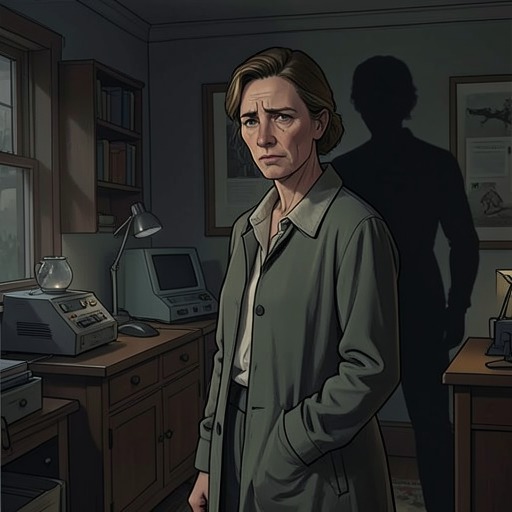
Cypress Gardens Senior Citizens Center
The RainmakerCypress Gardens Senior Citizens Center is both a daily gathering place for older residents and the setting for Rudy Baylor’s first encounter with prospective legal clients. Its ordinary rhythms—lunch, conversation, announcements, and familiar faces—make it more than a backdrop: they show the community the law students have come to serve, while Miss Birdie Birdsong’s local authority determines how newcomers are received.
Setting and Daily Life
The center occupies a small, hot, damp metal building whose hand-painted sign promises more than its surroundings do. Inside, the walls are bare and drab, apart from a fading photograph of Ronald Reagan and two small flags, the Stars and Stripes and Tennessee’s state flag. The room has folding chairs and tables, a podium, a microphone, and speakers in its corners; no flowers or greenery soften the building’s plain appearance.
At noon, about fifty older people gather for a hot meal. The group is racially mixed, averages at least seventy-five years of age, and includes people who are blind, use wheelchairs, or wear hearing aids. Residents eat together and socialize for a couple of hours before going home, where they count the time until they can return. Professor Howard L. Smoot describes the center’s daily meeting as the highlight of their day. The account lingers on lunch’s unhurried pace: meals are eaten slowly, conversation can become loud, and food sometimes falls to the floor. Those details convey a routine built around time spent together, not simply the delivery of a meal.
Miss Birdie and the Community’s Order
Miss Birdie Birdsong keeps the room in motion. At about eighty, she is still spry, moving through the crowd, greeting residents, and watching over the gathering with the combined authority of a host, organizer, and bouncer. She rebukes Bosco for coveting Rudy’s yellow Jell-O, then sets a full bowl before him herself. The moment captures her particular mixture of discipline and care: she manages a rambunctious resident without excluding him from the community’s pleasures.
Her role extends to the public business of the center. She delivers announcements, hospital reports, and obituaries through the microphone, whose sound system carries her piercing voice across the room. Residents adjust or remove their hearing aids as the sound booms from the speakers. Even the students’ formal introduction is made part of her program: she calls them forward and urges her audience to applaud, though no one does. When the legal session begins, it is again Miss Birdie who directs the residents toward the tables and presents the students as a source of free help.
The Law-School Visit
The visit grows out of a course taught by Professor Howard L. Smoot, who brings students to meet people with real legal problems. Smoot believes law school can drain students’ idealism and direct them toward lucrative firm jobs rather than public service. His optional course has dwindled from eleven students to four after a month of lectures and exhortations to work for free. Rudy and Booker Kane arrive with him at the center, where the students first endure lunch alongside the residents before hearing Smoot discuss subjects including health care, living wills, tax exemptions, nursing-home regulations, and estate planning.
After the program, residents approach the students for advice. Bosco chooses another student, while an older Black man selects Booker and asks about a long-ago divorce that may never have been officially completed. Booker listens and takes notes. Rudy, by contrast, sits alone for several minutes as his classmates confer with clients. Miss Birdie finally comes to his end of the table, draws out an envelope, and gives him his first counseling conference. It contains her will, and the center’s outreach has become a direct personal connection between Rudy and a potential client.
Return Visits and Narrative Significance
The center remains part of that developing connection after the initial class visit. Smoot eventually allows Rudy and Booker to return on their own, without joining the group for another lunch. They arrive during a program featuring America the Beautiful and hear Miss Birdie give the residents a pep talk about vitamins and proper exercise. Once she spots the students, she insists on formally introducing them again. The ritual reinforces her role as gatekeeper: access to the community is mediated through her, not taken for granted by the visitors.
On these later visits, Booker meets privately with his clients in a far corner, while Rudy’s work at the center is chiefly bound up with Miss Birdie and her will. He has already met Dot Black, and he has spent hours discussing the document with Miss Birdie. A third client from the earlier visit, Mr. DeWayne Deweese, is in the hospital; Rudy has mailed him a summary of suggestions about his dispute with the Veterans Administration. These separate cases show how a brief educational visit can lead into continuing legal relationships, even when a student’s advice has practical limits.
As a setting, Cypress Gardens brings the law students into contact with people whose needs do not resemble the career-centered ambitions Smoot criticizes. The residents are not an abstract classroom exercise: they have histories, disputes, habits, and a social life organized around the center. For Rudy, the place makes legal practice tangible before he has graduated or taken the bar exam. Its plain building and repetitive daily schedule frame an early test of whether law can be offered as service, while Miss Birdie’s insistence on both community and control gives the center a recognizable order of its own.