Donny Ray Black’s terminal illness
The RainmakerDonny Ray Black’s terminal illness gives the insurance dispute at the center of the novel its human measure. Diagnosed with acute leukemia, he needs a bone marrow transplant, but Great Benefit Life Insurance Company repeatedly refuses to fund the treatment. As his condition deteriorates, the question of coverage ceases to be an abstract disagreement over policy language: it becomes a question of what could have been done for a dying young man, and what his family can still ask the courts to recognize.
Diagnosis and the need for treatment
Donny Ray Black was diagnosed more than a year before Rudy Baylor visits him in late September. By then, the family’s need is urgent. Donny Ray Black is too weak to speak on the telephone, and Dot Black tells Rudy Baylor that he may be near death. The illness has confined him to bed and left him markedly weakened; his mother reports that he has eaten nothing that day and that she has given him two shots for pain. She judges the pain not too severe at that moment, but his condition is plainly worsening.
The transplant was needed the previous year, before the family’s hope of treatment had narrowed so sharply. During an earlier discussion of Great Benefit Life Insurance Company’s $75,000 settlement offer, Dot Black insists that money now cannot supply the care Donny Ray Black needed then. The timing is central: the family’s claim is not simply for money after an illness, but a challenge to the refusal of a treatment they believe could have helped while there was still time.
Decline at home
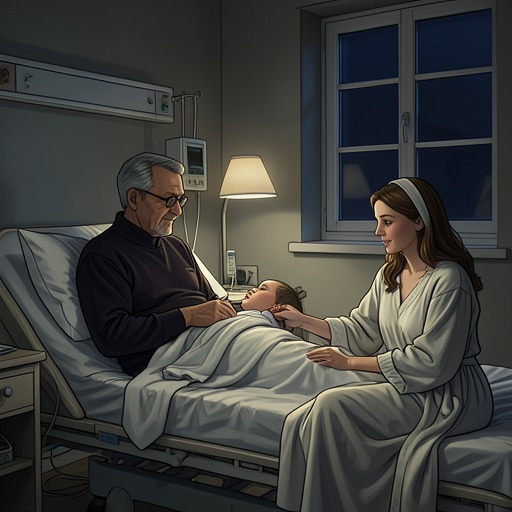
The accounts of Donny Ray Black’s final decline are set in the family home, where Dot Black remains closely involved in his care. When Rudy Baylor visits, Donny Ray Black is in a neatly kept room, with fluids and pills on a small table beside the bed. He tries to reassure his visitors that he feels better, but his voice is faint and strained, and his words are difficult to hear. The effort to present himself as well cannot conceal how much his condition has changed.
On a later visit, Rudy Baylor sits beside the bed as the room grows dark. He watches for the small movement of Donny Ray Black’s chest and cannot at first tell whether he is breathing. Donny Ray Black moves and opens his eyes, confirming that he is still alive. The episode does not alter the medical course, but it changes the force of the case for Rudy Baylor: the insured person behind the paperwork is no longer an idea in a file, but someone whose life is visibly nearing its end. Rudy Baylor understands the insurer’s refusal as a failure with immediate human consequences and becomes more determined to pursue the claim.
Coverage dispute and the lost opportunity
Great Benefit Life Insurance Company’s responses to the family’s claim give the illness a second, legal history. At trial, Dot Black reads a series of denial letters that rely on different grounds, including the assertions that a transplant is not covered and that bone marrow transplantation is too experimental. The shifting explanations place the insurer’s handling of the claim under scrutiny while keeping the treatment Donny Ray Black needed at the center of the dispute.
The policy language also matters. In his opening statement, Great Benefit Life Insurance Company’s lawyer argues that the policy excludes transplants. Rudy Baylor recognizes, however, that although it excludes transplants of other organs, it does not specifically mention bone marrow. A newer policy supplied to Rudy Baylor includes an express bone-marrow exclusion. This distinction does not itself establish what treatment Donny Ray Black would have received, but it sharpens the conflict over what the family’s policy promised and what the insurer was entitled to refuse.
The offered settlement makes the lost opportunity especially plain. Dot Black rejects the suggestion that $75,000 can repair the harm: Donny Ray Black needed the transplant when it might have mattered, and money offered after his condition has become terminal cannot restore that chance. In a later closing argument, Rudy Baylor tells the jury to consider a person dying while believing that the policy should provide the treatment. He also points to the defense’s lack of evidence contradicting Dr. Walter Kord’s testimony that the procedure was not experimental and quite probably would have saved Donny Ray Black’s life. That claim is presented as part of the trial’s argument, not as a treatment outcome Donny Ray Black lived to experience.
Testimony and narrative significance
After Donny Ray Black’s death, the case carries his presence into the courtroom through a recorded deposition. The edited recording lasts thirty-one minutes. The jurors watch and listen as his weak voice comes through, while Dot Black sits beside Rudy Baylor. The courtroom remains quiet when the screen goes blank; Dot Black weeps. In this sequence, the illness is not only described by relatives or debated through policy language. Donny Ray Black’s own recorded appearance makes his decline part of the evidence the jury encounters.
The recording also gives the trial a structure that joins individual suffering to the insurer’s conduct. Dot Black’s testimony describes her efforts to obtain care, the family’s repeated contact with Great Benefit Life Insurance Company, and the succession of denial letters. Donny Ray Black’s deposition then places the person affected by those decisions before the jury. In his closing, Rudy Baylor connects the medical dispute to the family’s financial circumstances and to the treatment they believe might have saved Donny Ray Black.
The illness therefore shapes both the stakes and the limits of the case. Donny Ray Black’s need for treatment precedes the litigation, his worsening condition makes delay consequential, and his death means that no later ruling can return the opportunity he lost. His testimony can still help the family make the dispute visible in court, but it cannot turn a legal argument into medical care received in time. The contrast between the policy’s promises, the insurer’s denials, and the family’s irreversible loss makes Donny Ray Black’s illness the central human fact against which the legal conflict is measured.