Dot Black–Buddy Black marriage
The RainmakerDot Black and Buddy Black’s marriage is portrayed through an uneven division of speech and responsibility: Dot explains their circumstances, while Buddy remains largely silent, and she describes his drinking and daily habits with weary acceptance. The novel offers only limited access to their shared life, but the details at their first meeting and in their home show how illness, injury, and financial strain have become part of the household’s routine.
A Marriage Introduced Through Dot’s Account
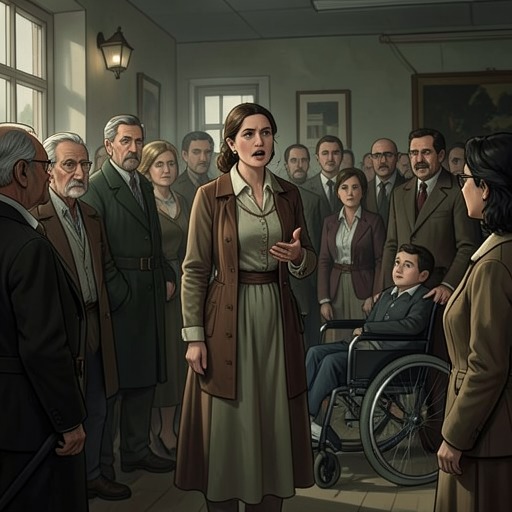
Dot and Buddy meet Rudy Baylor at Cypress Gardens Senior Citizens Center, where Dot does most of the talking. She gives their names, explains that Buddy is sixty-two, and asks Rudy to call him Buddy rather than use a formal title. Buddy offers little information himself. When Dot says that he is not well, she explains that a war injury in Korea left him with a metal plate in his head. She even turns the injury into a practical anecdote about airport metal detectors. The exchange establishes an intimate familiarity with Buddy’s condition, but the account belongs to Dot: she interprets his behavior and supplies the background while he sits nearby.
Dot also tells Rudy that Buddy has a problem with alcohol and links it to the injury. Her explanation is brief, and the evidence does not clarify the medical connection or Buddy’s own view of it. What the scene does make clear is that Dot has learned to describe his condition as part of their shared circumstances. She speaks plainly, without presenting him as a participant in the legal conversation, and Buddy remains mostly silent as she recounts matters affecting them both.
The Fairlane and the Household Routine
When Rudy visits the Black family residence, Buddy is not inside with Dot. She points out an old Ford Fairlane in the yard and explains that Buddy sits in it every day. They bought it new in 1964; now it is surrounded by weeds, and Buddy spends his time there with the cats. The car gives their domestic arrangement a visible center: Buddy’s habitual place is outdoors and apart, while Dot receives Rudy and discusses the family’s affairs inside. The scene records this separation without explaining whether it began with the injury, the drinking, or some other part of their history.
Dot describes Buddy’s drinking as another settled routine. He drinks gin in the morning and again in the afternoon, and she says that she does not really care because it makes him happy and keeps him out of the house. She does not buy the gin for him. Instead, he pays a neighbor’s child to purchase it and bring it to him, believing Dot does not know. Her account makes clear that she knows about the arrangement, even as Buddy apparently assumes otherwise. The small concealment sits within a larger pattern in which Dot recognizes his habits and chooses not to challenge them in the conversation with Rudy.
Practical Partnership Under Strain
Although Dot speaks for Buddy, the couple approach Rudy together because they need legal help with Great Benefit Life Insurance Company’s refusal to pay for Donny Ray’s leukemia treatment. At their first meeting, Dot handles the explanation and the papers; Buddy remains quiet. Their financial position is precarious: Dot receives Social Security Disability benefits because of a heart condition, while Buddy draws a small pension. The policy and the claim concern the family as a whole, but Dot takes the lead in seeking assistance.
Her account of the insurance dispute also shows why the couple waited before consulting a lawyer. They had paid their premiums regularly and expected the company to honor the policy; Dot continued writing to the insurer and receiving replies. She says that she had never used a lawyer before. These details place the marriage within a household accustomed to managing its difficulties without legal intervention, until Donny Ray’s illness and the unpaid claim make that approach untenable. Buddy’s silence in these scenes should not be mistaken for proof that he has no stake in the family’s problems: the evidence shows his presence, but gives little direct access to his thoughts or decisions.
What the Relationship Reveals
The portrait is built from contrasts rather than declarations of affection or conflict. Dot can describe Buddy’s injury, drinking, and daily retreat to the Fairlane with considerable precision, yet she does not present a plan to change those habits. Her acceptance is qualified by the consequences she names: the drinking makes him happy and keeps him away from the house. The account supports a picture of accommodation, not a complete explanation of how the couple arrived at it or how either feels about the marriage as a whole.
The Fairlane, the gin, and Dot’s steady explanations make the relationship legible through routine. Buddy’s withdrawal is visible in where he spends his days and in how little he speaks when the couple meet Rudy; Dot’s role is visible in the way she answers questions, manages the paperwork, and brings their claim forward. The scenes do not resolve the strain in their household. Instead, they show a marriage continuing amid injury, drinking, illness, and limited resources, with Dot carrying much of the practical work that brings the family’s needs before a lawyer.