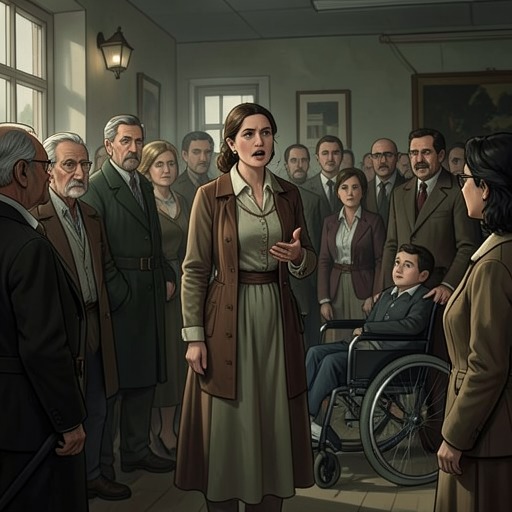
Dot Black–Donny Ray Black relationship
The RainmakerDot Black–Donny Ray Black relationship is defined by a mother’s efforts to obtain care for her dying son and by the grief that remains after his death. The insurance dispute gives that bond a public record: Dot describes their life together, the attempts she made to find treatment, and the repeated refusals that left Donny Ray without the coverage she believed her family had purchased.
Identity and Family Bond
Dot is presented in court as Donny Ray’s mother, and her account follows their relationship across the illness: life before it, the time during it, and the period after his death. That sequence makes the loss more than a medical or contractual fact. The case asks jurors to consider what the denial meant for a family and, specifically, for a mother unable to provide the health care her son needed.
The evidence does not elaborate on the family’s earlier history, but it makes their connection visible through Dot’s care and her continued effort to seek help. Donny Ray is not reduced to a claim number in her testimony. His illness is the circumstance that changes their life together; her attempts to secure treatment become the outward expression of her maternal responsibility.
Illness and Dot’s Search for Treatment
As Donny Ray became ill, Dot tried repeatedly to find a way to pay for his care. She wrote and called Great Benefit, and also contacted congressmen, senators, and mayors. She appealed to local hospitals for free care and organized friends and neighbors to raise money. These efforts failed to secure the help she sought, but their variety shows how widely she searched for a solution before and during the legal fight.
The family had bought an insurance policy through an agent who visited weekly to collect payments. Dot identified the policy and its application in court. She explained that she had wanted full coverage for her family, not that she had specifically anticipated a bone marrow transplant. Her testimony thus joined an ordinary purpose—protecting one’s family—with the extraordinary need that arose when Donny Ray required treatment.
Great Benefit’s successive denial letters made the dispute concrete. Dot read the first seven letters aloud, each giving a different reason for refusing the claim, including assertions that Donny Ray had a preexisting condition, was not a member of the household, or needed a transplant the policy did not cover. The changing explanations stand against the constancy of Dot’s purpose: she was seeking treatment for her son, while the company’s decisions repeatedly blocked that effort.
Testimony and Public Witness
Before Dot took the stand, she and Rudy Baylor had gone over a prepared question-and-answer sequence many times. She was visibly nervous, and her answers initially sounded practiced. Still, she maintained her composure while describing the family and the efforts she had made to find care. Her account gave the jurors a mother’s perspective on what the denials meant in daily life, rather than leaving the case at the level of policy language.
When Dot read the denial letters, the courtroom’s attention shifted from the technical explanations to their cumulative effect. The final letter shocked several jurors; after Rudy asked her to read it again, she did so more slowly and with greater feeling. The moment made Dot both a witness to Great Benefit’s decisions and a representative of the person those decisions affected. Her testimony did not bring Donny Ray back, but it made the family’s experience central to the trial.
The trial later presented Donny Ray’s own deposition, edited to thirty-one minutes and shown to the jury on a twenty-inch screen. The jurors leaned forward to watch, and Dot wiped her cheeks as the recording played. After the screen went blank, the courtroom remained quiet before the sound of her crying became audible. Her response linked the formal evidence to the continuing reality of her loss: Donny Ray was not merely the subject of testimony, but her son, whose absence she still felt beside her.
Grief After the Verdict
Rudy’s closing argument asked jurors to imagine Donny Ray’s experience and argued that the treatment Great Benefit had refused might have saved his life. The jury awarded the family two hundred thousand dollars in actual damages and fifty million dollars in punitive damages. Dot did not respond with a speech or celebration. She said little, and after the courtroom emptied, she cried while Rudy and Deck Shifflet stayed beside her. Rudy understood that she did not care about the money as much as she wanted her boy back.
The legal result could establish that Great Benefit had been wrong, but it could not undo the illness or the loss. Dot told Rudy she had had her day in court and wanted to go home; she had little appetite for the remaining proceedings. Later, when Rudy told her the company had gone bankrupt and that recovery of the award was unlikely, she appeared happy at the thought that she had helped put it out of business. She planned to visit Donny Ray’s grave the next day and tell him. Even that response cannot be mistaken for consolation: it gives her a way to understand the struggle’s consequence, while the loss that began it remains.
Significance of the Relationship
Dot and Donny Ray’s relationship anchors the case in the difference between a denied claim and a family’s lived need. Her letters, calls, appeals to hospitals, fundraising, and testimony form a chain of maternal efforts that continues even when each practical route fails. At trial, the denial documents and Donny Ray’s recorded testimony make that chain legible to the jury; Dot’s grief shows what no damages figure can repair.
The relationship’s ending is therefore not resolved by the verdict. The jury recognizes the company’s responsibility, but Dot leaves the courtroom still mourning, and the later bankruptcy further weakens the promise of financial recovery. Her plan to speak to Donny Ray at his grave carries the bond beyond the trial: the case is over, but her connection to her son and her sense of what happened to him remain.