Dot Black–Great Benefit Life insurance dispute
The RainmakerDot Black–Great Benefit Life insurance dispute centers on a family’s effort to obtain the transplant coverage they believe their policy promises, and on the widening discovery that Great Benefit Life Insurance Company treated denial as a business strategy. What begins with Dot’s worn stack of claim letters becomes a confrontation over Donny Ray Black’s life, the leverage available to a poor family, and the company’s incentives to make policyholders give up before they seek legal help.
The claim and the family’s circumstances
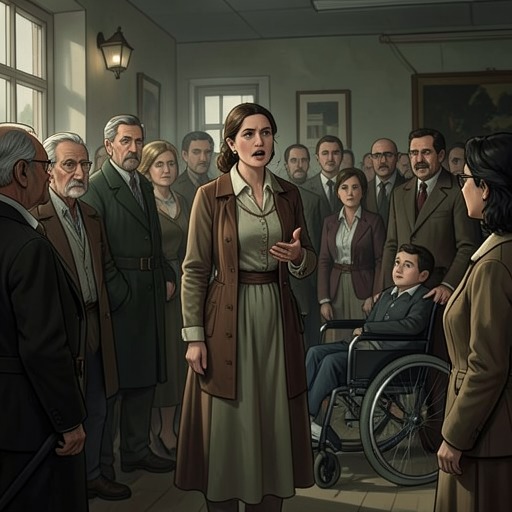
Dot brings the dispute to Rudy Baylor while he is still a law student. She and Buddy Black have little money for legal help, but they have paid premiums on their medical policy for five years without missing one. Their son Donny Ray has acute leukemia, diagnosed about eight months earlier, and the doctors have said he needs a bone marrow transplant. His identical twin, Ronny Ray Black, is a suitable match. The treatment costs roughly $150,000, far beyond what the family can afford without insurance.
The policy lists both sons as dependents. Great Benefit Life Insurance Company nevertheless refuses to cover Donny Ray’s treatment, at different points arguing that he is no longer covered because he is an adult and that his leukemia was a preexisting condition. Dot has read the policy repeatedly and insists it contains no adult-age termination clause. She also explains that Donny Ray had been diagnosed years after the policy was issued, undermining the preexisting-condition rationale. She says there is no exclusion for a bone marrow transplant, and reports that her doctor considers the procedure established treatment rather than an experiment.
The denials have immediate consequences beyond the dispute over policy language. After Donny Ray received an initial round of chemotherapy, the family was told Great Benefit Life Insurance Company would not pay for further treatment. The hospital then stopped providing care it could not afford to supply without payment. Donny Ray’s illness progresses while the family tries to challenge the refusal: Dot says he has fallen from 160 pounds to 110 and is sometimes too sick to walk. She urges Rudy to hurry because time is running out.
From repeated refusals to a legal case
Dot gives Rudy a bundle of letters and policy papers, including repeated denials and an especially insulting eighth-and-final letter. It tells her that the company has denied the claim seven times before and adds, “You must be stupid, stupid, stupid!” The letter turns the dispute into something more than a technical disagreement about exclusions: it displays contempt toward a policyholder who has kept up her premiums while trying to obtain care for her dying son.
At first, Rudy is uncertain what the law and the file will support. He asks for Donny Ray’s medical records and tells Dot that he needs time to review the documents and consult his professors. He promises to return with an advisement letter in two weeks, while privately imagining that he will refer the Blacks to an established lawyer who specializes in insurance bad-faith cases. His caution reflects his status as an unlicensed student as well as his inexperience with insurance litigation.
Max Leuberg’s review helps Rudy understand why a seemingly straightforward claim can be difficult to win. He describes debit insurance as inexpensive coverage sold door to door to low-income people, with agents collecting premiums regularly. In his account, insurers often deny claims on shifting grounds because relatively few policyholders take the additional step of hiring a lawyer and suing. Even when a claim is valid, punitive damages can be hard to secure: juries may repay a small medical bill and add only a modest penalty against a much wealthier company. Leuberg considers the Blacks’ claim good if their account is accurate, but warns that Tennessee juries are conservative and that Memphis is a difficult place to win a substantial verdict.
The denial process and the broader scheme
The dispute takes on a different scale when Rudy learns how the company’s paperwork can prolong a claim. Cooper Jackson describes a post-claim process in which a handler sends an initial denial, requests five years of medical records, and then issues another letter denying the claim pending further review. The file moves between claims and underwriting, while one department’s instruction not to pay is followed by another delay. The insured receives accumulating letters; meanwhile, the needed further notice never arrives. Jackson says the process depends on policyholders becoming discouraged, and estimates that only about one in twenty-five will consult a lawyer.
The manuals make the mechanics more concrete. Jackson’s claims and underwriting manuals each contain a Section U absent from the versions Rudy obtained in discovery. Read together, their instructions direct the departments to deny claims pending review and pass files back and forth without authorizing payment. The manuals connect the Blacks’ string of refusals to a coordinated procedure, not merely to a single examiner’s mistake or a disagreement over medical coverage.
Testimony about the company’s 1991 practices further situates the Black claim within a larger denial program. Jackie Lemancyzk says that, beginning January 1, 1991, Great Benefit initially denied every claim over $1,000 for a twelve-month period, regardless of its legitimacy. Some smaller claims were later paid, but the large claims generally remained unpaid unless the insured hired a lawyer and applied pressure. She describes the program as an experiment that netted the company about $40 million. She also testifies that the Black claim was initially denied like the others, then received special scrutiny after the file identified acute leukemia and the lack of a transplant exclusion. According to her, company personnel knew Donny Ray was terminally ill and continued the denial because they were betting that the family would not obtain a lawyer.
Money, leverage, and the stakes of the dispute
The economic imbalance that shapes the claim also becomes part of Rudy’s argument at trial. Leuberg explains that an insurer may weigh the likely cost of refusing a claim against the small probability of being sued and the limited penalties juries often impose. In that calculation, an unpaid claim can remain profitable even when the policyholder’s case is strong. The Black family’s lack of money for Donny Ray’s treatment makes the delay especially consequential: the company’s refusal does not merely postpone reimbursement but obstructs access to care.
In his closing argument, Rudy uses Great Benefit’s own financial figures to make the question of punishment tangible. He puts available cash, reserves, and undistributed surpluses at $475 million, alongside an admitted net worth of $450 million. The family has sued for $10 million, but Rudy leaves the amount of any award to the jury. His argument contrasts a sum large enough to matter to an ordinary person with the resources of a wealthy corporation, urging the jurors to consider a penalty that could deter the company without breaking it.
The dispute therefore joins a specific contract claim to a much broader conflict about how insurance denials work and whom they burden. Dot’s persistence, her careful reading of the policy, and the letters she has saved make the family’s case legible; discovery and testimony reveal a system that relied on delay and the low likelihood of legal challenge. Donny Ray’s need for treatment gives that system’s abstractions a human measure, while the trial’s financial evidence makes clear why the company’s resources and incentives matter to the question of justice.