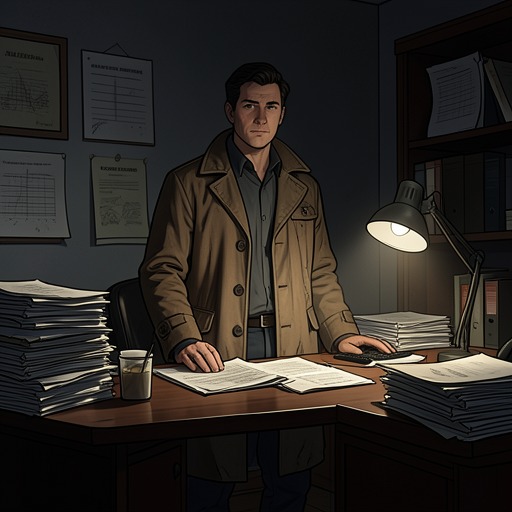
Dr. Walter Kord
The RainmakerDr. Walter Kord is the oncologist treating Donny Ray Black and a pivotal medical witness in Rudy Baylor’s case against Great Benefit Life Insurance Company. His role joins the case’s legal timetable to its human urgency: Kord confirms that Donny Ray is nearing death, helps make it possible to preserve his testimony, and ultimately agrees to explain the medical case to the jury in person without charging for his time.
Identity and Medical Role
Kord is a physician in a Memphis oncology group. By the time Rudy first seeks him out, Donny Ray’s condition is terminal. Kord had prescribed the original chemotherapy and conducted the tests showing that Donny Ray’s twin, Ron Black, was a perfect bone-marrow match. His later care is limited to medications as Donny Ray’s illness advances, but his earlier tests establish that a potential donor existed.
At trial, Kord’s background helps establish his authority to interpret the records. He is a Memphis native who attended local prep school, Vanderbilt, and Duke medical school. Rudy presents his credentials and qualifies him as an oncology expert. Kord then explains acute myelocytic leukemia, or AML, in accessible terms: the disease affects bone marrow and disrupts the production of healthy blood cells. Donny Ray had initially come to his office with dizziness, shortness of breath, fatigue, fever, and flu-like symptoms. Kord diagnosed him through a bone-marrow aspiration, a routine procedure performed at the hip.
Securing Donny Ray’s Testimony
Rudy first approaches Kord through a three-page letter left with the doctor’s receptionist, asking to speak without incurring a fee. Kord’s testimony matters not only because he treated Donny Ray, but because he can explain the diagnosis, the transplant possibility, and the consequences of the insurer’s refusal. When Rudy asks for an affidavit supporting an expedited deposition, Kord provides one stating plainly that Donny Ray will not live much longer.
That affidavit becomes important in court. Judge Tyrone Kipler grants fast-tracking, setting a short schedule for the case, and presses Great Benefit’s lawyers to agree to an expedited deposition. When they resist on scheduling grounds, Kipler points to Kord’s medical assessment and asks whether its validity is disputed. The defense does not challenge it. Kord’s affidavit thus helps turn the danger of delay into an immediate procedural issue: Donny Ray’s account must be recorded while he is still alive to give it.
Rudy meets Kord in person after waiting an hour and then spending another fifteen minutes in an examination room. Kord arrives hurriedly and initially asks to limit the conversation to five minutes. When Rudy says he needs Kord’s testimony, the physician explains that he is busy and charges five hundred dollars an hour for a deposition. Rudy admits that his new practice cannot afford the fee. His candid description of his financial situation persuades Kord to let him arrange a date and pay later, rather than making payment a condition of proceeding.
A Change from Fee to Commitment
Kord’s position changes further during a house call to Donny Ray. He visits while Rudy is sitting with the sleeping patient, and the two speak quietly near the bed. They discuss the scheduled trial date and whether Kord’s evidence would be more effective live than by video or written deposition. Kord recognizes the difference and offers to testify in person, without sending a bill. The decision gives the jury a direct account from the physician who diagnosed Donny Ray and evaluated the treatment he might have received.
Their conversation also clarifies the limits of medical willingness in a case shaped by cost. Kord says he had been willing to contribute his time and effort to a transplant, but the procedure would cost about two hundred thousand dollars. He says that no hospital or clinic could afford to absorb that expense. The obstacle, in his account, is not a lack of a matching donor or a refusal by the doctor to help; it is the financial burden of treatment that the insurer would not cover. Kord agrees with Rudy that the refusal has made the insurer an adversary, and expresses a willingness to help challenge it.
Testimony and Trial Significance
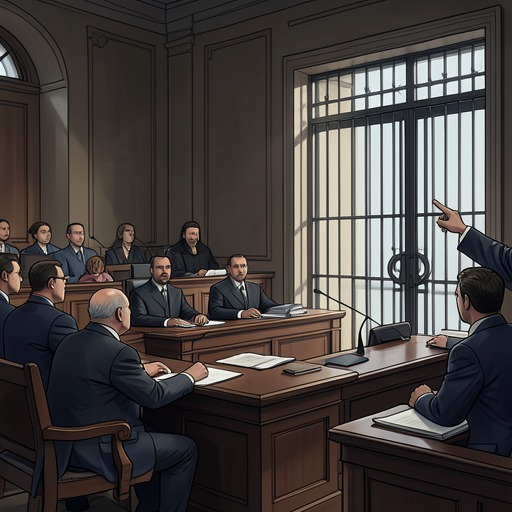
When Kord takes the stand, he presents the medical evidence in terms the jury can follow. He summarizes Donny Ray’s treatment, explains AML, and describes the diagnostic procedure without relying on unexplained medical language. His account gives the jurors a clinical basis for understanding the illness rather than leaving the dispute at the level of competing interpretations of an insurance policy.
Kord’s evidence also supports the central medical point in the plaintiffs’ case: bone-marrow transplantation was not simply an implausible or irrelevant demand. Rudy later emphasizes that the defense has offered no medical proof contradicting Kord and argues that the procedure was not experimental and could probably have saved Donny Ray’s life. The distinction matters to the case’s causation story. The claim concerns not only a disputed contract term, but a treatment that had a possible donor and, according to the plaintiffs’ evidence, a meaningful chance of saving a patient whose disease was otherwise progressing toward death.
Kord’s testimony is part of a larger presentation that makes the consequences of the insurer’s decisions visible to the jury. Dot Black’s account and the sequence of denial letters establish the family’s repeated efforts to obtain care; Kord supplies the medical explanation of what that care involved. Donny Ray’s recorded testimony, later shown to the jury, makes the stakes personal, while Kord’s professional evidence explains the disease and treatment behind it. The two forms of testimony are distinct but connected: one conveys the patient’s experience, the other establishes the medical facts against which the denials must be judged.
Character and Narrative Function
Kord is first introduced through the practical frictions between doctors and lawyers. He is rushed, wary of court, and attentive to the cost of professional time. His five-hundred-dollar hourly fee initially appears to put necessary evidence beyond the reach of Rudy’s struggling practice. Yet he does not remain a figure defined by that barrier. After learning Rudy cannot afford the deposition and later considering the prospect of testifying live, he makes his participation more generous: first by allowing payment when possible, then by offering to appear without charge.
The change does not erase the material limits he identifies. Kord cannot make a two-hundred-thousand-dollar transplant affordable, and his medical willingness alone cannot overcome the insurer’s refusal. His importance lies instead in the work he can do: preserve a dying patient’s evidence, explain the clinical record, and testify to what treatment could have meant. In a story where corporate decisions are often expressed through forms, denials, and procedural maneuvers, Kord gives those decisions a medical consequence. His movement from reluctant, hurried expert to unpaid live witness makes his testimony both professional evidence and an act of commitment to Donny Ray’s case.