Great Benefit Rests Its Case
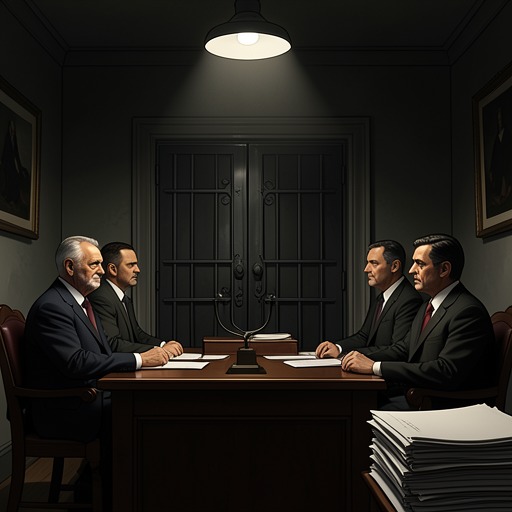
The RainmakerGreat Benefit Rests Its Case marks the end of the company’s attempt to answer the Black family’s case with witnesses and documents. After its testimony failed to confuse the jury and Jack Underhall faced a damaging cross-examination, Leo F. Drummond rested the defense; the trial moved toward closing arguments and the jury’s decision.
The Case Before the Defense
Rudy Baylor had rested for the plaintiffs after presenting Dot Black’s account of her efforts to find care for Donny Ray Black and the sequence of Great Benefit Life Insurance Company’s denial letters. The letters offered shifting reasons for refusing the claim, culminating in a denial that Dot read twice to the jury. Donny Ray’s edited, thirty-one-minute deposition was then played on a screen in the courtroom. His weak recorded testimony left the jurors visibly sympathetic, and the courtroom remained quiet after the screen went blank.
That presentation established the human stakes alongside the documentary dispute: the policy, the failed effort to obtain a transplant, and the consequences for a dying patient and his family. The plaintiffs rested, but the trial was only halfway through. Great Benefit still had eighteen potential witnesses listed, and Baylor knew that the defense could bring forward people from the home office to explain its claim denials. He also knew that those witnesses might face questions about the concealed Section U materials.
A Defense Losing Control
The defense’s approach was to extend its testimony and, in Drummond’s words as understood by Baylor, risk confusing the jury with a prolonged presentation. The tactic did not appear to work. Jurors laughed at Payton Reisky and slept through Richard Pellrod’s testimony. Rather than clarifying the company’s position, the witnesses left the defense struggling to hold the jury’s attention.
Underhall’s testimony brought the problem into sharper focus. Baylor asked whether Section U had been removed from the underwriting manual supplied to him. Underhall ultimately confirmed that it had. He described Section U as a system of checks and balances between claims and underwriting, requiring paperwork intended to ensure that claims were properly handled. Baylor then produced the complete manual, exposing the missing section in the version previously provided. The evidence connected the company’s account of its procedures to the documents it had withheld, making the omission difficult to dismiss as a harmless detail.
The Underhall Cross-Examination
Baylor next pressed Underhall about an agreement Jackie Lemancyzk had said she was forced to sign after being given ten thousand dollars in cash. Underhall said the agreement did not exist and maintained that he had no copy. Baylor appeared to consult a paper as he questioned him, making Underhall and Drummond fear that he had found the document. The paper was meaningless; Baylor never produced an agreement. The bluff nevertheless exposed Underhall’s uncertainty and made the possibility of a buried document loom over his answers.
When Baylor ended the questioning without revealing a document, Underhall left the stand and Drummond requested a recess. The exchange did not prove the agreement’s contents or place a copy before the jury, but it showed how the discovery of withheld records had altered the courtroom contest: even the suggestion that another document might surface could unsettle the defense. In Baylor’s assessment, Underhall had become a near-fatal problem for Drummond.
The Defense Rests
After the recess, Drummond announced that Great Benefit rested its case. The judge scheduled closing arguments for Friday at nine in the morning and told the jurors they would have the case by eleven. The announcement ended the defense’s opportunity to add witnesses and shifted the contest from testimony to the competing accounts the lawyers would give of the evidence.
In his closing, Baylor emphasized that the defense had offered no evidence contrary to Dr. Walter Kord’s testimony that a bone marrow transplant was not experimental and might have saved Donny Ray. He also organized Great Benefit’s 1991 policy, claim, and denial figures on a chalkboard, arguing that the denials reflected a year-long scheme rather than an isolated mistake. In rebuttal, he challenged the company’s late willingness to pay two hundred thousand dollars, arguing that Great Benefit had not offered that money before the jury learned the truth. He told the jurors to reject the amount if they did not believe the company’s conduct deserved punishment. Once the arguments were complete, the jurors left to deliberate; the defense’s decision to rest had opened the final stage, not settled the case.