Great Benefit’s 1991 claims-denial scheme
The RainmakerGreat Benefit’s 1991 claims-denial scheme was a company-wide experiment that turned the routine processing of insurance claims into a means of saving money through systematic refusal. It directed staff to deny claims regardless of merit, then relied on delay, fragmented departmental responsibility, and the low likelihood that policyholders would hire lawyers. The Black family’s claim made the consequences of that policy concrete: the company knew Donny Ray Black needed a bone marrow transplant, yet the claim remained unpaid. At trial, the scheme emerged not from one document alone but from missing manual sections, internal procedures, employee testimony, and the accumulating pattern of denials.
Design and Financial Logic
The plan took effect on January 1, 1991, and lasted twelve months. Jackie Lemancyzk, who had handled the Black claim, testified that Great Benefit initially denied every claim during that period. Claims above $1,000 were targeted whether or not they were legitimate; some smaller claims were also ultimately refused whenever the company could find an arguable reason. A few larger claims were paid only after an insured person hired a lawyer and threatened legal action. Lemancyzk characterized the policy as an experiment to discover how much money the company could generate over a year. Her account put the resulting extra gain at about $40 million.
The plan’s financial logic depended on unequal capacity to pursue a claim. Max Leuberg described debit insurance as inexpensive coverage sold door to door to low-income customers, with agents making weekly or near-weekly visits to collect premiums. He explained that companies selling this kind of insurance could expect few denials to become lawsuits: his estimate was that roughly one in thirty bad-faith denials reached court. Lemancyzk described a related calculation inside Great Benefit: the company believed no more than one in twenty-five claimants would consult a lawyer. The figures refer to different accounts of the likelihood of legal action, but both illuminate the same vulnerability. A denial could produce savings if most policyholders lacked the means, confidence, or persistence to challenge it.
How the Denials Worked
The procedure distributed the work between claims and underwriting. According to Cooper Jackson’s description of the process, a claims handler first denied a claim, then ordered five years of medical records. The insured might receive another denial pending review, after which the file went to underwriting; underwriting could send it back with instructions not to pay until further notice. Letters and internal memos accumulated while the two departments disputed clauses and responsibility. The claimant, meanwhile, received contradictory notices and waited.
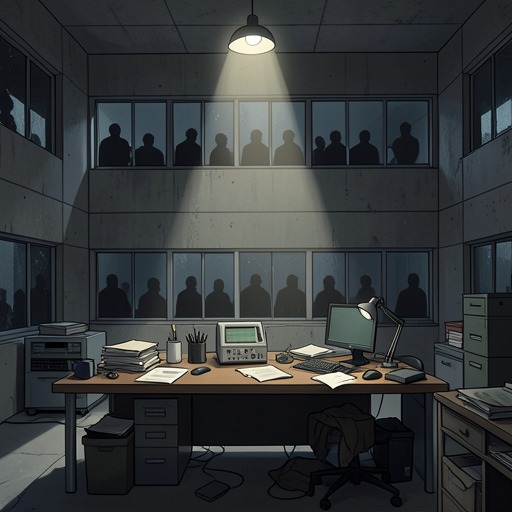
The division between departments was more than bureaucratic clutter. Jackson explained that claims and underwriting staff worked for the same company in the same building but often knew little about one another’s work. Their separate instructions could leave each department waiting for the other to authorize payment. The result was a paper trail that appeared to record careful evaluation while leaving the insured without a decision that would release the money. Great Benefit’s manuals included procedures for documenting these steps, but the full significance of those procedures became clear only when the manuals were compared with the versions produced in discovery.
The Black Claim as a Test of the Policy
The Black claim was first denied under the same general practice Lemancyzk described. Its scale and the diagnosis of acute leukemia then drew closer attention: she testified that her actions were monitored by Russell Krokit. Great Benefit’s records showed that Donny Ray’s illness was terminal without a bone marrow transplant, and Lemancyzk said she passed the medical information to Krokit, who passed it to Everett Lufkin. She testified that the company continued the denial even though people in the claims operation knew the claim should be paid. In her account, the decision rested on the company’s calculation that the insured might never obtain legal help.
The denial letters presented to the jury showed how the stated grounds shifted. They included outright denial, referral between claims and underwriting, an alleged preexisting condition, Donny Ray’s status as an adult outside the household, and claims that bone marrow transplants were not covered or were too experimental. The policy at issue excluded other organ transplants but did not expressly exclude bone marrow transplants. Great Benefit later used policy language that did exclude bone marrow treatment, a change Rudy Baylor used to argue that the earlier policy did not contain that exclusion. The dispute therefore joined the broad denial experiment to a specific question of coverage: whether the company could refuse a treatment its policy had not named as excluded.
Exposure in the Manuals and at Trial
Jackson showed Rudy Baylor examples from another case before explaining the process behind the denials. In Jackson’s storage boxes, Baylor found complete claims and underwriting manuals. Both contained a Section U absent from the corresponding manuals supplied in discovery. Read together, the sections described the exchange between the two departments and the documentation used to support each step. Their absence from the produced copies made the gap itself significant: the documents suggested that material procedures had been withheld from the plaintiff.
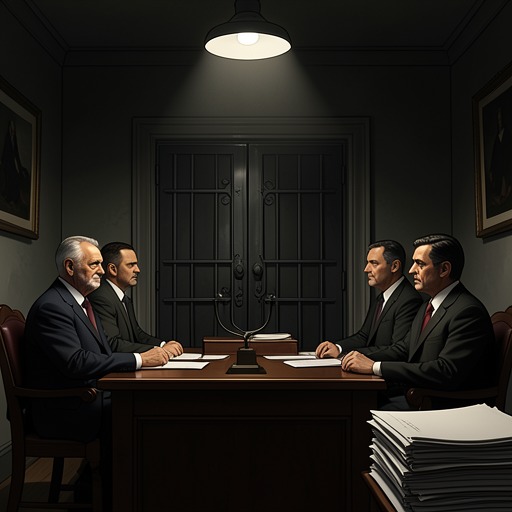
At trial, Everett Lufkin, Great Benefit’s vice president of claims, initially treated the produced claims file as complete. Baylor questioned him about Lemancyzk’s departure two days before her scheduled deposition and about his responsibility for the claims division. Her testimony followed and connected her handling of the Black claim to the larger policy. Kermit Aldy, vice president for underwriting, acknowledged that Section U had been removed from the manual produced in discovery. When Baylor presented the complete manual, its contents exposed the missing procedure to the jury. The evidence made it harder to treat the denials as isolated mistakes or to attribute them solely to low-level handlers.
Consequences and Significance
The trial’s presentation assembled the scheme as a causal account: the company set a denial policy, its departments carried that policy through paperwork and delay, and the Black claim remained unpaid despite the medical evidence and the need for treatment. Donny Ray’s recorded deposition, edited to thirty-one minutes, placed the person behind the claim file before the jury. Dot Black’s testimony and the succession of denial letters likewise made the cost of the administrative process legible as a family’s repeated effort to obtain care.
In his closing argument, Baylor put Great Benefit’s 1991 policy and denial figures on a chalkboard, making the pattern visible rather than leaving it buried in company records. He also summarized available cash, reserves, and undistributed surpluses at $475 million, against an admitted net worth of $450 million. That comparison supported his argument that punitive damages had to be large enough to affect a company of Great Benefit’s means. The scheme thus shaped both the liability story and the question of punishment: the issue was not only whether one claim had been wrongly denied, but whether a profitable year-long practice could continue unless its financial incentives were reversed.