Great Benefit’s Section U claims-denial scheme
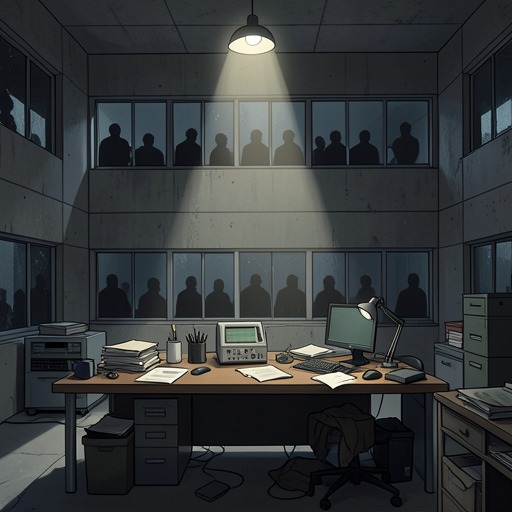
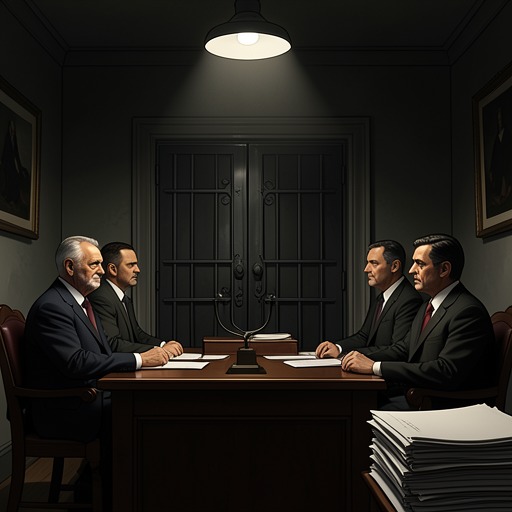
The RainmakerGreat Benefit’s Section U claims-denial scheme was a coordinated procedure for delaying and withholding insurance payments, designed to make denials appear to result from routine review rather than a company-wide decision. Its two manuals assigned claims and underwriting separate, interlocking tasks: each department could defer payment while waiting for the other, and the required paperwork made the resulting delay look like careful administration. The scheme’s significance in the Black case lay in the contrast between this elaborate process and the human cost of a legitimate claim left unpaid: Donny Ray Black was terminally ill, and the company knew his medical records indicated that a bone marrow transplant was necessary.
Definition and Operating Method
The procedure began when a claim reached a low-level handler in claims. As former claims handler Jackie Lemancyzk explained, the company’s 1991 policy was to deny every claim at first, then review some of the smaller claims that appeared legitimate. In the manual, handlers were instructed to deny claims within three days of receiving them. Some could later be considered for payment, but claims with a potential value above five thousand dollars were to be sent to underwriting with a denial letter to the policyholder, subject to further review.
The initial denial was only one step in a larger loop. The claims department could send the insured a second letter saying that the claim remained denied pending review, then forward the file to underwriting. Underwriting, in turn, could send a memo instructing claims not to pay until further notice. The two departments were expected to exchange correspondence and build a record of review, but the instructions prevented either from releasing payment without the other’s authorization. As Cooper Jackson described the process, the anticipated further notice never arrived. The insured was left receiving letters from departments that appeared to be considering the claim but did not resolve it.
Section U also prescribed how the company would document the delay. Its instructions directed workers to record each step, creating a paper trail that could later suggest the claim had been thoroughly evaluated. The manuals even contained coded signals for recording an insured’s reaction. If a customer threatened legal action, the file could be reviewed by a supervisor; if the customer seemed unlikely to resist, the denial could stand. For a claim below five thousand dollars, Lemancyzk said, a lawyer’s involvement could prompt quick payment with an apology. Larger claims went to a supervisor, and claims facing a lawsuit or an imminent one could be resolved through confidential settlement.
The 1991 Experiment
In her testimony, Lemancyzk described the procedure as part of a twelve-month experiment that began on January 1, 1991. For that year, the company decided to deny every claim over one thousand dollars, without regard to whether it was valid. The initial denial applied even more broadly: all claims were denied first, while selected smaller claims could later be reviewed. Some smaller claims were also ultimately denied whenever the company could find an arguable reason.
The strategy relied on policyholders giving up before seeking legal help. Lemancyzk testified that company personnel believed no more than one in twenty-five claimants would consult a lawyer. Max Leuberg had earlier described the broader insurance context in similar terms, saying that only about one in thirty bad-faith denials reached court. The precise estimates differ, but both accounts identify the same leverage: a company could benefit from denying claims when many policyholders lacked the knowledge, resources, or confidence to challenge the decision.
Lemancyzk said that management regarded the experiment as successful. The calculation was to total the money saved through denied claims and subtract the cost of quick settlements; she estimated that the scheme produced about forty million dollars in additional revenue. Larger claims were not necessarily paid because the company had reconsidered its original decision. According to her account, legal pressure changed the company’s calculation: if a lawyer became involved, some claims were paid or settled, while claims left unchallenged remained denied.
The Black Claim and the Manuals
The Black family’s claim illustrated the consequences of the system. Lemancyzk testified that she initially denied the claim under the company’s policy of denying claims first. When the file identified Donny Ray Black’s acute leukemia, Russell Krokit monitored her work. The medical records indicated that chemotherapy had not resolved the illness and that it would eventually be fatal without a bone marrow transplant. Lemancyzk said she showed this information to Krokit, who passed it to Everett Lufkin, the vice president of claims. Although company personnel knew the claim should be paid, she testified, the denial continued because the company was playing the odds.
Rudy Baylor’s discovery of the manuals supplied documentary evidence for that account. Cooper Jackson showed him storage boxes of material from other Great Benefit disputes and explained the post-claim underwriting procedure. Baylor then found Section U in the back of Jackson’s claims manual. His own discovery copy lacked the section. The underwriting manual contained a corresponding Section U, which set out the other half of the process. Read together, the sections directed claims and underwriting to deny, transfer, and defer claims while documenting the steps. Baylor concluded that the sections had been removed from the manuals provided to him in discovery.
At trial, Baylor used the difference between the copies to confront Lufkin. The versions had the same date for their revised edition, January 1, 1991, but one contained Section U and the other did not. Lufkin acknowledged that the section was present in the complete manual and that it was absent from Baylor’s copy, but said he did not know who had removed it and suggested that its absence might have been an oversight. Baylor then had Lufkin read the instructions to the jury. These included denying claims within three days, routing claims over five thousand dollars to underwriting, and using coded signals to distinguish policyholders who threatened suit from those who did not. The claims manual also instructed handlers to prepare a check for the claim but send it and the file to underwriting with directions not to mail the check until further notice.
Exposure in Court
Lemancyzk’s testimony linked the written procedure to the company’s practices. She said the Black claim had been assigned to her and that she sent the initial denial because all claims were initially denied in 1991. She described the annual policy, its financial result, and the management-level knowledge that Donny Ray’s illness was terminal. Her account made the transfers between departments legible as a mechanism rather than a neutral division of work: claims and underwriting appeared to review one another’s decisions, while the policyholder waited and payment remained blocked.
Baylor also presented the underwriting manual to Kermit Aldy, who acknowledged that its Section U had been removed from the copy given to Baylor. Aldy initially characterized the section as a system of checks and balances intended to ensure proper handling. When Baylor produced the complete manual, its instructions exposed the same deferral structure found in the claims manual. Taken together, the two sections showed that the separate departments were not simply exchanging independent judgments; their coordinated instructions could leave claims unpaid indefinitely.
The documentary exposure formed part of the plaintiffs’ case alongside the denial letters and the recorded testimony of Donny Ray Black. In his closing argument, Baylor used Great Benefit Life Insurance Company’s own figures to explain the scale of its claims and denials, and connected the company’s wealth to the question of punishment. The manuals turned the dispute from a sequence of seemingly inconsistent letters into evidence of an organized process. The scheme’s importance was therefore both legal and narrative: it explained how a large insurer could make repeated denials look procedural, and showed how a system that counted on policyholders not obtaining counsel could impose the greatest cost on those least able to fight back.