Kermit Aldy
The RainmakerKermit Aldy, Great Benefit’s vice president of underwriting, is a restrained corporate official whose importance emerges through the documents his department uses. His testimony connects the company’s formal division of work between underwriting and claims to a system that, as the trial reveals, could keep disputed claims unpaid. Aldy does not appear as the scheme’s architect; his significance lies in what he oversees and what he ultimately confirms about the missing manual section.
Identity and Corporate Role
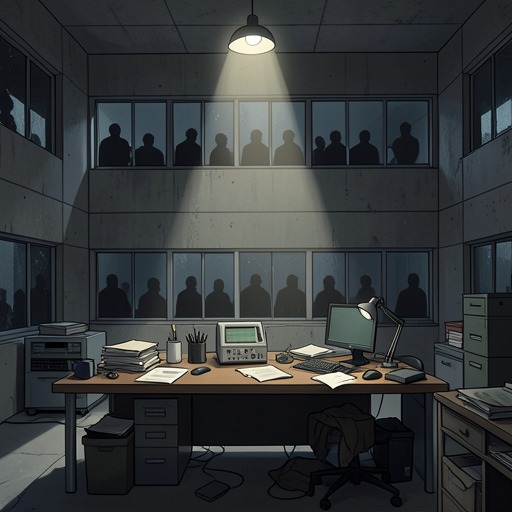
Aldy oversees underwriting, the process of reviewing applications and deciding whether to issue policies. Rudy Baylor encounters him during the corporate depositions as glum and noncommittal, a manager who seems suited to the paper-heavy routine of the department. The deposition is brief: Baylor finishes questioning him in under two hours and does not describe the encounter as a major confrontation.
The quietness of that exchange contrasts with the stakes of the work. Underwriting is one of the two departments involved in Great Benefit’s handling of claims. The company’s internal procedures send files and instructions between underwriting and claims, while the insured receives successive notices that a claim is denied or still under review. The division of responsibility makes it difficult for a claimant to identify who can authorize payment.
Connection to the Denial System
Cooper Jackson explains to Baylor that, under the procedures he has encountered, a claims handler first denies a claim and requests five years of medical records. Claims may then be sent to underwriting, whose instructions can prevent payment while the file moves between the departments. Jackson says that the paperwork and departmental separation leave policyholders facing repeated notices, while many give up rather than consult a lawyer. The Section U provisions in both manuals set out the corresponding steps for claims and underwriting, including instructions that sustain the hold on payment.
Jackie Lemancyzk later identifies Aldy, alongside other Great Benefit personnel, as one of the people involved in what she calls a conspiracy to dismiss her. She testifies that she was required to leave shortly before her scheduled deposition about the Black claim and that her departure was presented as a resignation. Her testimony implicates Aldy in that account, but does not establish that he personally devised the claims-denial policy.
Trial Testimony and the Missing Section
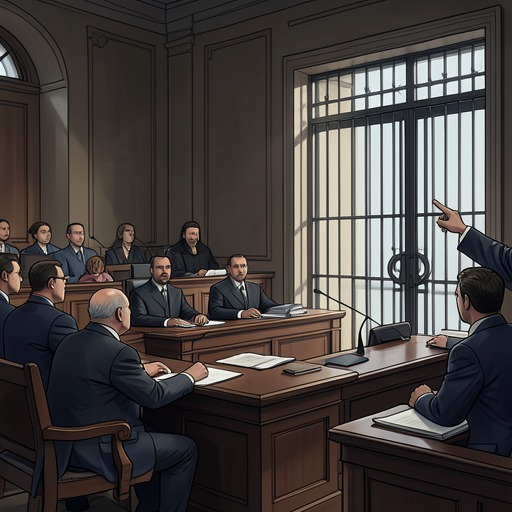
On the second day of trial, Baylor calls Aldy after questioning other company witnesses. Aldy is wary and terse, and Baylor moves quickly through the routine background of underwriting before turning to the manual supplied in discovery. Aldy identifies the green-bound volume and, when asked whether it is complete, eventually acknowledges that a section is missing from the back. He agrees that the missing section is Section U and that it was removed before the manual was produced to Baylor.
Baylor then asks Aldy to explain Section U’s purpose. Aldy describes a system of checks and balances between underwriting and claims, with paperwork intended to ensure claims are handled properly. That account initially presents the section as a safeguard. Baylor then brings out the complete underwriting manual, which includes Section U. The fuller document, read alongside the claims manual, exposes procedures that direct the departments to deny claims pending further review and to defer payment until further notice. The promised notice does not arrive, leaving the claim stalled. After about an hour of questioning over the complete manual, Aldy has helped Baylor make the hidden procedures legible to the jury.
Narrative Significance
Aldy’s courtroom role turns on a contrast between official description and documentary detail. He presents Section U as a mechanism for proper handling, but the complete manual reveals how the departments’ checks could operate as reciprocal obstacles to payment. The scene also shows the force of Baylor’s documentary strategy: rather than rely only on a broad accusation against Great Benefit, he first elicits Aldy’s acknowledgment that the produced copy is incomplete, then supplies the missing text for comparison.
Aldy’s testimony forms one part of the case assembled from company records, employee accounts, and the evidence concerning Donny Ray Black’s claim. The trial’s larger argument is that Great Benefit’s 1991 denial policy was not simply a sequence of isolated mistakes. Aldy’s admission about Section U helps demonstrate how the company’s procedures could institutionalize delay and conceal responsibility across departments.