M. Wilfred Keeley
The RainmakerM. Wilfred Keeley is the chief executive of Great Benefit Life Insurance Company, a seasoned corporate leader whose expertise in investment contrasts with his limited knowledge of claims. During the Black case, he moves from a genial executive eager to return to the home office to a witness questioned about the company’s resources, its claims practices, and the consequences of its financial collapse. His appearances expose a central tension in the trial: the company can present figures suggesting enormous wealth, yet those figures do not guarantee that the people it has harmed will receive payment.
Identity and Corporate Background
At fifty-six, Keeley is described as hale and hearty, with a warm smile. He has spent eighteen years with Great Benefit and rose through the investment side of the business, where he began his career. He understands that side of the company far better than claims handling. That distinction matters in a lawsuit over an individual insurance denial: the executive responsible for the corporation’s direction is not presented as someone who knows the day-to-day mechanics of processing a policyholder’s claim.
Keeley’s career also reflects the priorities of the company as Rudy describes them. Selling policies and handling claims are the mundane business; taking premiums and investing them is the glamorous part. Keeley knows the investment operation, while admitting little familiarity with claims. The contrast helps frame the lawsuit’s institutional scale: the business can manage large pools of money while the people seeking benefits encounter decisions made within specialized departments and procedures.
Depositions and the Search for Responsibility
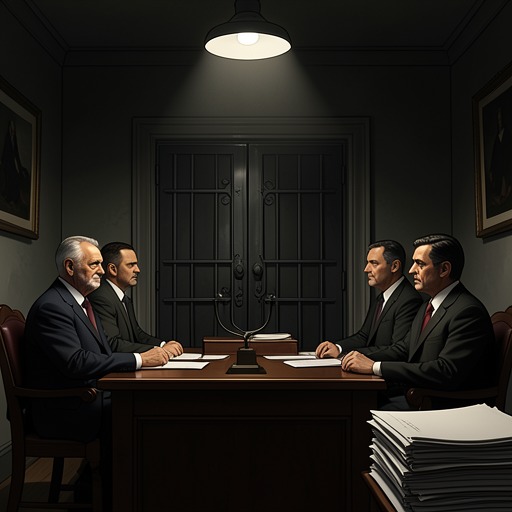
Rudy chooses Keeley as the first executive to depose, reasoning that he will begin with the company’s highest-ranking figure. Keeley thanks Rudy for letting him go first and says he needs to return to the home office. The deposition becomes an all-day examination. Rudy asks broadly and at length, sometimes digging without a clear line of inquiry, while Deck Shifflet studies Keeley’s financial statements and supplies questions. Leo F. Drummond and other members of the defense team pass notes, but the long session wears on them as well as on Keeley.
Their conversation ranges beyond the Black claim. Keeley acknowledges that Great Benefit faces other lawsuits around the country, involving other lawyers, courts, and similar facts. He has not previously been required to give a deposition in any of them. For Rudy, that disclosure points toward the possibility of comparing documents and trial strategies with those other attorneys. Keeley’s account of his own career, meanwhile, reinforces that his experience lies in investment rather than claims.
The deposition does not immediately resolve who authorized the denial of Donny Ray Black’s claim. The documents supplied by Dot Black total 221 pages, while Great Benefit has produced 748 pages, including duplicates. Rudy and Deck have organized the paperwork but suspect that the trail breaks between claims and underwriting. Deck doubts that claims handler Jackie Lemancyzk had authority to deny the claim outright; she appears to have processed it and sent the file onward. In this setting, Keeley’s position at the top makes him an important source of corporate information, but his limited claims knowledge also illustrates how responsibility may be distributed across the organization.
The Settlement Approach
After the depositions, Drummond invites Rudy to discuss settlement at the defense firm. Keeley unexpectedly joins them. He and Drummond sit with Rudy over drinks: the two company representatives have whiskey, while Rudy, exhausted, chooses a Coke. Keeley’s return so soon after the deposition signals that the company wants to negotiate.
Drummond says that Tyrone Kipler concerns him, and Keeley quickly agrees, describing the proceedings as unfair. Their concern about the judge becomes the opening argument for settlement. Drummond says the company feels confident in its defense but fears what Kipler might do at trial. Rudy sees their anxiety in a different light: the case has exposed damaging evidence, and the company faces the prospect of that evidence being presented publicly.
Drummond offers $150,000, doubling the earlier figure. The offer is not a personal negotiation over Rudy’s fee alone: Donny Ray is dead, and his mother has buried him. Rudy says he will convey the offer to Dot, while rejecting Drummond’s attempt to lecture him about his ethical obligation. Keeley is present as the company’s senior representative when Great Benefit tries to resolve the case before trial, but the offer does not settle it.
Testimony and the Company’s Finances
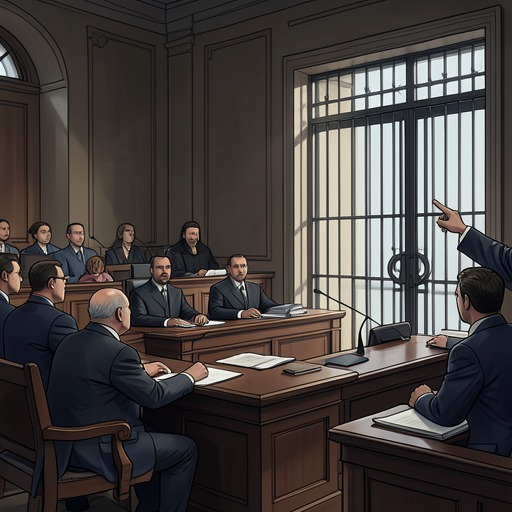
At trial, Rudy calls Keeley to the stand. Keeley comes into the courtroom appearing vigorous and friendly, and the narrative presents him as eager to assure the jury that he is in charge and worthy of trust. He readily confirms that he is Great Benefit’s chief executive. When Rudy asks him to establish the company’s net worth from its financial statement, Keeley initially resists, saying that the concept is not clear and that calculating it is not simple. Under continued questioning, he accepts Rudy’s estimate of approximately $450 million.
Rudy next asks how much cash the company holds. Keeley says the figure is difficult to determine and searches through the pages of the statement before giving an answer. Rudy then turns to a reserve account. In the example he raises, Great Benefit set aside $10 million after Rudy sued for that amount, ostensibly to pay the claim. The money remains the company’s, invested and earning returns, even as it is classified as a reserve. The exchange makes the company’s balance sheet a matter of consequence for the jury: its apparent wealth bears directly on what an award could mean, while the treatment of reserves complicates what the figures reveal.
The testimony places Keeley’s corporate authority beside the contested treatment of claims. His composure and friendly manner cannot by themselves answer whether Great Benefit handled the Black claim fairly. Nor does his investment background establish personal knowledge of the claim’s processing. The trial instead makes him account for the company as its highest executive, including the resources its defense might otherwise keep abstract.
Collapse and Aftermath
After the verdict, reports of Great Benefit’s troubles spread beyond Memphis. A newspaper account sent from Cleveland says that at least seven states are investigating the company, policyholder suits are being filed around the country, and the Memphis verdict may prompt more litigation. Keeley’s company is no longer simply defending one insurance case; it is facing a widening crisis involving its business and its subsidiaries.
The financial picture then reverses sharply. Great Benefit files for bankruptcy protection in federal court in Cleveland. Peter Corsa reports that its parent company, PinnConn, suffered losses trading foreign currencies and began drawing on the cash reserves of its subsidiaries, including Great Benefit. The money was then skimmed and sent to Europe. The account suggests a complex looting of corporate funds, not a scheme attributed personally to Keeley. The cash figures that had seemed to promise a substantial recovery in court can no longer be treated as money available to pay the Black family.
A subsequent report says Keeley was detained at JFK while waiting to board a flight to Heathrow with his wife. They described the trip as a holiday but could not provide the name of a hotel where they planned to stay. The report places him amid the investigation and the disappearance of the companies’ assets, but does not establish that he personally removed the money. For Rudy, Deck, Dot, and Buddy Black, the practical consequence is more immediate: the case’s apparent financial victory may be beyond reach. Keeley’s arc thus joins executive authority, courtroom accountability, and corporate insolvency without resolving them into a simple story of a single executive’s culpability.