PinnConn
The RainmakerPinnConn is the parent company of Great Benefit Life Insurance Company, and its financial collapse changes the meaning of the Black family’s courtroom victory. As investigators pursue records and news emerges of depleted reserves and a bankruptcy filing by Great Benefit, the case’s promised compensation becomes uncertain: a verdict against an insurer is of little practical value if the money behind it has disappeared.
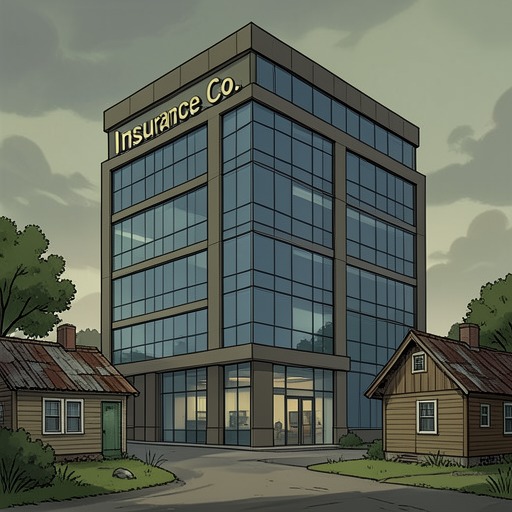
Corporate Role and Connection to Great Benefit
The novel identifies PinnConn as Great Benefit’s parent, placing the insurer’s claims practices within a larger corporate structure. The Black case concerns Great Benefit’s refusal to pay for Donny Ray Black’s treatment; testimony at trial describes the insurer’s 1991 policy of initially denying claims over one thousand dollars. That evidence establishes the conduct at issue in the lawsuit, but the text does not establish that PinnConn itself devised or directed the denial policy.
PinnConn’s significance becomes clearer when Great Benefit’s financial condition is examined. During the trial, Rudy Baylor uses the company’s financial statements to argue that Great Benefit has ample resources to answer for its conduct. He calculates four hundred and seventy-five million dollars in available cash, reserves, and undistributed surpluses, against an admitted net worth of four hundred and fifty million. Yet Max Leuberg had warned him not to trust an insurer’s figures, because companies use their own accounting rules. PinnConn’s subsequent financial troubles make that caution consequential: figures that supported an argument about deterrence do not guarantee that a judgment can be paid.
Financial Collapse and Alleged Diversion of Funds
After Great Benefit’s verdict becomes news, Rudy hears that PinnConn has defaulted on bonds and laid off many employees. Peter Corsa, a lawyer in Cleveland, reports that the company appears to have suffered heavy losses in foreign-currency trading and then drawn on the cash reserves of subsidiaries, including Great Benefit. In Corsa’s account, funds were eventually skimmed from PinnConn and sent to Europe. The information is still developing, and its full scope is not yet known when he relays it.
Corsa also describes PinnConn’s ownership as controlled in large part by a group of American investors operating in Singapore. The account deepens the sense that the crisis extends beyond one insurer, but the narrative presents it as information circulating amid a fast-moving investigation, not as a completed legal finding. What Rudy and Deck can see immediately is the practical result: the money they had hoped might satisfy the Black award may no longer be available.
Investigations and Public Exposure
The corporate crisis moves quickly from financial rumor to official action. The Federal Bureau of Investigation, working with the Ohio Attorney General and the Ohio Department of Insurance, raids the corporate offices and begins removing records. Most employees are sent home and told not to return for two days, while computer analysts in accounting remain behind. The raid makes PinnConn’s records an object of investigation and links the parent-company scandal to scrutiny of its subsidiaries.
News accounts report that at least two grand juries are beginning work and that lawsuits are being filed in large numbers against PinnConn and its subsidiaries, particularly Great Benefit. M. Wilfred Keeley, whom the novel associates with Great Benefit’s financial leadership, is detained at John F. Kennedy International Airport while preparing to fly to Heathrow with his wife. They cannot provide the name of a European hotel where they intend to stay. The episode is reported amid the inquiry; it does not, by itself, establish guilt or the eventual outcome of any prosecution.
Consequences for the Black Case
At five o’clock on Tuesday, lawyers for Great Benefit file for protection under the bankruptcy code in federal court in Cleveland. For Rudy and Deck, the filing abruptly recasts the large verdict as an uncertain asset. They had postponed deciding how to divide their fee, but now recognize that their expected earnings may have vanished. The small firm has averaged about a thousand dollars a month in net profit, has too little work in its files to last two months, and had relied on the Black case as its chance to stay afloat.
The uncertainty reaches beyond the lawyers. Dot Black and Buddy Black may not collect the compensation secured in court; Great Benefit’s policyholders and employees may also suffer as the company’s finances unravel. Jackie Lemancyzk, whose testimony helped expose the insurer’s practices, is among those Rudy fears will take a financial hit. Even Leo F. Drummond, who represented Great Benefit, may not be paid for the defense. The award remains a judicial victory, but the bankruptcy threatens to separate recognition of wrongdoing from meaningful recovery.
Narrative Significance
PinnConn’s collapse exposes the limits of a courtroom remedy when a corporate defendant’s apparent wealth proves unstable. During closing argument, Rudy asks jurors to measure punishment against Great Benefit’s capacity to pay; the later news about its parent company unsettles the financial premise beneath that appeal. The case’s evidence may establish what the insurer did, while the parent-company crisis determines whether the resulting judgment can accomplish anything for the family.
The turn also widens the scale of the conflict. What began as a claim by one family against an insurer becomes part of a corporate scandal involving subsidiaries, investors, international money movements, regulatory searches, and multiple legal actions. PinnConn’s role is therefore less that of a courtroom actor than a force reshaping the aftermath: its collapse turns a paper victory into a precarious one, without erasing the human cost of the denial or the fact that the Black family prevailed at trial.