Rudy Baylor–Dot Black attorney-client relationship
The RainmakerRudy Baylor–Dot Black attorney-client relationship is the partnership at the center of the Black family’s suit against Great Benefit Life Insurance Company. Rudy turns Dot’s denied claim for Donny Ray Black’s bone marrow transplant into a case about both a company’s deliberate practices and the human cost they impose. Their courtroom alliance culminates in a verdict of historic scale, but its emotional measure is Dot’s grief, not the money.
The Claim and Its Stakes
Rudy’s understanding of the case begins with a file Max Leuberg describes as a typical debit-insurance scam. These inexpensive policies were sold to low-income customers, who were often wary of lawyers and the legal system. Insurers could count on many denied claims never reaching court: Leuberg estimates that only about one in thirty bad-faith denials was sued. He also warns Rudy that even a valid claim could be difficult to turn into a substantial verdict in Tennessee, where juries were conservative about punitive damages.
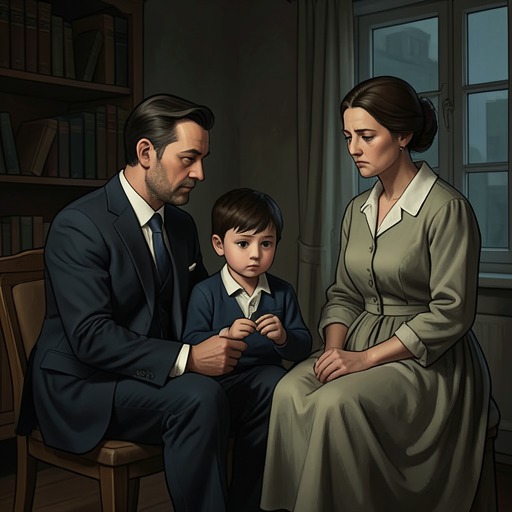
Dot’s claim is unusually stark. Donny Ray is terminally ill, and the policy covers the transplant that could have prolonged his life. Leuberg cautions Rudy that the parents may not have told him everything, but agrees that, if the file and their account are accurate, the case is good. The stakes therefore exceed recovery of medical expenses: the dispute concerns treatment the family believes the policy promised and a chance for Donny Ray that delay has placed in jeopardy.
From Individual Denial to Company Practice
The relationship changes as Rudy connects the Black claim to a wider system. Cooper Jackson explains how post-claim underwriting works: a claim is denied, medical records are sought afterward, and the file moves between claims and underwriting while each department’s letters and internal instructions keep payment suspended. The insured receives repeated correspondence, while the company’s separation of duties makes the process difficult to see from outside. Many policyholders, Jackson says, give up; only about one in twenty-five consults a lawyer.
Rudy examines the claims and underwriting manuals Jackson has preserved. Both contain a Section U missing from the versions Rudy obtained in discovery. Read together, the sections instruct the departments to deny claims pending further review and pass the file between them; the promised further notice never arrives. This discovery gives the case a documentary account of how the delay could be produced, rather than leaving Dot’s experience as an isolated disagreement over policy language.
Jackie Lemancyzk’s testimony places the Black claim inside an even broader policy. She testifies that, beginning January 1, 1991, Great Benefit denied every claim over $1,000 for a twelve-month experiment, regardless of legitimacy, and that some smaller claims were denied whenever an arguable reason could be found. She says the plan generated about $40 million in additional revenue. Donny Ray’s claim was initially denied like the others, but his acute leukemia drew special monitoring. Jackie says the company knew the policy covered bone marrow transplants and knew from his medical records that he would probably die without one; the denial continued because the company was gambling that the family would not get a lawyer. Rudy’s representation brings these facts into court on Dot’s behalf.
Rudy’s Advocacy for Dot
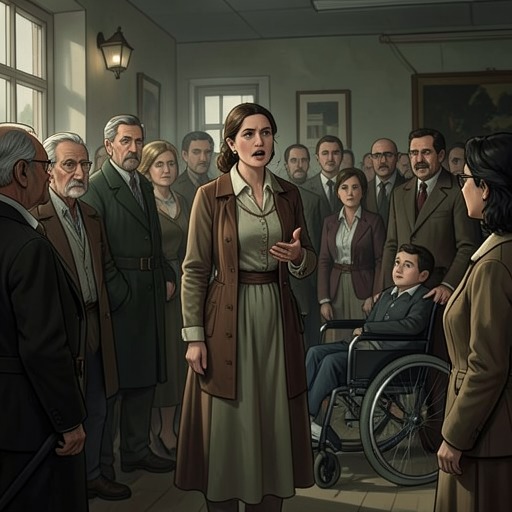
In closing, Rudy does not present Dot merely as the claimant attached to a policy. He asks the jury to consider what she has endured and what it means for a family to watch a dying son go without covered treatment. He keeps the medical discussion focused, noting that the defense offered no evidence to contradict Dr. Walter Kord’s testimony that the transplant was not experimental and could probably have saved Donny Ray’s life.
Rudy then makes the company’s conduct legible through evidence and figures. He uses Jackie’s testimony and Great Benefit’s statistics to show the 1991 policy, claims, and denials, and writes the numbers on a chalkboard. To argue for punishment, he contrasts the company’s admitted $450 million net worth with $475 million in available cash, reserves, and undistributed surpluses. He has sued for $10 million but leaves the amount to the jury, arguing that a penalty should matter to a corporation as a meaningful fine would matter to an individual.
Leo F. Drummond offers a different frame: he presents an award as a disruption to the Blacks’ modest life and proposes $200,000, the cost of the transplant, as a way to increase their monthly income. Rudy answers that Great Benefit’s present willingness to offer that sum comes only after the evidence has emerged. He rejects the proposal as inadequate to the wrong and reminds the jurors that the operation will never take place. The contrast makes the choice plain: the case is not simply about money that might improve the family’s circumstances, but whether the company’s conduct deserves to be punished.
Verdict and Personal Meaning
After deliberations, the jury returns a verdict that Tyrone Kipler describes as in order. It is the largest verdict in Tennessee’s history. Rudy understands that appeals could reverse it or reduce the punitive award, so the result is not yet secure; still, he begins to reckon with the $16.5 million he associates with the outcome. The legal victory and the financial possibility remain qualified by the prospect of further litigation.
Dot’s response makes the limit of the victory unmistakable. As congratulations gather around Rudy, he attends to her instead. In the emptied courtroom, she cries while he holds her hand; she cares nothing for the money and wants her son back. Her grief prevents the verdict from reading as simple triumph. The attorney-client relationship has helped turn a private denial into a public judgment against the insurer, but it cannot undo Donny Ray’s death. Rudy’s representation is consequential precisely because it secures recognition and punishment without pretending that either can restore what Dot lost.