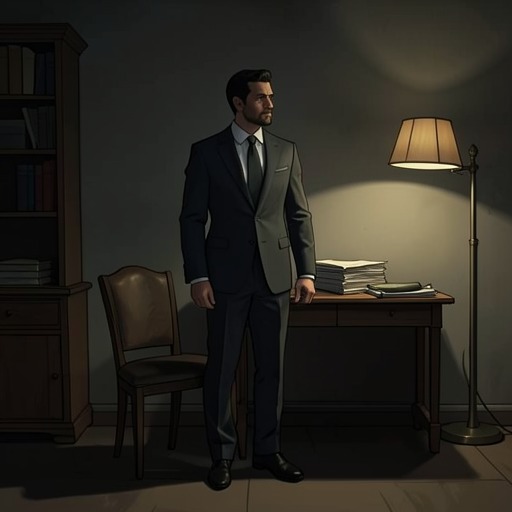
Rudy receives Texaco’s debt-collection suit and his landlord’s eviction summons
The RainmakerRudy receives Texaco’s debt-collection suit and his landlord’s eviction summons in one encounter that makes his private financial collapse impossible to ignore. A process server confronts him in the dark parking lot of The Hampton, then warns that police are seeking him over a law office damaged earlier that day; by morning, Rudy’s friend Booker is trying to keep an arrest from derailing Rudy’s chance to become a lawyer.
The Summons at The Hampton
Rudy returns to The Hampton shortly before two in the morning, after a day of professional and personal upheaval. In the parking lot, a man gets out of his car and comes straight toward him. Rudy confirms his identity, and the stranger thrusts papers at him: one is a summons from Texaco, and the other concerns eviction from his apartment. The process server identifies himself and explains that the documents contain the court date and the lawyers’ names, though the darkness prevents Rudy from reading them there.
The location sharpens the force of the notice. The Hampton is the decaying building Rudy has called home for nearly three years, and he has already fallen behind on its rent. The eviction papers therefore do not introduce a distant financial worry; they put his precarious housing directly at stake. The Texaco suit arrives alongside them, making the encounter a pileup of legal claims rather than a single isolated bill.
A Second Legal Threat
As he prepares to leave, the process server adds that he is an ex-cop who keeps a police scanner in his car. He says he heard a call about a man named Rudy Baylor who had damaged a downtown law office; the description and the make and model of the car match. When Rudy asks whether the police will arrest him, the man says they will and advises him to find somewhere else to sleep. The warning transforms service of the civil papers into notice of a separate, immediate danger: Rudy is not only facing debt and eviction but may also be wanted by police.
The encounter leaves Rudy with no clear place to go. Rather than return to his apartment, he calls Booker from a pay phone and goes to Booker’s home. He admits that he has been drinking and recounts the events since the two friends parted the previous afternoon, including the process server, the Texaco suit, and the eviction notice. Rudy’s account places the papers at the end of a day in which his remaining confidence and resources have already been badly depleted.
Booker’s Response and the Stakes
Booker recognizes that the police issue could have consequences beyond an arrest. The Tennessee bar exam is three months away, and, as Booker warns, an arrest and conviction could ruin Rudy’s prospects before the screening committee. The summonses thus intersect with Rudy’s professional future: the threatened housing and debt crisis is joined by the possibility that his conduct will close off the career he is trying to enter.
Booker proposes calling Marvin Shankle, his future employer and a prominent Memphis lawyer, who may be able to reach his brother and pull strings with the police. Rudy accepts the plan but immediately asks whether there might also be a job for him. He says he is facing bankruptcy and fears that other creditors may be waiting to serve him with papers. While Booker studies the Texaco suit and eviction notice, Charlene brings Rudy coffee and aspirin, then cooks bacon and eggs. The practical care of Booker’s household briefly gives Rudy shelter, but it does not resolve the debts or the police threat.
Consequences and Significance
The scene gathers several kinds of insecurity into a single night: a creditor’s lawsuit, the loss of Rudy’s rented home, possible arrest, and the danger to his bar admission. Its sequence matters. The process server first hands over documents Rudy cannot read in the dark, then adds information that makes those papers seem almost secondary to the possibility of police custody. The material crisis is at once legal, economic, and professional.
Booker’s intervention offers a possible route toward preventing an arrest, not a settled outcome. At this point, there is no confirmation that the police have found Rudy or that the charges have been resolved. The event instead establishes the narrowness of his position: with little money, no job, and creditors closing in, Rudy must rely on a friend’s connections while trying to preserve the future for which he is preparing.