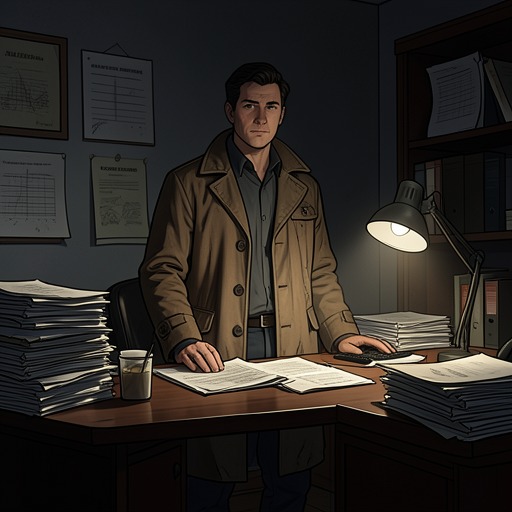
The Black family's financial hardship
The RainmakerThe Black family's financial hardship is not simply a lack of money; it is the condition that lets Great Benefit Life Insurance Company's refusal to pay become an immediate threat to Donny Ray Black's life. Dot and Buddy Black have kept up their medical-insurance premiums, yet they cannot cover the roughly $150,000 transplant their son needs. When the insurer will not pay, the family has no independent means to bridge the gap, and Donny Ray's treatment stops.
A Family with Little Financial Cushion
Dot tells Rudy Baylor that the family does not have much money. The Black parents are presented as pensioners, while Dot describes having worked for thirty years in a blue-jean factory and belonged to a union. Her account places the family's limited means against a history of wage labor and collective struggle, not against carelessness about the policy: she insists that the premiums were never missed.
The policy had been bought five years earlier, when the Black family's twin sons were seventeen. By the time Dot seeks legal help, Donny Ray is an adult who still lives at home, and his illness has made the household's financial limits urgent. The family has a thick bundle of worn insurance papers and denial letters, but no spare resources to replace the coverage those documents promise.
Illness and the Cost of Care
Donny Ray has acute leukemia. Dot says doctors diagnosed him eight months earlier, gave him a year to live, and identified his identical twin, Ronny Ray Black, as a perfect bone-marrow match. The transplant costs around $150,000, far beyond what the family can pay on its own. Their financial hardship therefore shapes the medical decision at the center of the dispute: the possible donor is available, but the treatment depends on money the family does not have.
The family had managed to obtain an initial round of chemotherapy, but after Great Benefit denied further treatment, the hospital stopped providing care and could not afford to give Donny Ray a transplant. Dot says he has not seen a doctor much lately because the family cannot afford it. His condition is already visibly worsening: he has fallen from 160 pounds to 110 and is sometimes too sick to walk. The insurance dispute thus reaches beyond the unpaid transplant bill; the lack of money also restricts the family's access to continuing medical care.
Premiums Without Protection
Dot says the family bought the policy five years before Donny Ray became ill and never missed a premium. Great Benefit nevertheless denied the claim using different explanations, including that his leukemia was preexisting and that he was no longer covered as an adult. Dot says the policy contains no adult-age termination provision. In the family's experience, years of paying for protection have not produced usable coverage when treatment becomes costly.
The insurer's repeated refusals are underscored by a letter that rejects the claim for an eighth and final time and insults Dot. Its cruelty compounds the financial injury: the family is not only denied money for care but addressed as though it does not merit a serious explanation. Dot interprets the company's conduct as a powerful corporation taking advantage of people it assumes lack the means to fight back.
The Cost of Contesting the Denial
The Blacks' hardship also limits their ability to challenge Great Benefit. Dot has gathered the policy, medical information, and a sequence of letters, and brings the paperwork to a law-school clinic seeking help. She knows the claim is important but cannot simply pay for the treatment while the dispute proceeds. Even Rudy initially plans to review the documents and refer the family to a lawyer who specializes in insurance bad-faith cases, a delay that alarms Dot because Donny Ray has little time.
The circumstances expose a circular disadvantage: the family needs the policy because it cannot afford extraordinary medical care, but it also lacks the financial security that would let it withstand the insurer's refusal or easily secure another route to treatment. Dot's insistence that the premiums were paid, her painstaking reading of the policy, and her appeal for Rudy to hurry make the hardship concrete. The Black family's lack of money is not incidental background to the claim; it is what makes the denial's consequences so immediate and the pursuit of a remedy so difficult.