
Shared Melancholy
The RavenThis flow traces the emotional bond the narrator imagines between his grief and The Raven’s supposed history.
increasing Bearing strength in each event
 decreasing
Bearing strength in each eventdecreasingPrivate Melancholy

Private Melancholy
Solitary Burden
The narrator reads to escape sorrow over Lenore.
His melancholy is inward, quiet, and familiar.
Emotional Isolation
No companion shares the burden before the disturbances begin.
The solitude makes any sign of parallel suffering attractive.
Birdly Amusement

Birdly Amusement
Temporary Smile
The narrator smiles at The Raven’s grave decorum.
Humor creates a brief emotional bridge between human and bird.
Sorrow Interrupted
The amusement does not cure grief, but it momentarily alters its rhythm.
The bird gains access through this small relief.
Imagined Master
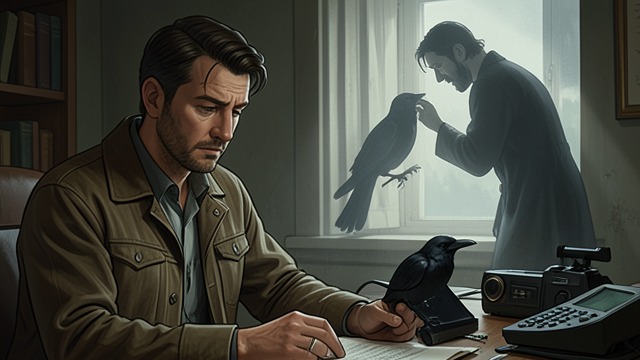
Imagined Master
Invented History
The narrator imagines an unhappy master who taught The Raven its refrain.
This conjecture gives the bird a history of suffering.
Emotional Recognition
He recognizes a version of his own condition in the imagined master.
The Raven becomes a companion through borrowed melancholy.
Shared Burden
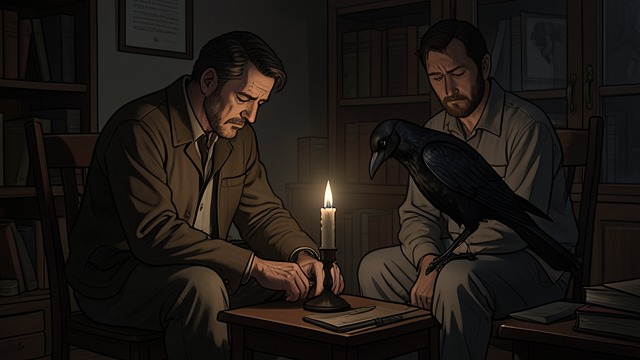
Shared Burden
Songs as Grief
The narrator imagines dirges carrying one repeated burden.
The bird’s word becomes a compressed history of sorrow.
Bond Through Loss
The imagined parallel makes The Raven seem emotionally intelligible.
Yet it also confirms that grief may be inherited without being healed.
Companion of Despair
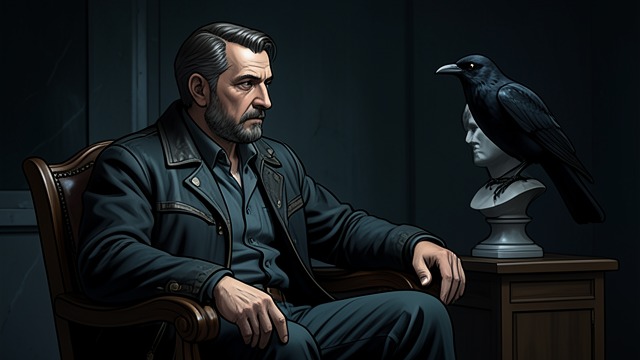
Companion of Despair
Bond Hardened
The Raven remains beside the narrator when all hopeful interpretations fail.
Its presence is the only continuity left.
Cruel Companionship
The bird does not comfort him, but it shares the chamber of sorrow.
Companionship survives in its most oppressive form.
before the visitor appears
during the first observation of The Raven
after The Raven’s second answer
during the narrator’s reflection on the refrain
at the ending
