
The Final Command
The RavenThis flow traces the narrator’s failed effort to reclaim authority over the chamber and his own grief.
increasing Bearing strength in each event
 decreasing
Bearing strength in each eventdecreasingGrowing Suspicion
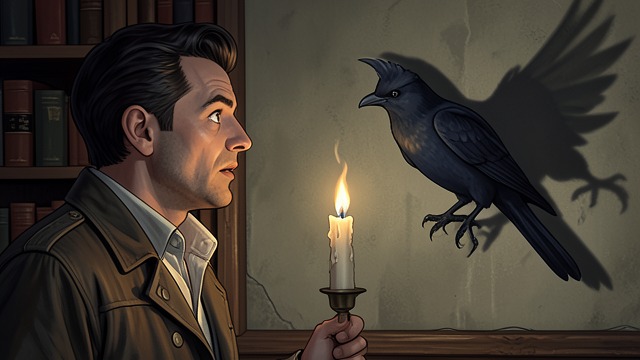
Growing Suspicion
From Curiosity
The narrator stops treating The Raven as a harmless novelty.
Its answers now appear linked to his deepest fears.
Threatened Agency
He recognizes that his own questions have helped empower the bird.
Conversation has become a trap constructed from his desire for certainty.
Prophet Accusation
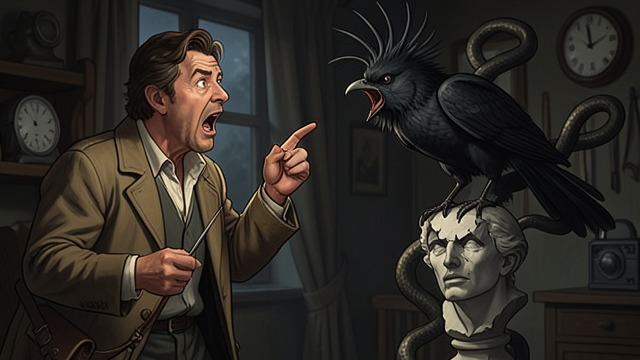
Prophet Accusation
Naming Evil
The narrator calls The Raven a prophet, thing of evil, bird, or devil.
The vocabulary reveals his inability to decide whether the visitor is natural or demonic.
Moral Confrontation
He no longer requests neutral information.
He demands that the bird account for the suffering its answers intensify.
Parting Order
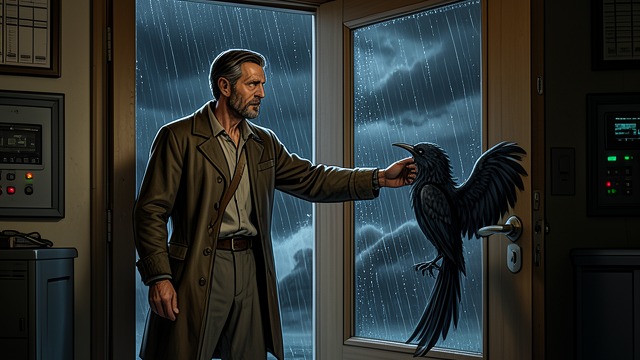
Parting Order
Sudden Resistance
The narrator commands The Raven to return to the tempest and Night’s Plutonian shore.
The imperative voice attempts to restore human control.
Reversal of Power
The order exposes desperation rather than authority.
Because the bird answers only “Nevermore,” command produces no change.
Heart’s Removal
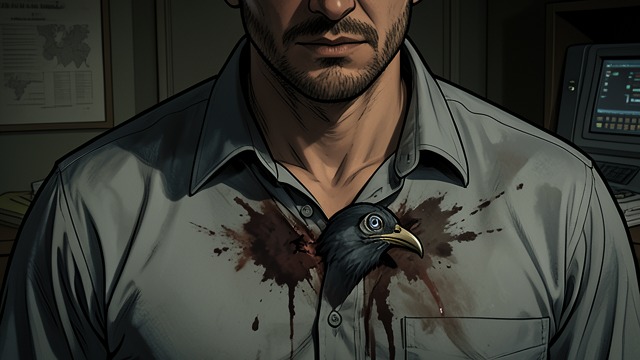
Heart’s Removal
Direct Demand
The narrator asks The Raven to remove its beak from his heart.
The physical image makes emotional injury feel like bodily penetration.
Impossible Separation
He also demands that the bird leave the door.
The paired commands reveal that the visitor occupies both inner feeling and outer space.
Unbroken Shadow
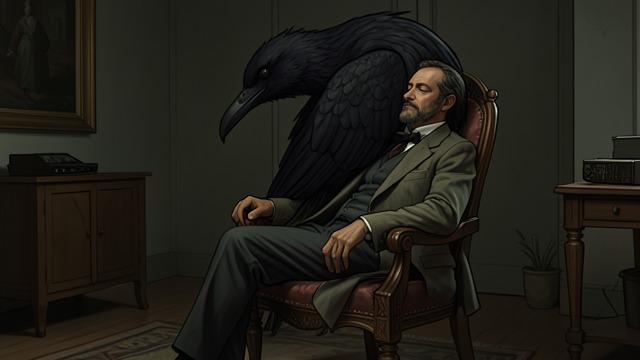
Unbroken Shadow
Permanent Defeat
The Raven remains, and the narrator’s soul stays beneath its shadow.
The attempted recovery of authority ends in complete failure.
Final Condition
The chamber is no longer a place he inhabits freely.
It becomes the visible shape of a grief from which he cannot escape.
after the early exchanges
after the question about healing
after the denied reunion question
immediately after the parting order
at the ending
