December
The RavenDecember is the temporal setting that frames the speaker’s encounter with The Raven and gives the poem its emotional climate. It is not merely a calendar reference: as the month of dying embers, sleepless reflection, and anxious expectation, it marks the boundary between a painful past and a future the speaker longs to reach but cannot trust. The month therefore becomes the first visible sign that time in the poem will not bring release.
Seasonal Setting
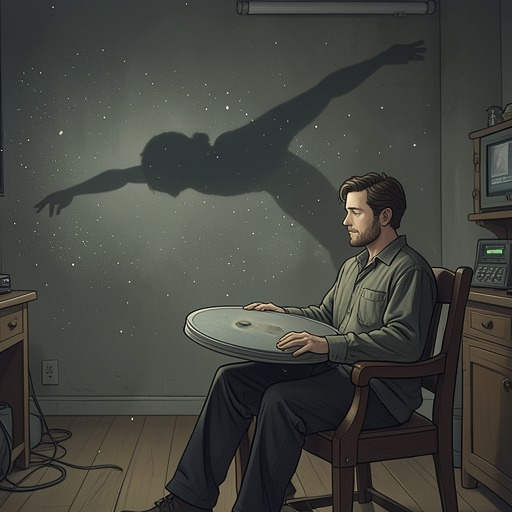
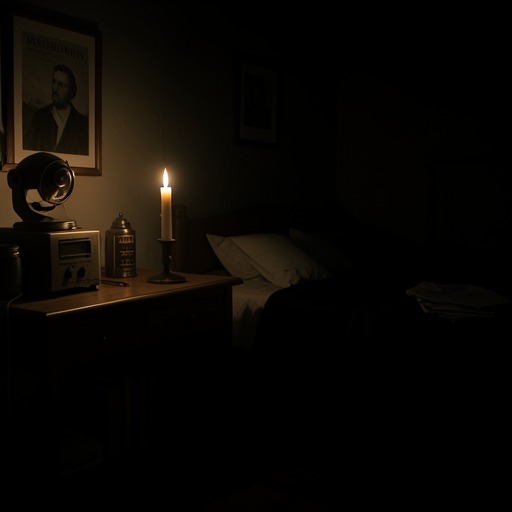
December is introduced through the speaker’s precise recollection of a bleak night. He remembers the moment as occurring “in the bleak December,” while each separate dying ember casts a ghostlike image upon the floor. The season’s coldness and decline are joined to the interior scene: the fading fire gives physical form to exhaustion, while the room becomes a place where memory appears to detach itself from ordinary reality. December thus establishes both the setting and the poem’s governing atmosphere of melancholy.
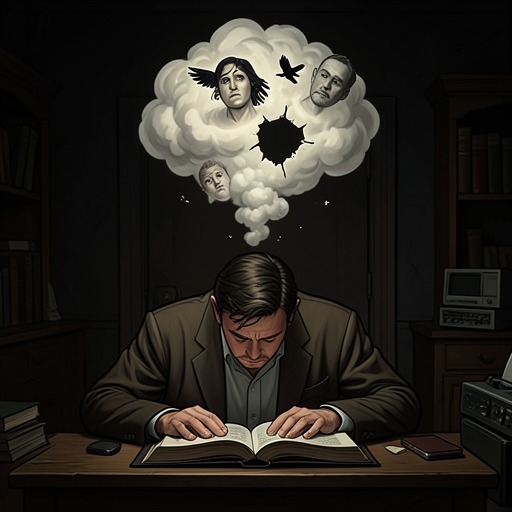
The month also surrounds the speaker with a suspended stillness. He is pondering over forgotten lore, weak and weary, and nearly napping when the tapping begins at the chamber door. The interruption does not arrive in a lively or restorative season; it breaks into a period already marked by fatigue and decay. The temporal setting makes the disturbance feel like an intrusion into a sealed interval, where night, weather, memory, and grief have temporarily taken control.
Time, Hope, and Anticipation
The speaker eagerly wishes for the morrow, but his desire for the following day is explicitly connected with his failed attempt to obtain relief from the loss of Lenore. The future is imagined as a possible interval of respite, yet the language of vainly seeking consolation shows that December has not carried him toward recovery. His longing for tomorrow is therefore double-edged: it gestures toward escape from the present while revealing how little confidence he has in time’s power to heal.
That tension becomes sharper as the dialogue with The Raven progresses. The speaker anticipates that the bird will leave on the morrow, just as his hopes have already flown before, but the bird answers, “Nevermore.” The expected movement from night to morning is denied symbolically. December’s future-oriented promise is replaced by recurrence: the same answer returns whenever the speaker tries to project himself beyond the immediate scene.
From Passing Night to Permanent Repetition
At first, December appears to provide a conventional temporal frame for a single midnight episode. The poem begins with a tired reader in a chamber, a sound at the door, and a date-like seasonal marker that locates the action in ordinary time. Yet the repeated response of The Raven progressively changes what time means within the scene. “Nevermore” is uttered after the speaker asks the bird’s name, after he imagines the loss of friends and hopes, and after he seeks relief from memories of Lenore.
The recurrence creates a structural contrast between temporal passage and emotional stasis. The season belongs to a cycle in which one month should give way to another, and the morrow should follow the night; the speaker’s grief, however, remains fixed. Each new question seems to promise a different answer, but the bird’s identical reply makes the conversation feel less like an exchange than a mechanism of repetition. December consequently becomes the month in which ordinary chronological movement is overwhelmed by the permanence the speaker hears in the bird’s word.
The December Chamber and the Unfinished Future
The encounter ends without release. After the speaker asks whether there is balm in Gilead, whether Lenore may be embraced in a heavenly realm, and whether the bird’s presence can serve as a sign of parting, The Raven continues to answer, “Nevermore.” The speaker orders the bird back toward the storm and the Night’s Plutonian shore, but the command does not restore the boundary between the chamber and the outside world.
The bird remains perched above the chamber door, and its continued presence makes the earlier December night seem to extend indefinitely. The season that began as a remembered setting has become an image of arrested time: the embers die, the desired morrow fails to arrive as consolation, and the room stays occupied by grief’s dark emblem. December’s decisive narrative function is therefore to initiate the passage from temporary sorrow into a seemingly unending condition, where the future is repeatedly forced to echo the past.