Morrow
The RavenMorrow is the anticipated next day in the poem, first imagined as relief from sorrow and later recast as the horizon at which companionship and hope may disappear. Its decisive significance lies in this reversal: what begins as a wished-for interval beyond the narrator’s present suffering becomes the temporal measure of his abandonment, especially after the Raven answers his expectation with “Nevermore.”
Morrow as an Escape from Grief
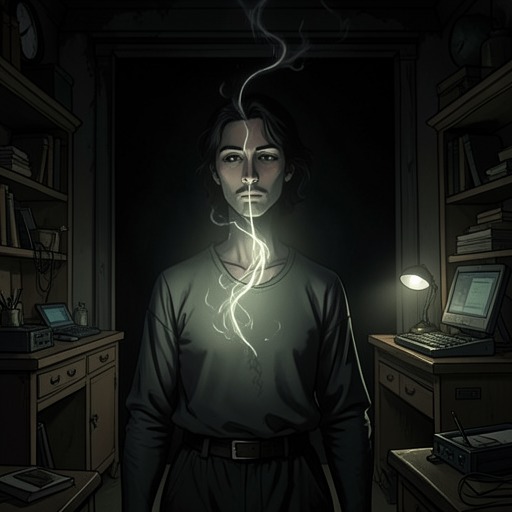
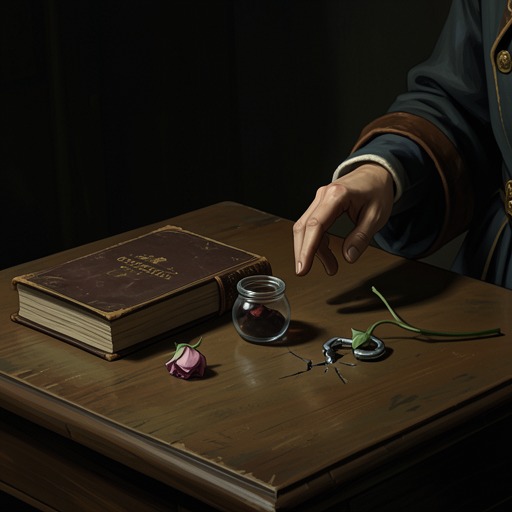
The narrator initially longs for Morrow while attempting to find relief in books from sorrow over the lost Lenore, described as the rare and radiant maiden whom the Angels name Lenore. The coming day therefore carries a psychological promise rather than a merely chronological meaning. It stands opposite the bleak December midnight and represents the possibility that the present night of mourning might finally end.
That hope is already fragile. The narrator does not possess a remedy for grief; he has only sought one in reading, and the anticipated arrival of Morrow cannot restore Lenore or undo her death. The word consequently marks a postponement of pain rather than its resolution. It names the future as something desired precisely because the present remains unbearable.
Morrow and the Chamber Door
The Raven’s arrival turns Morrow from a private expectation into a recurring temporal reference within the chamber scene. While the narrator is nearly napping, tapping and rapping sound at the chamber door, and he repeatedly explains the disturbance as a visitor seeking entrance, insisting that it is “Only this and nothing more.” His effort to identify the interruption as ordinary depends on the expectation that the night can still be contained and that the next day will arrive without yielding anything more terrible.
The narrator’s repetition of the visitor explanation shows how Morrow functions as an imagined boundary. By repeating that the caller is merely a late visitor, he tries to keep the unknown event within a familiar sequence: a knock, an opening, an encounter, and the return of ordinary time. The threshold instead becomes the place where that expectation begins to fail.
The Promise Reversed by the Raven
After the Raven has entered and answered the narrator’s question with “Nevermore,” Morrow acquires a darker force. The narrator imagines that other friends have already flown before and says that on Morrow the bird will leave him, just as his Hopes have flown before. The Raven’s repeated answer rejects both parts of this expectation: it denies the bird’s future departure and echoes the disappearance of hope.
This exchange changes Morrow from a day of possible relief into a deadline for anticipated abandonment. The narrator still projects a future in which the Raven will be gone, but the answer makes that projection impossible. Time no longer promises movement away from grief; it merely repeats the condition in which the narrator is trapped.
Temporal Repetition and Final Meaning
Morrow is bound to the poem’s larger pattern of recurrence. The tapping is repeated, the narrator repeats his explanations, and the Raven repeats “Nevermore.” Within that structure, the next day is not an opening onto a new condition but a future continually measured against prior losses: friends have departed, Hopes have departed, and Lenore shall press the velvet lining of the cushion “nevermore.”
The final image confirms the failure of Morrow to provide release. The Raven remains sitting above the chamber door, while the narrator remains under its demonic-looking gaze. The awaited next day is never shown as a restorative arrival; instead, its meaning has been absorbed into the poem’s refrain of irreversible absence. Morrow thus becomes an emblem of deferred hope whose promised transition from night to day cannot overcome grief.