Seraphim
The RavenSeraphim appear in The Raven as an imagined celestial presence at the emotional center of the narrator’s search for relief. Their unseen censer seems to make the chamber’s air grow denser and perfumed, while their foot-falls are imagined as tinkling on the tufted floor. This vision briefly transforms the haunted room into a space touched by the sacred, but it cannot deliver the consolation the narrator seeks for Lenore’s death.
Appearance and Setting
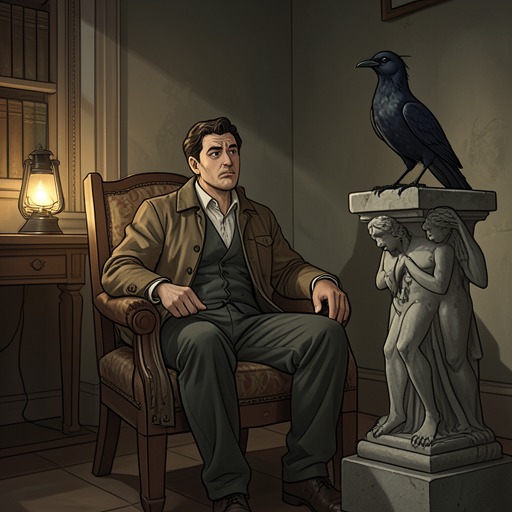
Seraphim are never directly seen or independently confirmed. They belong to the narrator’s perception at the moment when grief, supernatural suggestion, and religious longing converge. The air appears perfumed from an unseen censer swung by them, and the imagined sound of their steps gives the scene a ceremonial quality. Their presence therefore enters the poem through atmosphere rather than bodily description: fragrance and music imply a visitation whose source may be heavenly, psychological, or inseparable from the narrator’s distressed state.
The contrast with the surrounding chamber is decisive. The room has been marked by darkness, sorrow, and the Raven’s ominous presence, yet the Seraphim introduce imagery associated with celestial order and ritual. Their imagined movement does not remove the Raven or alter the narrator’s isolation; instead, it intensifies the expectation that some higher power might intervene. The sacred atmosphere becomes a promise suspended over an unchanged earthly scene.
Relation to Lenore and Grief
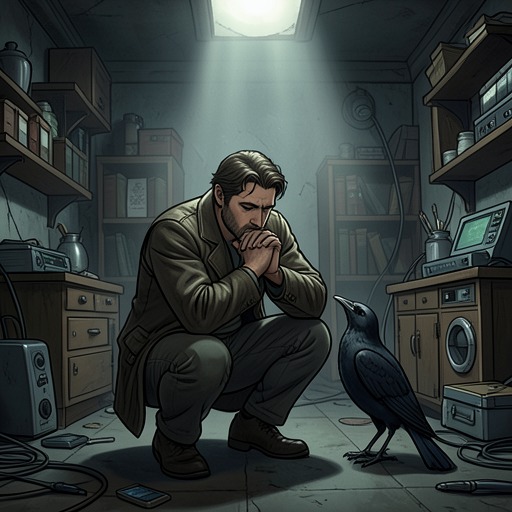
The narrator invokes the Seraphim while addressing the Raven as a possible prophet or evil creature. He asks whether God, through the angels sent into the chamber, has granted respite and nepenthe from memories of Lenore. Seraphim are thus connected not merely with heaven but with the specific hope that grief might be anesthetized, forgotten, or made bearable. The invocation treats celestial beings as possible mediators between unbearable memory and release.
Yet this imagined consolation is immediately denied. The Raven answers, “Nevermore.” The response turns the Seraphim’s sacred symbolism into an instrument of refusal: even the appearance of heavenly agency cannot secure forgetfulness. The narrator’s desire to escape memory is therefore confronted by the persistence of Lenore’s absence, and the religious vocabulary of mercy becomes another route through which loss is confirmed.
Theological and Narrative Function
Seraphim occupy the poem’s unstable border between revelation and projection. The narrator does not establish that they have truly entered the room; he experiences the air as if it had been perfumed by their unseen censer and imagines their footsteps. This uncertainty preserves the scene’s tension between a supernatural visitation and a grief-stricken interpretation of ordinary or inward sensations. The Seraphim are real within the narrator’s vision, but their power remains unverified.
Their appearance also enlarges the stakes of the Raven’s repeated answer. The bird is not asked only for a casual prediction. It is pressed on questions of divine mercy, healing, and the possibility of release from sorrow. When “Nevermore” follows the appeal to the Seraphim, the answer reaches beyond the chamber’s immediate disturbance and denies access to nepenthe itself. The imagined celestial messengers cannot interrupt the pattern established by the Raven’s voice.
Contrast with the Raven
The Seraphim are associated with fragrance, music, heaven, and respite, whereas the Raven is associated with the Nightly shore, the chamber door, and an answer that returns without variation. Their opposition is not presented as a direct confrontation between visible beings. Instead, the Seraphim form the narrator’s hoped-for counterforce to the Raven: an unseen agency of grace set against a visible bird whose speech fixes the future in negation.
The contrast ultimately favors the Raven’s material and psychological dominance. The Seraphim remain an evanescent possibility suggested by air and sound, while the Raven continues to occupy the room and repeat its word. The sacred vision therefore fails to displace the darker presence. It survives only as a brief imaginative alternative to the permanence of grief.
Significance
Seraphim give religious form to the narrator’s longing for healing while showing how little authority that longing retains. By placing them beside references to God, angels, Gilead, and Aidenn, the poem frames personal mourning as a question about whether the universe contains any remedy for irreversible loss. The Seraphim seem to announce that relief may be near, but the Raven’s “Nevermore” converts that possibility into another denial.
Their function is consequently less to provide supernatural rescue than to measure the depth of the narrator’s failed hope. The imagined censer perfumes the air, and the imagined footsteps make the chamber feel briefly hallowed; nevertheless, Lenore remains lost, memory remains active, and the Raven remains. Seraphim embody the consoling world the narrator can envision but cannot reach.