
Healing and the Limits of Saving
The Reincarnated Demon King's Host Just Wants to Live in Peace, But the Hero Won't Leave Him AloneTheo’s vocation matures as he learns that care matters even when it cannot reverse death, erase trauma, or make another person’s choices for them.
increasing Bearing strength in each event
 decreasing
Bearing strength in each eventdecreasingMagic Can Save a Life
Magic Can Save a Life
Expertise used decisively
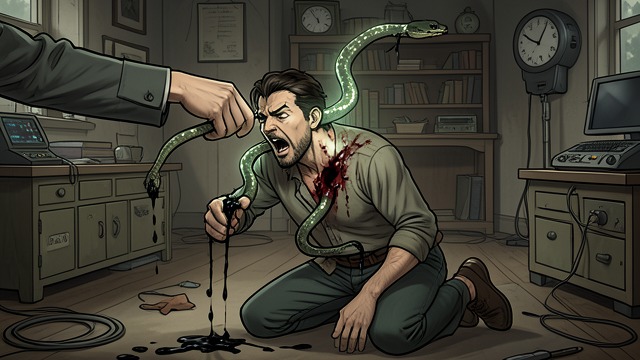
Theo removes the Basilisk venom from Khal’s body and closes his wounds. His skill makes an immediate difference where the party’s prior attempts have failed.
Success creates responsibility
The rescue reveals Theo’s unusual mana to the Hero’s party and makes his ability a source of both trust and suspicion. His competence saves Khal, but it cannot ensure that the people watching him will understand him.
The episode establishes healing as powerful without making it omnipotent. It can prevent a particular death, while leaving the larger questions of identity, trust, and political danger unresolved.
The Patient Who Cannot Be Cured
The Patient Who Cannot Be Cured
Care persists after prognosis
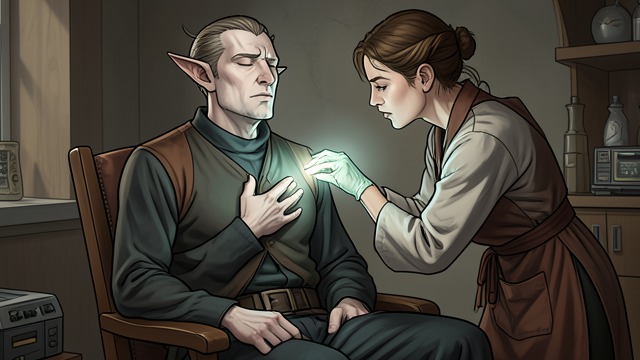
Theo recognizes that Glefald’s lung rot is terminal and gives him an estimate of how little time remains. He continues to ease the elf’s discomfort even though additional magic cannot restore his life.
The patient chooses how to die
Glefald accepts the end of his life and decides when to pass. He tells Theo that healing is not the same as controlling death, offering the healer a lesson he struggles to accept.
The scene treats patient agency as part of care. Theo cannot save Glefald, but he can listen, relieve pain, and respect a choice that belongs to the person dying.
The Ghost’s Wound
The Ghost’s Wound
Emotional pain survives death
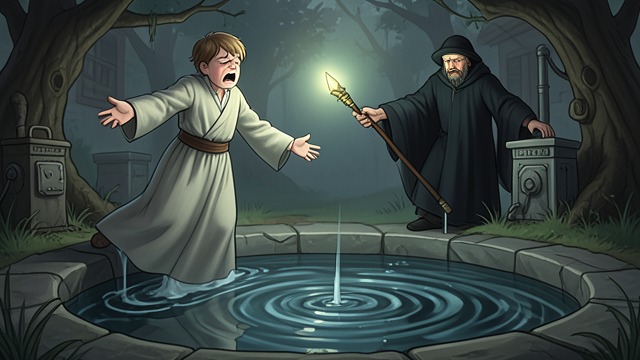
Theo discovers that the spirit at the well is a child abandoned by his brother. The ghost’s aggression is tied to fear and waiting, not a simple desire to harm the living.
Healing takes another form
Theo uses his magic to offer the boy a way home after Wicker destroys the nested corpse. The act eases the spirit’s anguish, while ritual helps settle the other ghosts.
The encounter expands healing beyond a living body without claiming that every wound can be undone. The child receives release, not restoration of the years he lost.
A Healer Risks Himself
A Healer Risks Himself
Rescue through total effort
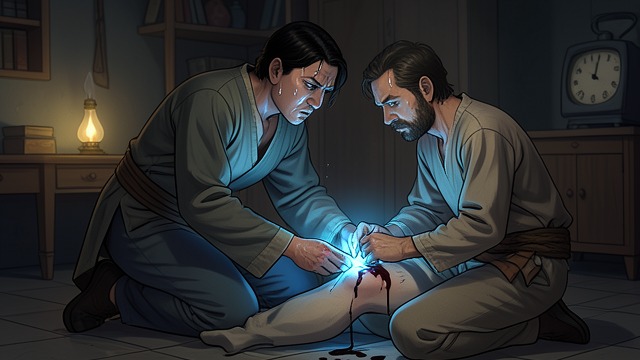
Theo channels his own and Malthios’s mana to clear the poison from Luc. He refuses to stop while even a trace remains, driven by the fear of losing the man he loves.
The healer also needs care
Theo collapses after the treatment, revealing that devotion can become self-endangerment. The party and Luc must recognize that the healer’s survival matters too.
The episode deepens the meaning of service. Theo’s love makes him courageous, but care is not improved by treating his own body as expendable.
Healing the Enemy
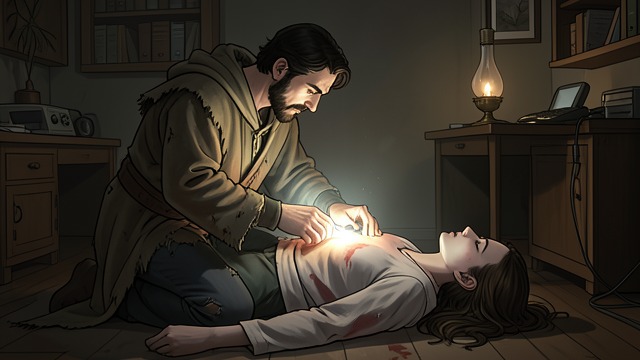
Healing the Enemy
Skill separated from approval
Theo heals Eliza after defeating her, despite his anger at how she treated Luc and her threat against him. He does not need to forgive her before deciding that he will not let her die from his wound.
A vocation reclaimed
Theo calls healing his duty, but this duty is one he claims for himself. His action differs from the compulsory service that first brought him to the court.
The choice shows that healing can be an ethical commitment without becoming obedience. Theo remains free to fight, refuse, and judge, while still choosing to preserve a life.
During Khal’s treatment in Theo’s kitchen
During Glefald’s final illness
During the Ashenhave haunting
During Luc’s recovery from Nissle’s poison
After Theo defeats Eliza in the throne room
