
Chosen Family Versus Bloodline
The Reincarnated Demon King's Host Just Wants to Live in Peace, But the Hero Won't Leave Him AloneRelationships built through care challenge the story’s competing claims that birth, status, or species should determine who counts as family.
increasing Bearing strength in each event
 decreasing
Bearing strength in each eventdecreasingParents Who Do Not Care
Parents Who Do Not Care
A family without affection
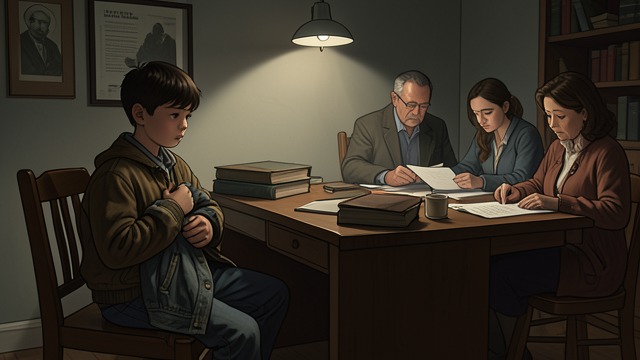
Theo’s parents push him to study and improve, hoping his ability will improve their circumstances. Their expectations help develop his talent but deprive him of the ordinary freedom of childhood.
A child learns self-reliance
Without reliable affection, Theo becomes wary of touch and closeness. He does not yet know that parental neglect is not the only possible model of family.
His guardedness is not an inborn lack of feeling. It is an adaptation to a home in which his usefulness is valued more consistently than his emotional needs.
Malthios Without a Lineage
Malthios Without a Lineage
Power replaces kinship
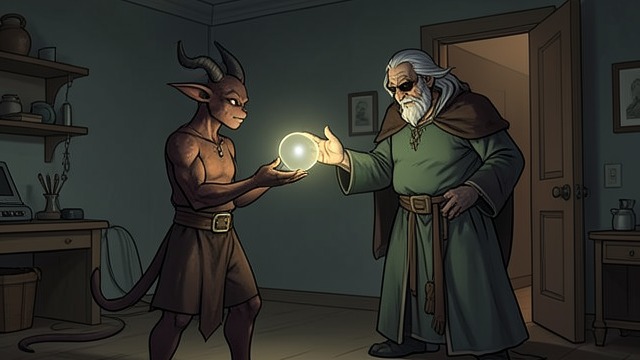
Malthios’s parents abandon him, and demon society offers no royal family or inherited right to protect him. His place depends on strength and usefulness.
A sponsor provides survival
A Demon Lord gives Malthios mana and a chance to enter Novice training. The gift saves his life but places him within a system that measures future worth through violence.
Malthios’s history parallels Theo’s without making their experiences identical. Both are shaped by families and institutions that treat survival as something earned through usefulness rather than given through care.
The Pentagram as Family
The Pentagram as Family
Friendship chosen over competition
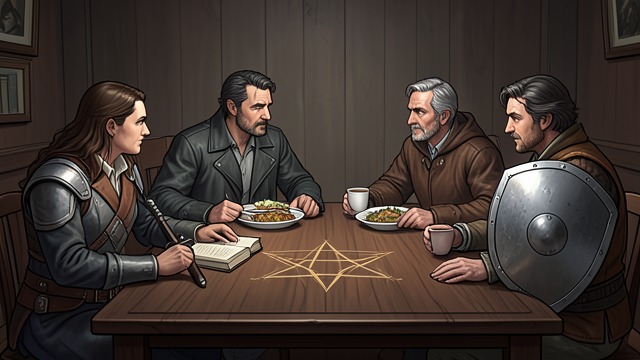
Kamil, Aym, Torq, and Foras form a group with Malthios despite a culture that offers little reason for demons to trust one another. They read, fight, eat, and train as companions.
Loyalty becomes a source of strength
The Pentagram gives Malthios a reason to use power in defense of others. Their connection helps him survive a society that otherwise treats him as disposable.
The group demonstrates that family need not depend on blood or status. Its members choose one another, and that choice is powerful enough to shape Malthios’s life long after the group is gone.
Luc’s Family and His Duty
Luc’s Family and His Duty
Kinship carries an assignment
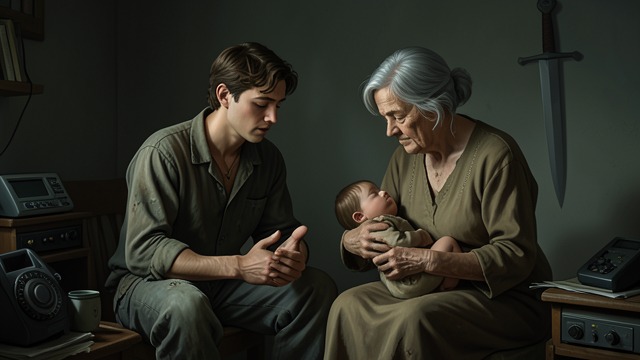
Eliza raises Luc after his mother’s death, but her care is inseparable from his training as a Hero. Luc gains an aunt and guardian while also being prepared to fulfill a role chosen for him.
Blood does not settle the question
Eliza believes she is protecting Algeya through Luc’s succession. Luc eventually recognizes that family ties do not give her the right to control his body, relationships, or future.
Their conflict challenges the assumption that bloodline defines duty. The person who loves Luc must learn that care without respect for choice can become another form of coercion.
A Community Chosen Back
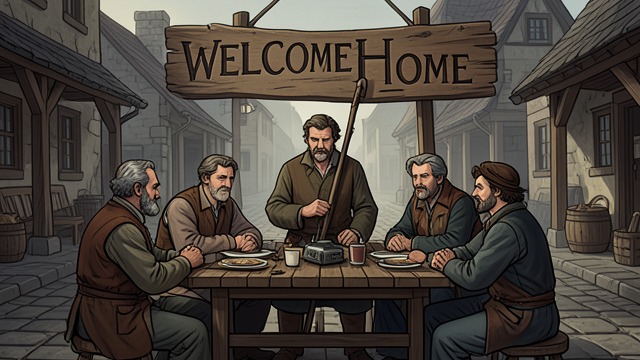
A Community Chosen Back
Relationships answer the accusation
Leafel’s residents testify when Theo is threatened with execution. Their words describe the healer who served them, not a category they have been taught to fear.
The family remains after truth
After Theo’s secret becomes public, the same village welcomes him home and makes room for Malthios. The acceptance is backed by years of shared work, grief, and mutual aid.
Chosen family becomes more than comfort for the isolated. It is a community capable of opposing institutions that judge people only by birth, power, or inherited enemy status.
During Theo’s childhood before his training
During Malthios’s first night in the dungeon years before his reign
During the Novice years after Malthios meets Kamil
After Eliza takes Luc to The Capital
When Leafel defends Theo at his trial
