
We Bleed the Same
The Reincarnated Demon King's Host Just Wants to Live in Peace, But the Hero Won't Leave Him AloneThe parallel vulnerability of humans and demons undermines the idea that one people’s suffering can justify the other’s destruction.
increasing Bearing strength in each event
 decreasing
Bearing strength in each eventdecreasingBlood in the Ruins
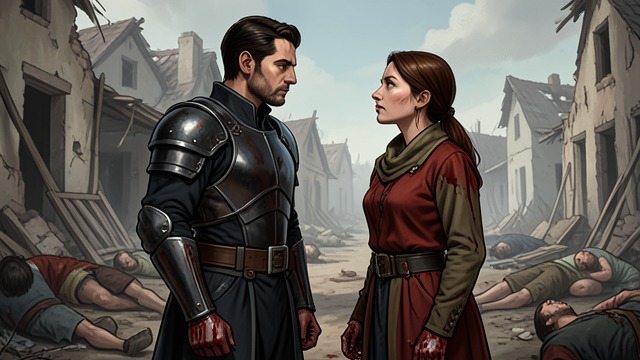
Blood in the Ruins
A shared physical truth
Malthios observes that mortals and demons bleed the same color amid a ruined village. The recognition is simple, but he does not yet allow it to challenge his belief that mortals are a plague.
Difference used as permission
He interprets mortality as weakness and sees the destruction around him as a means to a larger goal. The evidence of shared bodies fails to stop him while revenge continues to define his purpose.
The image establishes a truth the story will revisit: noticing common humanity is not enough unless it changes how power is used.
The Hero’s Scars
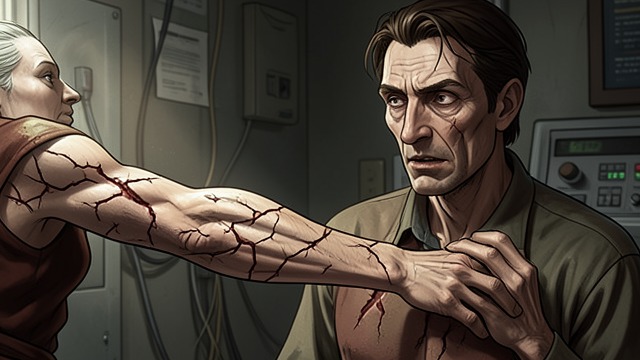
The Hero’s Scars
Duty written on the body
Theo sees the scars Luc has gained while serving as Hero and feels responsible for them because he was absent from the party. Luc views them as marks of duty, even while one scar records harm inflicted by Eliza.
A healer’s guilt questioned
Luc tells Theo not to treat every scar as proof that he failed. The scars belong to Luc’s history and choices as well as to the system that shaped him.
Their conversation shows that bodies can carry the consequences of institutions and personal decisions at once. Care does not require claiming ownership of another person’s past.
A Bandit’s False Ownership
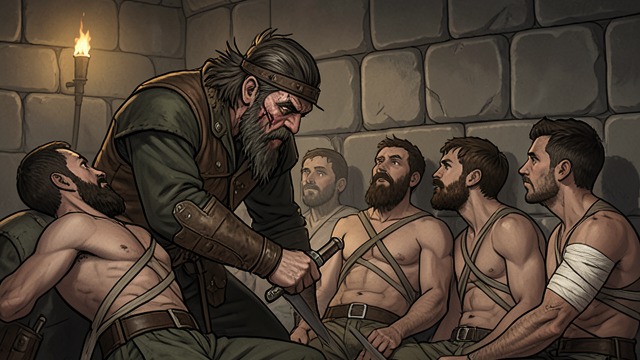
A Bandit’s False Ownership
People treated as merchandise
The bandit leader threatens to sell the party and singles out Theo as a possession to be used against Luc. His language reduces captured people to their bodies and market value.
Resistance restores personhood
Theo heals Luc while waiting for an opening, then strikes the leader and helps the party escape. The group’s coordinated response rejects the bandits’ claim that captivity grants ownership.
The episode extends the story’s concern with control beyond kings and demons. Ordinary violence can reproduce the same logic of treating other lives as tools, and resistance begins with refusing that logic.
A Demon’s Unanswered Grief
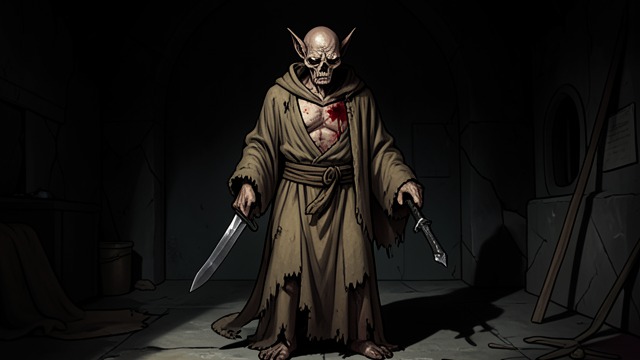
A Demon’s Unanswered Grief
Loss becomes ideology
Malthios loses the companions who had shown him that demons could rely on one another. Instead of grieving openly, he turns their deaths into an argument for vengeance against mortals.
Familiar suffering is rejected
He later sees the same vulnerability in mortals but continues to believe that their lives matter less. His experience of loss has not yet taught him to recognize the pain of those he harms.
The story distinguishes grief from moral transformation. Suffering can deepen empathy, but it can also become an excuse for repeating harm unless someone chooses to question the meaning assigned to it.
Shared Blood, Different Choices
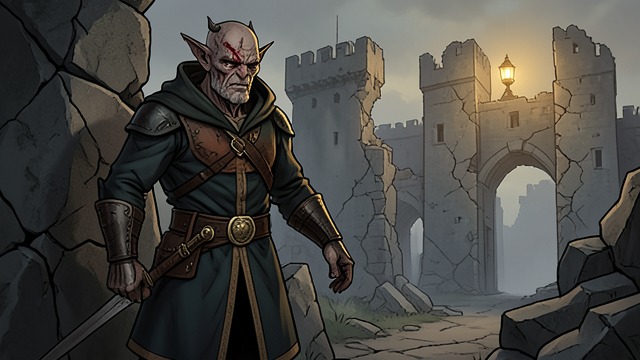
Shared Blood, Different Choices
The conqueror’s distinction collapses
Malthios tells the gathered demons that mortals and demons need not remain enemies. He has killed for both sides, and now chooses to end the organized violence rather than preserve a hierarchy built on bloodshed.
Common vulnerability becomes responsibility
The shared fact of bleeding does not make the histories of the two peoples identical. It does make the continued use of suffering as proof of superiority harder to defend.
The theme resolves through action rather than sentiment. Malthios’s decision to dismantle the fortress carries more weight than his recognition that all bodies can be wounded.
During Malthios’s campaigns before he becomes Demon King
During Theo and Luc’s journey north
During the bandit ambush in the northern forest
After the Pentagram’s deaths and before Malthios’s defeat
After Malthios defeats Tyraz
