Absence Makes the Heart Grow Fonder
The Reincarnated Demon King's Host Just Wants to Live in Peace, But the Hero Won't Leave Him AloneAbsence Makes the Heart Grow Fonder, the title of Chapter 25, names a pattern that develops well beyond a simple parting: when Luc leaves Leafel, Theo’s insistence that he is fine gives way to sleeplessness, physical distress, and an attachment he had tried to dismiss. The idea returns in altered form when Theo is drawn back toward the Hero’s mission and ultimately risks himself to save Luc. Across these moments, absence is not a cure for feeling but the condition that makes its force harder to deny.
A Title About Recognition
The expression appears as a chapter heading in the contents, not as dialogue spoken by a character. Its familiar suggestion—that separation intensifies affection—fits Theo’s first experience of Luc’s departure, but the story gives the sentiment a troubled edge. Theo does not welcome the realization or treat love as an uncomplicated reward. He has reasons to keep Luc at a distance, and the emotional cost of doing so arrives first as an unwanted disruption of ordinary life.
That pattern is complicated by Theo’s bond with Malthios. The Demon King is a presence inside Theo’s mind and body, able to know his thoughts and feelings; Theo’s resistance to Malthios’s commands has brought him severe headaches and verbal abuse. The relationship makes privacy and solitude difficult even before Luc leaves. In this context, missing Luc is not simply an empty room or a quiet house: it is a new and distinct absence within a life already crowded by another consciousness.
Luc’s Departure and Theo’s Denial
After a meal at Theo’s home, Luc’s companions arrive to collect him. Theo sees Luc to the front door; Luc looks back sorrowfully, and Theo raises a hand in farewell before closing the door so he will not watch him walk away. He tells himself that this is the end of their paths crossing: Luc is the Hero, with a mission that will take him far from Leafel, and Theo imagines that Luc will find other people with whom to form bonds. Theo wishes him well and reasons that someone else should help Luc heal from a stolen childhood and a harrowing life purpose. He also insists that Luc should stay far away from him and Malthios.
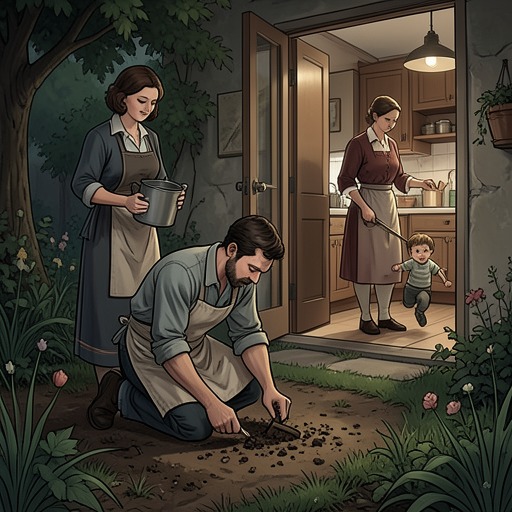
The practical gestures that follow expose the limits of this reasoning. Theo tells himself that he is handling Luc’s absence well, although Luc had been in his life for only three days. At dinner, Theo reaches for a second plate by accident and nearly throws it away. That night, he cannot sleep; the bed feels cold, barren, and too large. The second place setting and the suddenly excessive bed make absence tangible, translating an attachment Theo had tried to explain away into mistakes and bodily discomfort.
Longing in the Body
The distress persists into the next morning. Nib notices Theo looks unwell when they visit for balm for a stiff lower back, but Theo answers that he is fine. The denial has become a performance for others as well as for himself: the change is visible enough to draw comment, even as he refuses to name it.
In the following weeks, several pressures gather rather than resolve. Theo sleeps poorly and suffers headaches because of Malthios’s persistence. He does not let Malthios out into the forest to release his frustration, fearing that he is too unstable; Malthios largely answers with insults. Theo tries to distract himself by taking on too much work, going to bed late and rising early. Hayden visits every day, offering flirtatious comments and trying to help, but these attentions do not displace Theo’s fixation on Luc. Theo describes a tightness in his chest alongside nightly nightmares in which Luc lies broken and covered in blood, his blue eyes unseeing. When Theo wakes feverish, clammy, and unable to prepare more than bread with jam and medicinal tea, Malthios attributes the illness to his feelings for a boy. The passage does not reduce Theo’s illness to longing alone: it presents emotional distress amid poor sleep, headaches, nightmares, and overwork.
Separation Becomes a Choice
The expression gains another meaning when Luc recognizes that Theo is being pulled back toward a life of duty and control. Luc fears that, by returning, Theo is being dragged against his will and that he might as well have put a chain around Theo’s neck himself. Theo’s answer preserves the importance of choice: he acknowledges that he could have remained in Leafel and let Luc die, but knowingly accepts the cost of returning. Their separation has made his attachment impossible to dismiss, yet the decision is not portrayed as mere helplessness. Theo distinguishes the choice he makes for himself from the coercive demands surrounding them.
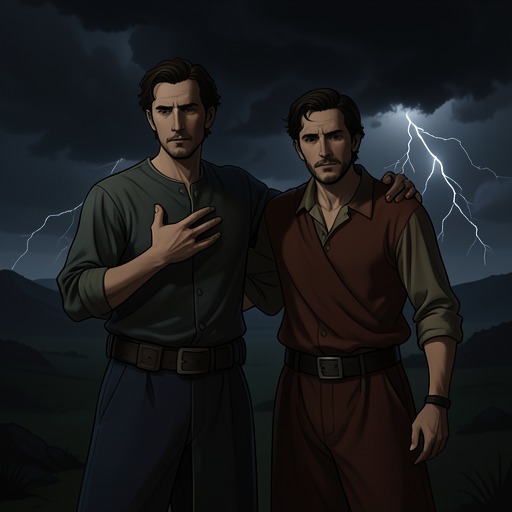
That distinction reaches its sharpest form when Tyraz raises his sword over Luc. Theo feels Malthios’s power flood through him but remains in control; he breaks the barrier holding him prisoner and runs without a plan or weapons. He throws himself over Luc, placing his body between Luc and Tyraz’s blade, and calls inwardly to Malthios. Malthios answers that he has Theo. The earlier image of the empty, oversized bed has become a scene of immediate physical risk: Theo no longer merely suffers Luc’s absence but acts to prevent it from becoming permanent.
The Expression’s Changing Force
The chapter title’s maxim begins as an explanation for unwanted longing, but its reach extends to the later conflict between affection, duty, and freedom. Theo first tries to make Luc’s departure sensible by imagining Luc’s future happiness elsewhere; his own sleeplessness and nightmares reveal what that self-explanation leaves out. When separation becomes entangled with danger and coercion, Theo’s response is not to deny his feelings but to choose what he is willing to risk for Luc.
The phrase therefore marks a development rather than a simple romantic lesson. Absence makes Theo’s attachment legible to him, while the story tests that recognition through concrete consequences: a second plate, a cold bed, weeks of strain, and finally a barrier broken in desperation. Love here does not erase fear, conflict, or the pressure of duty. It becomes visible in the choices Theo makes when keeping Luc at a distance is no longer emotionally or physically possible.