Hero Magic Lifespan Constraint
The Reincarnated Demon King's Host Just Wants to Live in Peace, But the Hero Won't Leave Him AloneHero Magic Lifespan Constraint is the established cost of the Hero’s power in Algeya. The gift grants exceptional physical resilience, speed, strength, accelerated healing, and resistance to magic, but it burns through the user’s body at a devastating rate. Because every recorded Hero barely survived into their twenties, the power is not simply an advantage in battle; it is a shortened life imposed upon the person chosen to wield it.
Definition and Mechanism
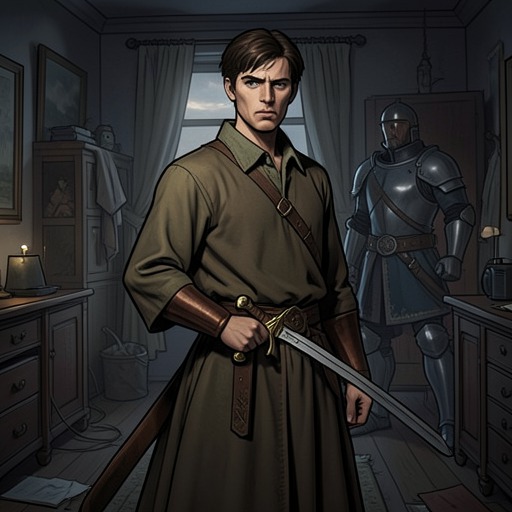
The Hero’s abilities are primarily physical rather than a broad collection of ordinary spells. They include resilience, speed, strength, quicker healing, and resistance to magic. These talents must be honed through training, often from childhood: Eliza began at twelve, while Luc began at five. The contrast between the gift’s spectacular battlefield performance and its bodily cost establishes the central exchange of the Heroic system. The more completely the body is shaped into a weapon, the less time that body is allowed to endure.
The constraint is presented as a known historical pattern rather than a private illness. All Heroes on record had barely made it through their twenties, making early death an expected feature of the office. Luc’s ability to fight with extraordinary fluency, and his confidence as the Hero, therefore exist alongside an implicit deadline. His strength is real, but it cannot be separated from the life-force it consumes.
Succession and Institutional Use
The lifespan cost explains why Eliza begins looking for a successor while she is still active. At around Theo’s fourteenth year, rumors spread that a new Hero had been found to train in her place, because Eliza was already showing signs that her time was catching up with her. Her battle with Malthios had taken a substantial physical toll, making succession a practical necessity within the system rather than a distant contingency.
Theo’s own magical test places him inside that succession structure. His deep emerald-green healing power marks him as an unusually gifted healer, and the court mage declares that someone with such a gift belongs in the Hero’s party. He is ordered to study under the greatest healer in Algeya and later enter training with the next Hero. The decision is made for him while he is still a child, and his parents’ disappointment that the result will not benefit them exposes the gap between personal life and state-directed utility.
When Theo turns sixteen, the machinery of succession becomes immediate. Guards are scheduled to take him to the capital to meet the young Hero and the other companions, after which they are meant to train together until the Hero comes of age. Their assigned future is to purge the remaining Demons and protect ordinary people. The lifespan constraint is therefore converted into an institutional timetable: the declining Hero requires a replacement, the replacement must be trained early, and the next generation is prepared before the previous one fails.
Bloodline, Duty, and Refusal
The short lifespan also gives political force to the demand that Luc continue the Hero’s bloodline. Julius says that Eliza wanted Luc to sire the next Hero, a goal that could not be achieved through either of Luc’s former male relationships. The requirement treats Luc’s body as a reproductive instrument as well as a military one, binding succession to heterosexual lineage and making his private attachments obstacles to the state’s plan.
Eliza frames this expectation through duty. She calls Theo her blood and condemns him for running away from his assigned role, while Theo condemns the system that turns a child into a weapon. Their conflict is not merely personal: it pits inherited obligation against the cost already written into the Hero’s body. If the office shortens the lives of its bearers, then demanding that Luc extend the office through his descendants perpetuates both the power and its sacrifice.
At the trial of the Demon King’s Host, Eliza makes the consequence explicit by asking whether Luc is choosing to end their bloodline and discard everything for which he has trained. Luc answers that he has made the only choice he has ever made for himself: he chooses a quiet, peaceful life with Theo and argues that people born with the Hero’s gift should be able to choose their fate rather than remain bound to duty. His decision rejects the lifespan constraint’s wider social meaning, not by denying the cost, but by refusing to let the cost authorize control over his future.
Consequences for the Plot
The rule shapes Theo’s fear of meeting the new Hero. Although he is trained to become a healer for the Hero’s party, he knows that the Hero’s role leads toward a life that is brief even by the standards of the setting. He hopes never to meet the successor, then abandons the expected path on his sixteenth birthday, traveling with Malthios for two years before reaching a remote northern village. His escape is consequently both a flight from compulsory service and a rejection of the biological schedule imposed on Heroes.
The rule also sharpens the contrast between Theo’s healing and Luc’s heroism. Theo can draw upon Malthios’s immense mana and becomes a stronger healer than Camden, though he deliberately restrains his ability to avoid suspicion. Luc’s power is more visibly spectacular: during a training duel, his movement is effortless, his sword seems to extend his arm, and his resistance, speed, strength, and healing make him a magnificent fighter. Yet the same excellence that makes him admired accelerates the bodily expenditure that gives the Hero’s office its tragic reputation.
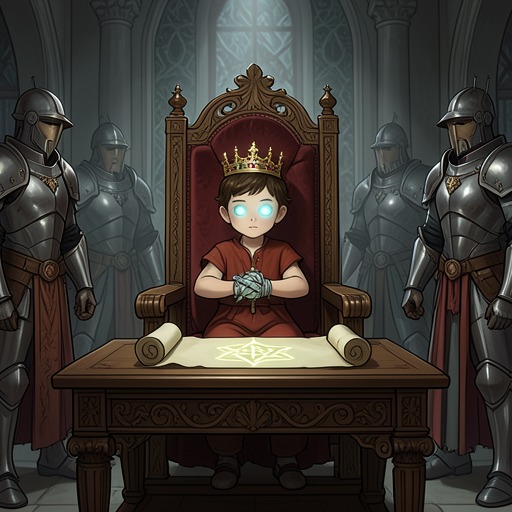
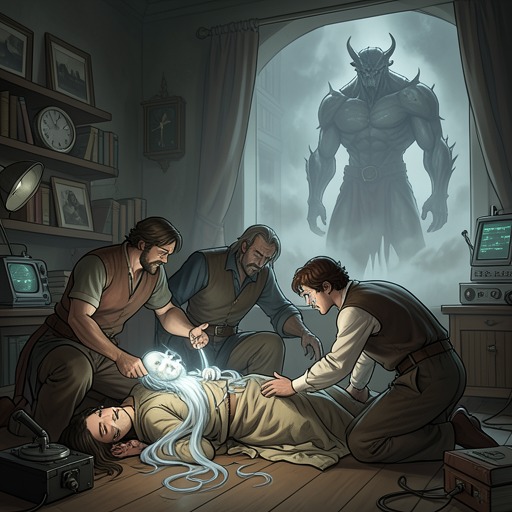
The court’s treatment of Theo further reveals how the Heroic system manages bodies under the justification of public safety. After Theo’s identity as Malthios’s host is confirmed, the court mage and Eliza order him restrained and taken to the capital for trial. King Alexis states that the choice of Theo’s fate belongs solely to Hero Luca, placing extraordinary authority in the hands of a person whose own life has been consumed by the same heroic institution. Luc’s eventual decision to protect Theo and abandon the demand to continue the bloodline transforms the rule from background lore into a direct challenge to the political order.
Narrative Significance
Hero Magic Lifespan Constraint prevents the Hero from functioning as an uncomplicated chosen-one fantasy. The gift offers speed, strength, healing, and magical resistance, but its price is time. Training from childhood, succession before adulthood, and the expectation of a new bloodline all follow from that price, creating a cycle in which the state preserves heroic power by spending heroic lives.
The ending turns that cycle toward freedom rather than inheritance. Luc does not deny that he is a Hero, nor does he deny the responsibilities associated with protecting others. Instead, he rejects the assumption that the gift determines the shape of his life. His choice to live with Theo challenges both the compulsory duty attached to the Hero and the reproductive future demanded by Eliza. The constraint thus becomes the foundation for the book’s larger argument: power that consumes a person’s life cannot automatically claim the rest of that person’s choices.