Hero’s Party Oath
The Reincarnated Demon King's Host Just Wants to Live in Peace, But the Hero Won't Leave Him AloneThe Hero’s Party Oath is the governing promise of the Hero’s party: its members are expected to place the mission above personal interests and to pursue the protection of Algeya and the defeat of demons even when doing so demands sacrifice. The oath gives the party its institutional legitimacy, but its force becomes morally unstable when officials use it to command bodies, relationships, and choices that exceed the actual work of protecting others.
Definition and Institutional Force
The oath is presented as a collective obligation rather than a private aspiration. When Bryony rejects orders that would force the party to abandon Luc while he is still recovering, Avery answers that the members swore to put the mission before everything. He treats the oath as an absolute hierarchy in which personal loyalty, friendship, and even a companion’s medical condition must yield to operational necessity. The disagreement exposes the oath’s central tension: it can coordinate a group against the Demon King’s forces, but it can also turn service into obedience for its own sake.
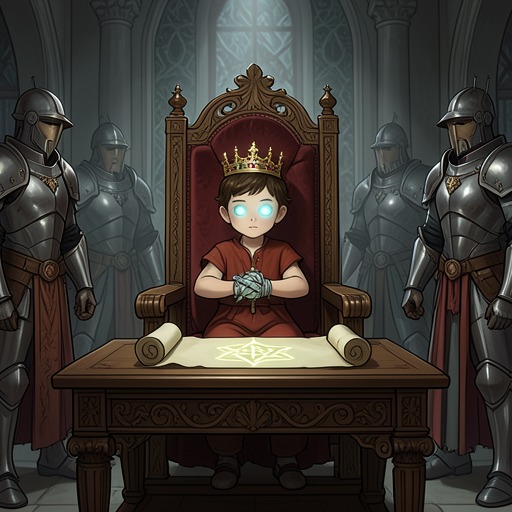
The state’s system reinforces this interpretation from childhood. After Theo’s emerald healing gift is recognized, the court mage declares that someone with such power belongs in the Hero’s party, sending him to study with Algeya’s greatest healer before training with the next Hero. When Theo turns sixteen, Camden explains that guards will take him to the capital to meet the new young Hero; the pair will train together until the Hero comes of age, after which responsibility for purging the remaining demons and protecting common people will pass to them. The oath therefore operates within a larger system of recruitment and assignment in which exceptional ability is treated as a public resource before the individual can meaningfully choose a life.
Conflict with Personal Loyalty and Care
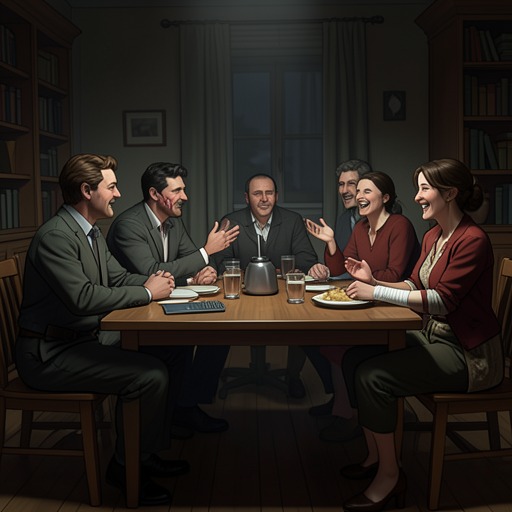
The oath becomes a direct source of conflict during Luc’s recovery. Avery and Emi arrive with orders from the court mage and Hero Eliza, expecting the party to comply, while Bryony argues that she and the other volunteers are not commanded by the council in the same way. Wicker dismisses the threat of reporting them and points out that the King and council still need experienced members for the mission against the Demon King’s second; sending inexperienced recruits would be foolish. Their resistance reveals that practical solidarity can oppose the official use of the oath without denying the party’s broader purpose.
Theo’s position is even more concrete: he refuses to leave until Luc is completely healthy again. Care is not treated as a distraction from the mission but as an immediate duty to a person whose life has already been subordinated to heroic demands. The sick room becomes the oath’s testing ground, where recovery, friendship, and command collide. The conflict ends not with the party abandoning its larger fight, but with its members refusing to let institutional urgency erase the needs of the people who carry out that fight.
Luc states the oath’s alternative meaning when he answers that his promise was to protect the people of Algeya and defeat demons, not to surrender his humanity, emotions, or free will. He adds that the party should be grateful he has retained those qualities, since acting according to their preferred, unfeeling interpretation would have resulted in their deaths. His argument separates the mission’s ethical end from the coercive methods used in its name. The oath can demand courage and responsibility; it cannot legitimately require the extinction of moral judgment.
Bloodline, Romance, and the Future of Service
The oath is also entangled with a hereditary model of heroism. Julius explains that Hero Eliza ordered him not to join Luc’s party, threatening to take everything from him if he refused, because she wanted Luc to continue their bloodline and sire the next Hero. Under this logic, Luc’s romantic life is not private: his body is part of a succession plan, and relationships are evaluated according to whether they preserve the heroic line.
Luc’s earlier relationships already illustrate the cost of this system. He recalls a maid in training and a squire from the capital, followed by shorter relationships formed during the party’s stays in other towns. He describes lasting intimacy as incompatible with the fate of the Hero, whose duties repeatedly demand departure. The oath thus produces a distinct form of enforced temporality: attachments are expected to end because the next mission will always take precedence.
Theo and Luc challenge that future through a promise of their own. Theo recalls promising to wait for Luc regardless of how long it took, while Luc gives him a ring that belonged to his father, a member of an adventuring party who saved his companions from a demon attack but lost his own life. When Luc places the ring on Theo’s marriage finger, inheritance changes meaning. The object no longer points only toward heroic sacrifice or the continuation of a bloodline; it becomes part of a chosen partnership that values shared life over reproductive succession.
Judgment and Reinterpretation
The oath’s authority reaches its crisis in the trial of the Demon King’s Host. After Theo’s identity and protection of Malthios become grounds for accusation, the court treats the matter as one for institutional judgment, while King Alexis declares that the choice of Theo’s fate belongs solely to Hero Luca. Even this apparent transfer of authority remains tied to the Heroic system: the person whose life has been governed by duty must now decide whether duty requires punishment, execution, or another response.
The people of Leafel contest the court’s isolation of Theo by opening a mirror spell into the capital proceedings. Micah, Imani, Dale, Dmitri and his parents, Nib, Amaya, Hayden, and the wider town demand Theo’s release. Their intervention supplies a communal answer to the oath’s supposed purpose. Protection of common people cannot be reduced to an abstract command from the capital when the people themselves recognize Theo as someone worth protecting.
Luc ultimately refuses to treat Theo as a disposable enemy or a problem to be removed. He describes Theo as Malthios’s prison and himself as Theo’s humble guard, promising not to let Theo out of his sight. Faced with Eliza’s accusation that he is ending their bloodline and throwing away everything for which he was trained, Luc identifies his decision as the only choice he has ever made for himself. He chooses a quiet, peaceful life with the man he loves and argues that the world should become one in which those born with the Hero’s gift can choose their fate rather than remain bound to duty.
Narrative Significance
The Hero’s Party Oath begins as a mechanism for organizing resistance to demons, but the plot gradually distinguishes public responsibility from institutional ownership. Theo is recruited because his healing gift is useful; Luc is pressured because his heroic status is useful; Julius is separated from him because the bloodline is useful. Against this logic, the oath’s humane core survives only when its subjects interpret protection as responsibility toward actual people rather than obedience to commands.
The oath therefore does not disappear at the story’s end. It is morally rewritten. Luc still accepts the duty to protect Algeya and defeat demons, and the party still recognizes the danger posed by Malthios, but neither obligation authorizes the destruction of autonomy or intimacy. The final conflict turns the oath from a demand for mission-first sacrifice into a principle that must include humanity, free will, chosen family, and the right of heroic individuals to determine what kind of future their service is meant to protect.