Malthios’s Obsidian Crown
The Reincarnated Demon King's Host Just Wants to Live in Peace, But the Hero Won't Leave Him AloneMalthios’s Obsidian Crown is the visible emblem of Malthios’s authority as Demon King: a crown made of obsidian shards, described as heavy on his head. It appears at the beginning of his reign and again in the moment of his defeat, its changing position marking the rise and sudden vulnerability of a ruler whose power is also carried through violence and magic.
Appearance and Meaning
The crown is identified by its material and weight rather than by elaborate description. As Malthios sits on his throne, the obsidian-shard crown rests heavily on his head. The image joins the object to the office: Malthios is not merely a powerful demon but the newly established king, and the crown makes that status immediately legible. Its weight also gives kingship a physical presence, though the narrative does not explain whether the burden is symbolic or simply literal.
The crown’s importance is therefore distinct from the mechanics of Malthios’s magic. In the scene of his defeat, he reaches for a sigil inked on his forearm and pushes mana into it; the crown is not shown enabling that act. The text presents it as a marker of kingship, while the sigil is the explicitly named focus of his attempted magic.
The Crown at the Start of Malthios’s Reign
The crown appears during the first month of Malthios’s rule, when he sits on his throne reflecting that governing has been less different from commanding than he expected, only on a larger scale. The reign has begun with the cold-blooded killing of a Demon Lord and a dozen Novices. This juxtaposition places the crown amid the consolidation of power: it signifies a new office, but the authority it marks has been established through lethal force.
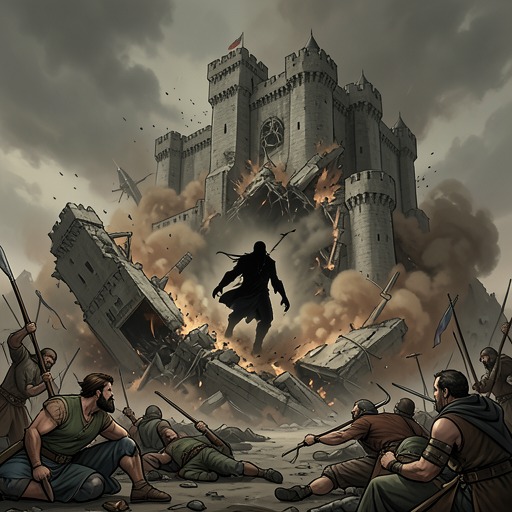
Malthios’s account of returning to the village to kill the Hero further darkens the image of his rule. The mortals there have already died after using so much power to defeat his friends that their mana and life force were exhausted. Malthios takes satisfaction in killing the survivors and burning the village to ash. The crown is present as he reflects on these acts, linking the outward sign of sovereignty to a reign whose first month includes revenge and destruction. It does not itself cause or authorize the violence; its significance comes from the way the narrative places it upon the ruler who carries it out.
The Crown at Malthios’s Defeat
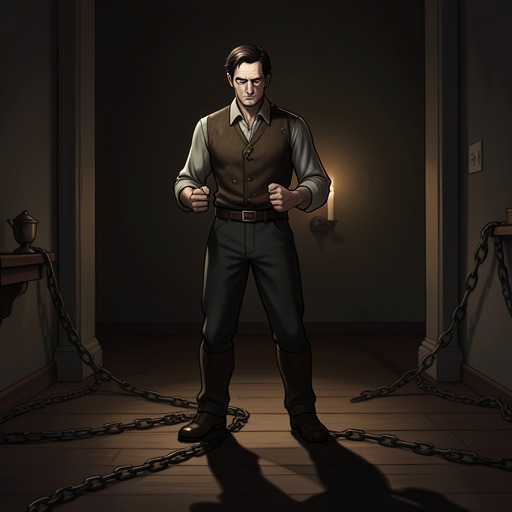
The second major appearance comes during Malthios’s confrontation with Eliza. After she tells him to die, Malthios declares that she has not seen the last of him and fumbles for the sigil on his forearm. As he drives mana into it, the crown slides from his head and his vision darkens. The moment gives the object a concrete role in the scene without establishing that it falls, breaks, or is taken by anyone: it loses its settled place on the king’s head as his immediate hold on power fails.
The contrast between crown and sigil sharpens the reversal. The crown has represented Malthios’s public status, but his last effort depends on the mana and sigil he reaches for as Eliza stands over him with her sword. His declaration insists that defeat is not final even as his vision goes dark. The crown’s slip thus accompanies the apparent end of this encounter, not a confirmed destruction of the object or a permanent end to Malthios’s story.
Narrative Significance
The crown frames Malthios’s kingship through two sharply opposed scenes: enthroned at the start of his rule, then slipping as Eliza defeats him. Between them, his first month shows how authority becomes larger in scale without making him less personally violent. The object condenses that political change into a physical image, but the narrative keeps its powers limited: it identifies the Demon King and marks his reversal, while the actual magical act in the defeat scene is associated with the sigil on his arm.