
Mortality, Grief, and the Living
The Reincarnated Demon King's Host Just Wants to Live in Peace, But the Hero Won't Leave Him AloneThe encounters with dying friends, lost spirits, and immortal demons connect grief to the question of how to value a limited life.
increasing Bearing strength in each event
 decreasing
Bearing strength in each eventdecreasingThe Hero’s Short Horizon
The Hero’s Short Horizon
Magic consumes its wielder
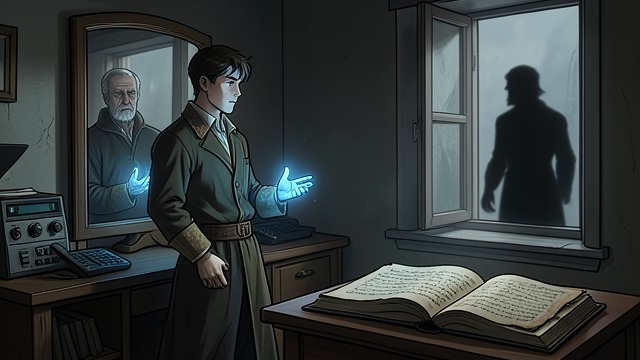
The Hero’s power burns through life force, and the Heroes recorded before Luc rarely live beyond their twenties. Eliza begins seeking a successor as her own strength approaches its limit.
A future shortened by service
Luc’s training gives him extraordinary abilities, but the role makes his young death seem ordinary to the institutions that depend on Heroes. He has learned to expect sacrifice before he has had the chance to choose a life.
The lifespan constraint makes the Heroic system’s costs bodily and immediate. It also explains why Luc’s desire for a peaceful future is not a rejection of life-saving work but a demand to have a life of his own.
Glefald’s Chosen Ending
Glefald’s Chosen Ending
A healer cannot reverse time
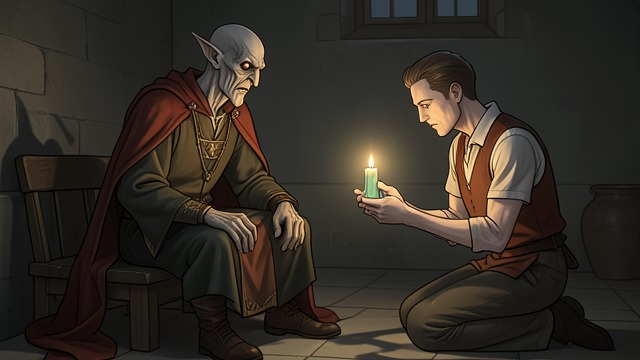
Theo treats Glefald’s lung rot but cannot stop it from returning. The elf knows he is near death and does not want his final days turned into an endless campaign to keep him alive.
Dignity remains with the patient
Glefald decides how to approach his death and tells Theo to keep faith in himself. His acceptance gives Theo a model of care that respects the patient’s own understanding of what a good ending means.
The moment challenges the healer’s impulse to equate love with saving. Theo’s continued presence matters even when there is no cure to offer.
The Pentagram’s Blood Tears
The Pentagram’s Blood Tears
Immortality does not prevent grief
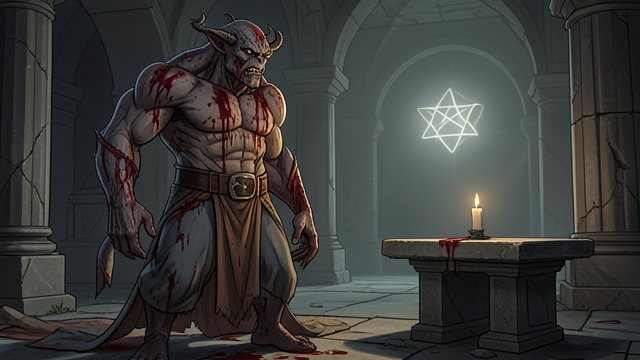
Malthios survives the destruction of the Pentagram but is left with injuries and the knowledge that his friends are dead. Demonic tears take the form of blood, making grief appear as a wound.
Memory is kept at a distance
Malthios turns away from the pain and lets anger shape his purpose. The years that follow do not heal the loss; they make his recollections harder to access.
The contrast unsettles the idea that immortality makes time plentiful. Malthios has centuries, but time without remembrance or connection becomes another form of deprivation.
The Forgotten Child at the Well
The Forgotten Child at the Well
Waiting becomes a haunting
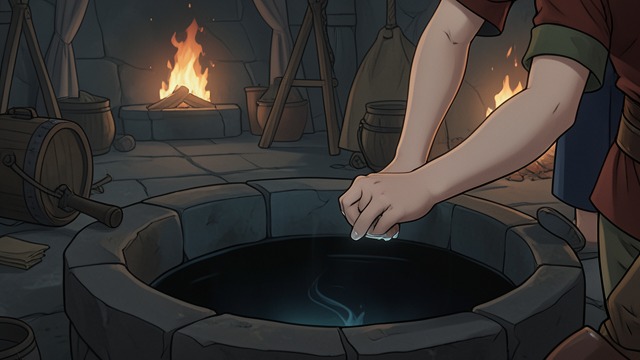
A child is lowered into a well by an older brother who promises to return. The boy dies alone, and his ghost continues to wait long after the person he trusted has gone.
The living hear the memory
Theo experiences the child’s fear and hunger when he touches the well. Wicker and Theo release the spirit through fire, ritual, and healing, while the child finally receives an answer to the promise that was broken.
The haunting makes neglect endure beyond the child’s death. It also shows that listening to the dead can reveal what violence looked like to the person who suffered it.
Life After the Demon King
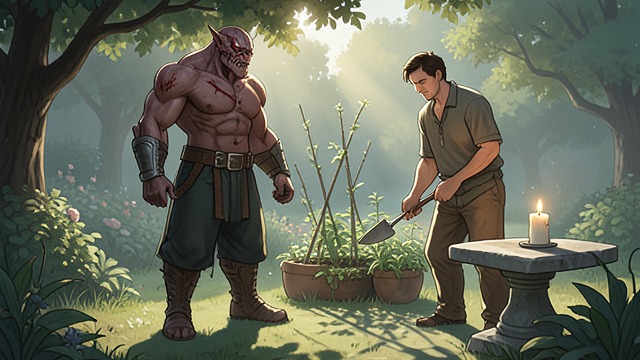
Life After the Demon King
Mortality remains meaningful
Malthios, who once dismissed mortal lives as too brief, learns to value the days Theo spends gardening, reading, and caring for neighbors. The ordinary future matters precisely because it can be lost.
Grief carried rather than erased
Malthios begins remembering his friends while also forming new relationships. Theo does not replace the Pentagram; his presence helps Malthios carry their memory into a life they never got to share.
The story does not make grief vanish with victory or romance. It suggests that a finite life can hold value through the choices and connections made within it.
Before the current generation’s quest
During the final days of Glefald’s illness
After Malthios escapes the Hero’s assault
During the Ashenhave ghost crisis
During the first year after the war
