Hero’s Duty to Purge Demons
The Reincarnated Demon King's Host Just Wants to Live in Peace, But the Hero Won't Leave Him AloneHero’s Duty to Purge Demons is the central public rule governing the Hero’s office: the Hero is expected to put the fate of the world before every private bond and ultimately kill the Demon King. In the trial surrounding Theo Bladefoot and Malthios, this obligation is presented not as a discretionary preference but as the authority that determines guilt, loyalty, inheritance, and the future of the heroic institution. Its decisive complication is that Luc accepts the duty’s power while refusing to let it dictate the timing and shape of his entire life.
Definition and Institutional Authority
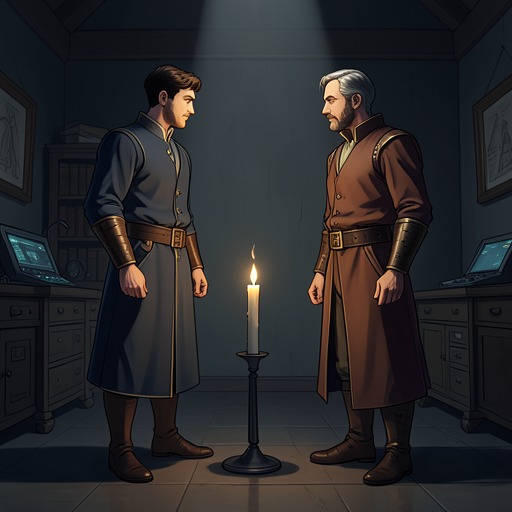
The rule is articulated during the capital trial after Theo’s identity as the Demon King’s host has been exposed. King Alexis states that the fate of Healer Theo belongs solely to Hero Luca, even as members of the court object that Luc is biased because he and Theo were lovers. The arrangement gives the Hero an extraordinary judicial burden: Luc is not merely a combatant sent to defeat a supernatural enemy, but the person empowered to decide whether the host must die.
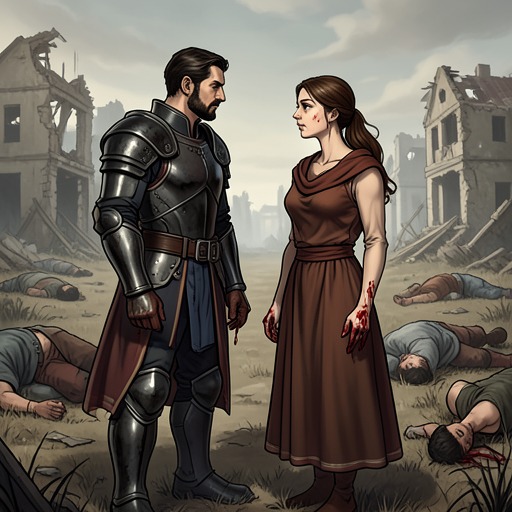
Hero Eliza voices the strictest formulation of the principle. She insists that the Hero’s duty is to place the fate of the world above all else and trusts Luc to honor that command. Her position treats the office as a hereditary and institutional obligation rather than a private identity. The rule therefore reaches beyond the immediate danger posed by Malthios; it also protects the continuity of the Hero’s bloodline and the political order built around heroic service. Eliza’s later accusation that Luc is choosing to end their bloodline and discard everything for which he was trained makes the reproductive and dynastic consequences of the duty explicit.
Conflict with Personal Knowledge and Consequences
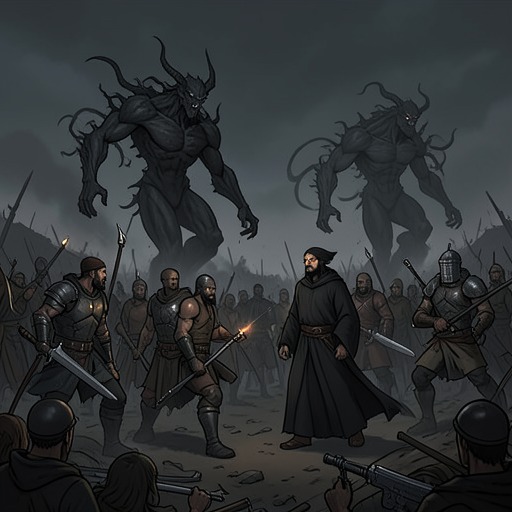
The rule assumes that the Demon King remains an enemy who must be destroyed. Yet Malthios tells Luc that the organized demonic threat has already been broken: he destroyed the Demon Fortress and everyone within it, leaving only a few lesser demons and demon-created monsters for competent adventurers to handle. On that account, there is no longer any practical need for a Hero. This claim does not erase the rule, but it changes the circumstances in which the rule operates. The world still possesses a legal and symbolic expectation that Malthios must die, even after the immediate military necessity has diminished.
Malthios also explains why he no longer wants the role that made him the target of the Heroic mandate. After watching his only real friends slaughtered by a Hero, he initially sought power and revenge, but Theo brought him back to the possibility of ordinary living through peaceful life, good food, and true friendships. Malthios presents his destruction of the fortress as an act of protection for Theo and Theo’s world, even at the cost of his own life. The confession turns the supposed absolute opposition between Hero and Demon King into a moral dispute over whether identity, history, and present conduct can matter alongside inherited categories.
The rule also exposes the cost of forcing one person to embody public safety. Theo recognizes that returning to the capital means surrendering his freedom and possibly giving himself over to execution, yet he comes back because Luc’s life is at stake. Luc, in turn, understands that Theo is being dragged into danger because of him and compares his helplessness to putting a chain around Theo’s neck. Their relationship makes the rule visible as a system of coercion: duty does not remain in the courtroom but reaches into love, bodily freedom, and the choices available to both men.
Luc’s Interpretation of the Duty
Luc does not deny that the rule applies to him. Facing the court, he declares that as the Hero it is his duty to kill the Demon King. The statement initially appears to confirm Eliza’s position and places Theo’s life in immediate peril. Luc then separates the existence of the duty from its timetable, adding that he alone can choose when the killing will occur. This distinction is the rule’s decisive reinterpretation: the Hero’s obligation remains formally intact, but its execution is postponed until after Luc and Theo have had their years together, grown old, and lived what Luc calls their happily-ever-after.
Luc’s decision converts an apparent sentence into a conditional future. He chooses to keep Malthios under observation rather than release him, describing Theo as Malthios’s prison and himself as the prison’s humble guard. The arrangement preserves a recognizable version of public protection while refusing immediate execution. Luc proposes living with Theo and Malthios in a small northern village, away from the general population, so that containment, companionship, and safety can coexist rather than being treated as mutually exclusive.
The decision is also a direct rejection of Eliza’s understanding of heroism. When she asks whether Luc truly means to sacrifice the bloodline and abandon the career for which he was trained, Luc answers that this is the only choice he has ever made for himself. He chooses a quiet and peaceful life with the man he loves and argues that the world should become one in which people born with the Hero’s gift can choose their fate instead of being bound permanently to duty. The rule thus becomes the object of reform from within: Luc does not simply evade the office, but challenges the assumption that heroic power cancels personal autonomy.
Bloodline, Love, and Alternative Futures
The pressure to obey the rule is inseparable from the demand that Luc continue the Heroic bloodline. Julius reveals that Eliza wanted Luc to sire the next Hero and had threatened to take everything from Julius if he remained a distraction. This information clarifies why Luc’s relationships have repeatedly been treated as temporary or expendable. He describes earlier lovers in the capital, including a maid in training and a squire who ended their relationship when Luc was announced as a departing Hero, followed by shorter relationships during stays in other towns. He identifies this instability as the fate of the Hero: movement and obligation make durable attachment nearly impossible.
Against that inherited pattern, Theo and Luc create a future marked by deliberate permanence. Theo promises to wait for Luc no matter how long it takes and gives their bond a material sign through the Arriss Pendant. Luc responds with his father’s blue-sapphire ring, the only object he possesses from a father who died saving an adventuring party from a demon attack, and places it on Theo’s marriage finger. The ring joins family memory to a relationship that the heroic system does not recognize as a means of continuing the bloodline. Their commitment therefore contests the rule at its most intimate point: it proposes chosen partnership and shared aging as legitimate futures for a Hero.
Trial, Judgment, and Significance
The trial makes the rule’s public consequences concrete. Theo is taken to the capital in Magic-Dampening Handcuffs through a Portal Orb and is led toward the dungeons while Luc remains silent. The court reaches agreement that Healer Theo is guilty for protecting Malthios, but Leafel refuses to accept that judgment. Through a mirror spell, Micah appears in the court with Imani, Dale, Dmitri and his parents, Nib, Amaya, Hayden, and the people of Leafel, demanding Theo’s release. Their intervention demonstrates that Theo’s conduct has generated a community of witnesses and dependents rather than merely a secret private loyalty.
Dale argues that Theo was raised in Leafel and that, despite having every reason to despise Malthios, he is wrongfully condemned for choices made under an impossible burden. The defense reframes the rule’s central question from whether Theo protected a demon to whether any person could be expected to resist or subdue the Demon King without becoming morally responsible for the surrounding suffering. Luc’s eventual decision answers the court without abolishing the rule: Malthios is sentenced to life in prison, while Theo is found free of all charges.
The outcome establishes a compromise with lasting implications. Malthios remains constrained rather than executed, Theo is legally released rather than marked as a traitor, and Luc retains responsibility for preventing future danger while choosing a life outside the heroic center. At the same time, Luc’s declaration that those born with the Hero’s gift should be able to choose their fate points beyond this single case toward institutional change. Hero’s Duty to Purge Demons remains a powerful mandate, but the ending denies it the right to define every possible form of justice, kinship, or happiness.