Malthios and Kamil
The Reincarnated Demon King's Host Just Wants to Live in Peace, But the Hero Won't Leave Him AloneMalthios and Kamil are bound by a comradeship that begins in an illicit library lesson and ends in an act of battlefield sacrifice. Kamil gives the guarded, street-raised Malthios his first convincing experience of trust without an ulterior motive, while their shared life with Aym, Torq, and Foras transforms a group of exploited Novices into something resembling a family. Her death, when she uses wind to throw Malthios out of the Hero’s reach and is killed in his place, becomes the clearest proof that love can exist within demon society—and the loss that exposes how deeply Malthios has come to depend on it.
Identity and First Meeting
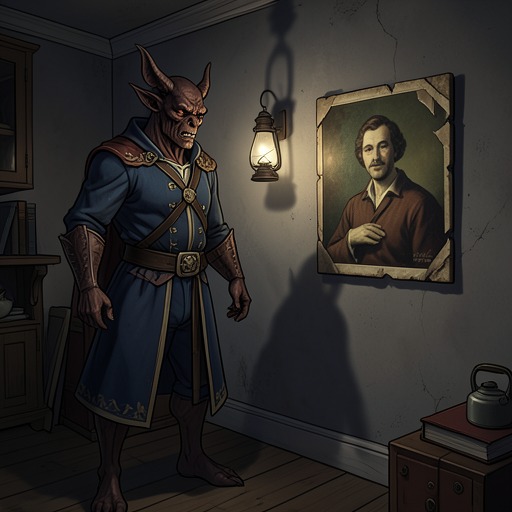
Malthios enters demon society after surviving the agonizing process by which Fulton gives him mana. As a Novice, he receives regular food, a bed, training, and access to a hierarchy that treats usefulness as the condition of survival. He is still an outsider within it: older Novices mock him as trash born and look down on his weakness, while Malthios assumes that Fulton will discard him as soon as he is no longer useful. His determination to train independently is therefore not only ambition but defensive preparation against abandonment.
The library provides the first setting in which Kamil reaches him without demanding anything in return. Malthios has been trying to teach himself to read since his years on the street, but his progress has been poor; forbidden from entering the library, he sneaks inside during breaks and grows increasingly frustrated over a difficult book. When he nearly throws it, Kamil catches his wrist. Her intervention is quiet rather than spectacular: she sits beside him, places the book across both their knees, and offers help despite admitting that she is not very good at reading herself. She introduces herself as Kamil, waits through Malthios’s difficulty speaking, and responds to his name by calling him Mal and saying that they will get along well.
That prediction matters because Malthios cannot understand why Kamil keeps helping him. The reading lessons continue for weeks, and her apparent lack of ulterior motive puzzles him more than hostility would have. In a life organized around suspicion, Kamil’s patience becomes an unfamiliar form of evidence: she does not merely assist his literacy, but demonstrates that another demon can approach him without treating him as a tool.
Friendship Within the Pentagram
Kamil’s loyalty becomes public when older Novices attack Malthios and the small antlered Aym. After Kamil arrives, she insults the attackers, encourages Aym to endure, and tells them that Mal will protect them. Malthios answers by striking the larger aggressor with blue fire, killing him as the flames consume his body and it dissolves into shadows. The violence is a turning point for Malthios, who realizes that he has killed without hesitation, but Kamil does not recoil from him. Instead, she presents him proudly to the others as someone who belongs with them.
The group’s acceptance is reinforced by a shared conviction that advancement depends on mutual reliance. Kamil explains that they rely on one another so they can advance and become Demon Lords, rejecting Malthios’s assumption that demonic life is only a contest of solitary usefulness. Torq, Foras, and Aym join the circle around him, and Kamil asks Aym whether Malthios is a good fit. Aym answers that he has potential. The language is partly practical—the group is discussing strength and advancement—but the scene gives Malthios something that the demon hierarchy denies him: recognition as a companion rather than a disposable subordinate.
Their bond develops through ordinary acts as much as through combat. During a forest meal, Aym produces a pot, Foras fills it with water, and Aym and Torq prepare stew for all five. Demons commonly regard eating as a weakness, yet the companions eagerly share the meal, partly because all of them grew up with food unusually scarce. The modest stew becomes a ritual of belonging. Around that fire, Malthios recognizes the group’s affection, including Torq and Foras’s openly physical devotion, and begins questioning the belief that demons cannot love.
Kamil’s teasing gives their intimacy a sibling-like shape rather than a romantic one. She asks whether Malthios is considering joining Torq and Foras, then provocatively asks whether he prefers a feminine figure. Malthios rejects the suggestion that he desires her, saying that he knows her too well. Kamil pretends to be wounded, but he understands that she is not hurt. To Malthios, she is what a sibling might have been: close enough to challenge him, safe enough to tease, and woven into his sense of his own flesh-and-blood circle.
The Hero’s Attack and Kamil’s Sacrifice
The friendship is tested when the Pentagram encounters the Hero. Aym immediately recognizes the danger, and Malthios orders the troops to intensify their attack. Kamil instead grasps his arm and tells him that they must flee, because only a Demon King can stand against a Hero. Malthios proposes staying behind while the others evacuate the battalion, but Torq refuses on behalf of all five, insisting that they are the Pentagram. Their response confirms that the group’s solidarity is not an abstract promise: they will not purchase survival by abandoning one member.
The battle makes the difference in power unmistakable. Torq uses earth magic while Foras sends ice shards, but the Hero avoids both attacks and cuts through them. Torq throws himself in front of Foras to shield him, and Malthios attacks with a sword followed by a whip of blue fire. He manages to block several blows, yet the Hero’s speed and strength overwhelm him, and a strike to his shoulder sends him backward. His wings barely catch him as he loses control of the fight.
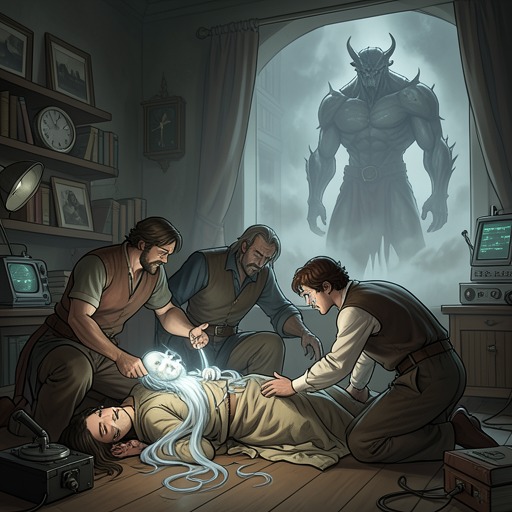
Kamil then acts with the same decisive care that marked her first intervention in the library. Wind catches beneath Malthios’s wings and hurls him out of danger. From below, he sees Kamil with her hands raised, smiling at him with the same wide, genuine expression she wore when they first met. She continues smiling as the Hero’s sword cuts through her neck. Her final act is therefore both rescue and sacrifice: she uses her magic to preserve Malthios’s life while placing herself directly within the Hero’s attack.
Malthios’s escape does not lessen the cost. His instincts carry him far from the battlefield until he lands on a mountainside ledge after sunset. His injured shoulder still aches despite the healing it should have received, and he kneels in the darkness before realizing that he is crying blood. The physical form of demonic grief makes the loss literal: for demons, tears are blood because forcing a demon to weep is effectively like inflicting a wound. Kamil’s death becomes not merely the disappearance of a comrade but a wound carried in Malthios’s body.
Memory, Secrecy, and Continuing Consequences
Kamil’s influence remains legible in Malthios’s later understanding of attachment. Before anyone knows that he is the Demon King’s host, he assumes that no amount of friendship can save him if his nature is discovered. When Mal offers to protect him, Malthios answers that Mal would only be protecting himself. The exchange reveals how thoroughly fear has divided Malthios from the trust Kamil once taught him: even after experiencing devotion, he expects every promise to collapse into self-interest.
Cargo’s direct question about whether Malthios will tell the others that he is demon spawn reactivates the same danger. Malthios freezes, nearly dropping the basket he is carrying, while Mal immediately presses forward to defend them. The concealed identity has become a threat to every relationship around him, and the older lesson from Kamil’s death makes the stakes sharper: disclosure may expose him to execution, but concealment risks turning friendship into a deception.
That danger eventually becomes public through the trial of the Demon King’s host. After Malthios’s identity is confirmed, he is taken through a portal to the capital, placed in magic-dampening cuffs, and led to the dungeons while Luc refuses to speak to him. The court initially treats the host as a criminal whose protection of Malthios requires judgment. Yet Leafel answers through a mirror spell: Micah casts from the town square, Hayden speaks for the people, and Imani, Dale, Dmitri, Nib, Amaya, and the townspeople demand Theo’s release. The community’s solidarity offers a later counter-image to the isolation that defined Malthios’s early life.
The final judgment separates Malthios’s punishment from Theo’s. Malthios admits that he destroyed the Demon Fortress and those within it, while noting that remaining lesser demons and demon-created monsters can be handled by competent adventurers. Luc maintains that the Hero’s duty is to kill the Demon King, but chooses when that duty will be carried out. King Alexis ultimately announces a life sentence for Malthios and freedom from all charges for Theo Bladefoot. Kamil cannot be restored, yet the decision prevents her sacrifice from ending in another solitary death: the life she helped Malthios discover is continued under restraint, connection, and the possibility of accountability.
Narrative Significance
Malthios and Kamil’s relationship combines the underdog, maturation, and sacrifice patterns that shape Malthios’s transformation. Kamil does not grant him power; Fulton’s mana and the brutal Novice system do that. What she grants is a different model of strength, one based on teaching, mutual defense, shared food, and the refusal to leave a companion behind. Her first gift is literacy, but her deeper lesson is that survival need not mean standing alone.
Their friendship also challenges the story’s division between demons and mortals. Malthios has been taught that demons have no family or friends, only means to an end, and mortals insist that demons are incapable of love. Kamil’s conduct disproves both claims without erasing the violence of demon society. She can defend Aym, fight beside Malthios, tease him about sex, and die protecting him; affection exists alongside brutality rather than replacing it. The relationship therefore gives Malthios the emotional knowledge needed to question the order that created him.
Kamil’s death is the decisive reversal in that education. The friend who first makes Malthios feel safe becomes the person whose death proves safety cannot be preserved by trust alone. He survives because she saves him, but survival is inseparable from guilt, grief, and the memory of her smile. In that sense, Kamil remains central to Malthios even after the plot moves beyond the Pentagram: she is the lost comrade through whom he learns that demons can love, and the sacrifice against which his later choices are measured.