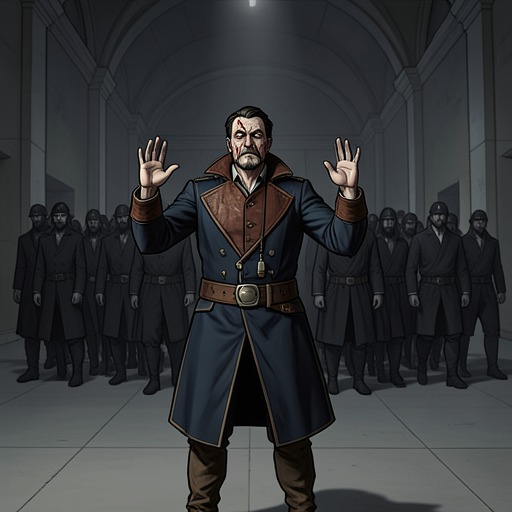
Malthios’s Recruitment as a Novice
The Reincarnated Demon King's Host Just Wants to Live in Peace, But the Hero Won't Leave Him AloneMalthios’s Recruitment as a Novice marks the first decisive institutional turning point in Malthios’s life. After abandonment and hunger, he is taken from a demon village by a Demon Lord, given mana, and placed among the Novices. The recruitment saves him from immediate starvation, but it does not rescue him from violence: it makes survival conditional on magical potential, physical usefulness, and obedience to a society in which power matters more than blood or family.
Abandonment and Survival
Malthios begins this part of his history without a secure family or any understanding of why he has been mistreated. He does not remember his parents’ faces, and his earliest memories are associated with pain and scars across his back. Demon society is described as largely indifferent to parental bonds, particularly toward demons with low magical potential, because status is determined by power rather than blood. When Malthios’s parents abandon him before he has reached six years of age, he survives alone in a demon village by stealing food.
His survival is not presented as the result of protection or privilege. Something within him refuses to lie down and die, even though he has no clear sense of how long his life on the streets lasts. The period establishes the stubborn endurance that will later allow him to withstand painful magic, harsh training, and contempt from stronger Novices. Recruitment therefore reaches him at the boundary between neglect and death: he is not sought out because of family standing, but because he is one of the children who has survived long enough to display usable mana.
The Demon Hierarchy
The recruitment takes place within a rigid hierarchy whose categories determine both social value and military function. Demonkin occupy the lowest level, possessing little or no mana or magic but remaining useful as common soldiers. Novices are Demonkin who have been gifted mana by a Demon Lord, also called a sponsor. Their magical potential varies, but their physical prowess makes them particularly effective combatants. Above them stand the Demon Lords, who ascend through massive slaughter of innocents, gaining immense mana and wings.
The highest rank is the Demon King. Only Demon Lords know how a demon reaches that form, and the transformation succeeds only when the demon is worthy of the power. No Demon King has existed for many years at the point of Malthios’s childhood. This absence gives the hierarchy an unoccupied summit, while the recruitment system supplies the lower ranks with candidates who may be trained, tested, and consumed by the struggle for advancement.
Fulton’s Recruitment and Training
A Demon Lord named Fulton eventually arrives to take the surviving children whose gift of mana marks them as suitable for training. Malthios survives Fulton’s infusion of mana, although he experiences it as one of the most painful events of his life. The pain is the price of entry into the Novice class: mana is not merely discovered in him but bestowed by a stronger demon, making his new capacity inseparable from sponsorship and hierarchy.
Training remains brutal. Higher-level Novices look down on Malthios, and his new position does not erase the humiliation of his earlier deprivation. Yet the institution provides what the streets never did: regular food and a bed every night. This material security is one of the recruitment’s most consequential effects. Malthios is still being shaped for combat, but he is no longer forced to steal each meal or face abandonment without resources.
The Library and the First Opening
The most important benefit of recruitment is not physical comfort but access to the library. Malthios has tried to teach himself to read throughout his years on the streets, without making much progress. Once inside the training system, he sneaks into the library during breaks even though he is not supposed to be there. His frustration becomes intense enough that he nearly throws the book he is struggling to read.
That moment introduces a different potential in him from the one the demon hierarchy values. The Novice system sees a combatant with mana and physical strength; Malthios seeks knowledge, literacy, and a way to understand the world. His attempt to read also leads to an encounter with a demon girl around his age, whose dark red hair reaches her shoulders. She stops him by gripping his wrist and offers help, admitting that her own ability is limited but better than nothing. Recruitment thus places Malthios not only within a military structure but also within the first social and intellectual connection that can interrupt his isolation.
Later Consequences
The meaning of the recruitment extends far beyond Malthios’s childhood. The demon society that trains him is the same society in which power, slaughter, and magical rank govern advancement. It gives him the foundations of survival and strength while normalizing the values that make violence a route to authority. His later status as Demon King can therefore be read against this first institutional transformation: before he can become the greatest figure in demon society, he must first be recognized as a child worth converting from Demonkin into a Novice.
The event also becomes part of the knowledge carried by Malthios when he is reincarnated within Theo. Theo learns that Malthios’s past was not shaped by parental care or an uncomplicated rise through merit, but by abandonment, forced magical transformation, and endurance inside a hierarchy that treated children as resources. That history helps explain both Malthios’s destructive impulses and the fierce insistence on survival that remains present within him.
Recruitment also creates a structural contrast with Theo’s later life. Theo’s emerald healing magic is claimed by the court and directed toward the Hero’s party, while Malthios is claimed by a Demon Lord and directed toward demon training. Both systems identify exceptional children, assign their bodies a public purpose, and subordinate personal choice to an ongoing war. Theo’s later fear that discovery of the Demon King’s presence will lead to execution is rooted in this same political order: the opposing sides differ in ideology and method, but both treat extraordinary individuals as instruments of collective defense.
Narrative Significance
As an event, Malthios’s Recruitment as a Novice combines rescue, coercion, and initiation. It interrupts one form of death without ending the conditions that produced Malthios’s suffering. Food and shelter replace theft and exposure; magical power replaces helplessness; training replaces aimless survival. At the same time, the recruitment makes violence the language through which Malthios can gain recognition.
The event is therefore a dark origin story rather than a simple elevation. Malthios is given a place in the world only after the world has measured him for usefulness. His persistence, his painful acceptance of mana, and his clandestine pursuit of literacy reveal a person who exceeds the role assigned to him, even while that role supplies the means by which he will eventually reshape the fate of both demons and humans.