Micah
The Reincarnated Demon King's Host Just Wants to Live in Peace, But the Hero Won't Leave Him AloneMicah is a young cat mage whose development connects Leafel’s everyday life to the book’s central conflict over inherited identity and chosen moral action. Their arc moves from quiet admiration and dependence on Glefald to practical competence, healing ambition, and public courage. By the time Theo faces judgment in the capital, Micah is no longer merely a child watching heroes from the edge of the scene: they become the voice and magical instrument through which Leafel demands that Theo be recognized as a person rather than condemned for the power residing within him.
Identity and Introduction
Micah belongs to the Leafel adventurer party and is described as too young to be adventuring legally under guild rules, although the village permits it. Their cat-mage identity is marked by grey tabby ears, a tail that fluffs around their legs when frightened, nut-brown hair, and unusual green-and-yellow eyes. In the party’s first significant appearance, Micah clutches a staff while looking at the arriving Hero’s party with open awe, a sharp contrast to Hayden’s hostility, Cade’s bullying bulk, and Isabelle’s guarded soldierly watchfulness. Theo tolerates Micah more readily than the other young adventurers because Micah is quiet and listens to instructions.
Micah’s place in Leafel is also defined by their relationship with Glefald, the retired elf adventurer who runs the village’s Watchtower guild post. When Theo visits to deliver oil, Micah answers the door with nervous ears that quickly perk up upon recognizing him and reports that Glefald has been coughing through the night. The scene establishes Micah not as a sheltered observer but as the person already carrying responsibility inside a household whose central caretaker is failing.
Apprenticeship, Grief, and Healing
When Theo examines Glefald, he orders Micah to prepare throat-cure tea with plenty of honey and a splash of whiskey. The instruction is practical, immediate, and intimate: Micah is trusted with a healer’s remedy while Glefald lies in bed, but is also forced to confront the seriousness of the illness. Glefald’s lung rot has returned in a terminal relapse, and Micah explains that the elf is like a father to them. They had helped him with chores whenever they were not on patrol; now that Glefald cannot leave his bed, those duties have fallen entirely onto Micah.
This burden becomes visible after Dmitri grabs Micah by the wrist in an alley and demands to know why they are crying. Micah’s fear is not caused by an abstract sadness. Glefald has only a few days left to live, and Micah is grieving both the coming death and the sudden loss of the person who organized their daily life. Although Dmitri expresses sympathy and says he cannot imagine losing his own father, Micah insists that protection is unnecessary because they are a mage and the youngest member ever to join an adventurer party. The insistence is defensive, but it also reveals a core trait: Micah wants their vulnerability acknowledged without being reduced to helplessness.
Glefald’s funeral confirms how deeply Micah belongs to both the family around the Watchtower and the wider village. Glefald is buried in the earth according to his elven wishes, with a tree planted over the grave so that it will eventually become a second guardian of Leafel’s entrance. The adventurer party lowers the body, while Micah, too slight to help with that task, stands beside the grave clutching their staff with tears running down an otherwise brave face. Their grief is shared by the community rather than hidden from it, and Dmitri stands with an arm around their shoulders. Micah’s mourning therefore becomes part of Leafel’s collective memory and of the village’s protective identity.
After Glefald’s death, Micah increasingly turns toward Theo as a teacher. They help in Theo’s garden and learn to manage the shop alongside Dmitri, but their strongest interest is in herbs, healing references, potions, and other remedies. Micah studies the books Theo provides, watches closely as he prepares concoctions, and eventually asks to be taught healing magic. Their stated goal is to help injured people and save them from death as Theo does. Theo answers by warning that healing cannot cheat death: Glefald’s death was his time to pass, and Micah must learn the boundary between treatment and resurrection. The lesson preserves Micah’s compassionate ambition while placing it against the book’s recurring insistence that healing has limits.
Growth Through Responsibility
Micah’s apprenticeship is not confined to spells. When Theo must leave Leafel to rescue Luc, he puts Micah in charge of the shop. The assignment comes with precise obligations: Micah must double-check everything, avoid poisoning anyone, and practice what Theo has taught. Dmitri is given responsibility for the garden and flock, with the harvest and eggs to be delivered to Imani and Dale or to the Watchtower. Micah’s response is both dutiful and emotional; after accepting the responsibility, they throw their arms around Theo’s waist and plead for him to return soon.
The farewell shows how much Micah has changed Theo as well. Theo has built his life around concealment, convinced that friendship would not save him if people discovered what he was. Yet Micah’s dependence, trust, and willingness to learn have helped make Leafel a place of reciprocal obligation rather than mere concealment. Theo leaves not an anonymous shop but a living household whose work Micah is capable of continuing.
That growth is visible when Theo returns. Micah and Dmitri are slightly older, with Dmitri taller and more self-assured, while Micah has become more confident and their magic has notably strengthened. Theo continues training Micah in healing, but Wicker takes the cat mage under their own wing and begins preparing the paperwork to request Micah as an official apprentice. The request would allow Micah to become a formal guild member, transforming informal instruction into recognized professional development. Wicker’s own membership and appointment as head of the Leafel post have already been approved, giving the Watchtower a new institutional future after Glefald’s death.
Public Defense of Theo
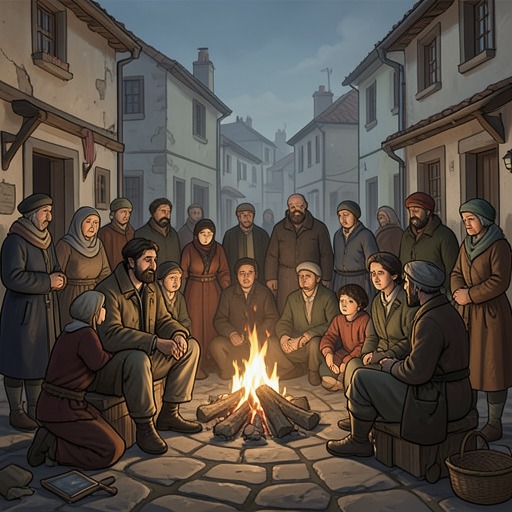
Micah’s greatest public action occurs during the trial of the Demon King’s Host. Theo’s hidden identity has been exposed, and the court is considering him guilty for protecting Malthios. Through a large mirror spell, Micah appears in Leafel’s town square with staff raised, casting a spell remarkable for someone so young and inexperienced. Behind them stand Imani, Dale, Dmitri and his parents, Nib, Amaya, and the people of Leafel; Hayden steps forward as their representative and demands Theo’s release.
Micah’s role is more than ceremonial. While holding the spell, they tell the court that Theo did not ask to be born with the power within him and chose to live in peace. The statement directly challenges the court’s logic of inherited guilt. It distinguishes origin from action: Theo may possess a connection to Malthios, but his conduct has been defined by restraint, healing, and peaceful life in Leafel. Micah therefore turns the private lesson of Theo’s apprenticeship into a public argument about moral responsibility.
The intervention also reverses Micah’s original position before the Hero’s party. At first, Micah looked at heroes with awe while remaining a nervous, rule-bending child on the margins of guild law. At the trial, the young mage is the one who opens a magical channel into the court and speaks for a whole community. Their power is not used to attack the court but to make Leafel visible, converting local affection into political resistance. The act proves that Micah’s development has been social as well as magical: they have learned not only how to cast, but whom to stand beside.
Relationships and Narrative Significance
Glefald is Micah’s surrogate father and first defining loss. His death forces Micah to assume duties before they are ready, while his burial beneath a future guardian tree gives physical form to the connection between care, memory, and protection. Theo becomes a second major mentor, teaching Micah shopkeeping, herbs, potions, and the ethical limit that healing cannot overcome death. Wicker later extends that mentorship by pursuing Micah’s formal guild apprenticeship, suggesting continuity rather than replacement after Glefald’s passing.
Dmitri functions as Micah’s close companion and protective shadow. Their relationship contains both friction and tenderness: Dmitri’s attempt to force an explanation for Micah’s tears hurts them, but he is also genuinely stricken by Glefald’s impending death, works beside Micah in the garden and shop, and supports them at the funeral. When Micah faces the wider danger surrounding Theo, Dmitri remains part of the small network that allows the young mage to act with confidence.
Micah’s importance to Theo’s hidden-identity conflict lies in the contrast between anticipated stigma and demonstrated acceptance. Theo fears that discovery of his nature will make him unprotectable and punishable, while Micah’s later defense insists that the decisive fact is Theo’s choice to live peacefully. In the capital, the court treats identity as evidence of guilt; Micah treats conduct as evidence of character. Their position embodies Leafel’s alternative to the authorities’ judgment: a person’s origin may explain danger, but it does not settle the meaning of a life.
Micah’s character arc consequently combines maturation with apprenticeship and civic awakening. The child who once needed Glefald’s care becomes the keeper of Theo’s shop, the student of healing magic, the prospective guild apprentice of Wicker, and the caster who brings Leafel into the courtroom. Their progress does not erase grief or vulnerability. Instead, Micah carries those experiences into action, making care itself a form of courage and turning the village’s affection into a force capable of confronting the institutions that would condemn Theo.