Theo’s Demon King Host Identity Revealed
The Reincarnated Demon King's Host Just Wants to Live in Peace, But the Hero Won't Leave Him AloneTheo’s Demon King Host Identity Revealed turns a secret he has long feared exposing into a public crisis. When Malthios retreats and Theo’s familiar appearance returns, the people around him see what he is; the revelation leads from Luc’s rescue to Theo’s arrest and trial, where the choice between a prescribed heroic duty and a life chosen for love becomes explicit.
Secrecy and the Cost of Disclosure
Theo’s fear is not abstract. He believes that friendship cannot save him if anyone discovers what he is, and he remains prepared to run again. When Cargo asks whether he will tell the others that he is demon spawn, Theo freezes so completely that he nearly drops his basket. Malthios immediately presses to take control and defend them. Even before the identity is exposed, the possibility of disclosure is enough to make Theo fear for both of them.
The risk becomes sharper when Bryony brings news from the capital: Luc needs help. Theo understands that going there means surrendering his autonomy. The court will learn who he is and where he lives; Camden might recognize him, and the authorities could force him back into the Hero’s party, where his secret could be discovered. He goes anyway because Luc might die. The decision makes the eventual revelation more than an accidental loss of privacy: Theo has accepted the danger of being recognized in order to save someone he loves.
That attachment has its own history of vulnerability. Luc has described relationships that could not survive the demands of being the Hero, including a squire who ended their relationship when Luc was called away. Later, Luc gives Theo his father’s sapphire ring, a keepsake from a man who died saving his adventuring party from a demon attack, and places it on Theo’s marriage finger. Their promise of a shared future gives Theo a reason to risk the capital, but also makes the threat of discovery more personal.
Recognition and Immediate Consequences
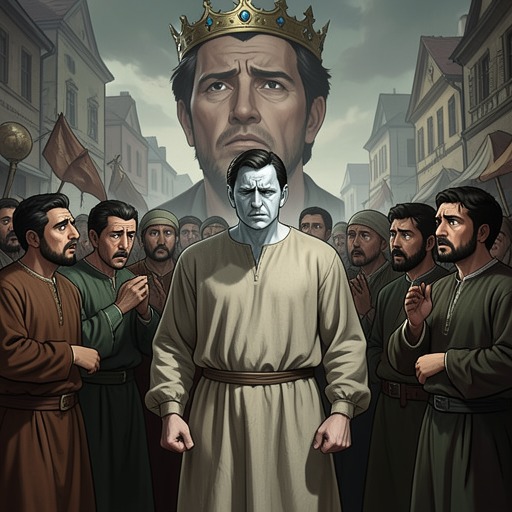
The decisive disclosure comes after Malthios retreats. Khal and Veiv relax as Theo’s appearance returns to normal, and Wicker runs to embrace him. Cargo’s response reveals that he had already known: he says Theo was not dangerous. Avery reacts with fury, naming the figure they have been confronting as the Demon King. The moment exposes not only Theo’s identity but also the difference between knowing a secret and treating its bearer as a threat.
Theo turns from the surrounding argument to Luc, who has suffered a fatal wound. Theo’s magic can heal it despite its placement and demonic magic, and he takes care to repair Luc completely before tending to his other injuries. Luc wakes and recognizes him. When he asks whether Theo is the Demon King’s host, Theo confirms it and apologizes. The revelation therefore arrives in the most intimate possible form: Luc learns the truth as Theo saves his life, and Theo has to face Luc’s reaction before he can know whether their bond will survive it.
Avery drops magic-dampening handcuffs into Theo’s lap and orders him to put them on. The handcuffs turn suspicion into custody. Avery uses a magic scroll to contact the court mage, while the party’s Portal Orb provides a way to reach the capital by breaking it. Within ten minutes of Theo putting on the cuffs, the group steps through a portal into the capital courtyard, where knights and the court mage are waiting. The court mage orders Theo taken to the dungeons. Luc says nothing as Theo is led away, and Theo cannot bring himself to look at him.
A Public Trial and a Second Revelation
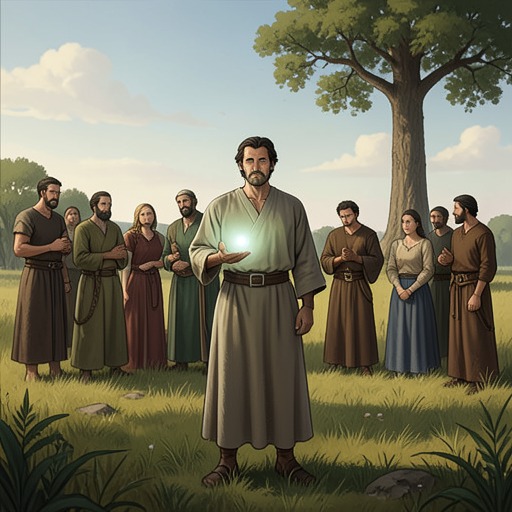
The trial widens the consequences beyond Theo and Luc. The court agrees that Theo is guilty of protecting Malthios, and the proceedings make plain that the disclosure has become a question of public judgment. Before the court can complete its decision, Micah opens a large mirror spell from Leafel. Behind him stand Imani, Dale, Dmitri and his parents, Nib, Amaya, and the gathered townspeople. Hayden speaks for them: they demand Theo’s release.
Their appearance overturns Theo’s expectation that discovery will mean rejection. He had feared that no amount of friendship could protect him; now the people of Leafel make their loyalty visible before the court. Cargo’s earlier decision not to expose Theo and the villagers’ public demand for his release offer different forms of acceptance: one quiet and personal, the other collective and politically consequential.
Luc, meanwhile, asks whether Malthios destroyed the demons. Malthios answers that he destroyed the fortress and those inside it, though lesser demons and demon-created monsters may remain, and says there is no longer any need for a Hero. He asks Luc to use the name Mal, the name given by his friends and used by Theo. Luc takes control again and tells the court that his duty as the Hero is to kill the Demon King—but that he gets to choose when. He describes Theo as Malthios’s prison and himself as its humble guard, promising not to let Theo out of his sight.
Judgment and the Future Chosen
Eliza challenges Luc over the choice he has made, asking whether he will end their bloodline and abandon the purpose for which he has trained. The conflict echoes an earlier explanation from Julius: Eliza wanted Luc to continue the Hero’s bloodline and sire the next Hero, and had pressured Julius to leave him. Luc’s decision rejects not only an immediate execution but the future that Eliza’s expectations prescribe. He calls a quiet, peaceful life with the man he loves the only choice he has ever made for himself, and argues that those born with the Hero’s gift should be able to choose their fate rather than remain bound to duty.
King Alexis concludes the trial by sentencing Malthios to life in prison and declaring Theo free of all charges. The distinction matters: Theo is acquitted, while Malthios is not simply absolved. The people of Leafel cheer through the mirror spell, and Luc turns with Theo to wave to them. He hopes they will arrive home before spring if the roads are clear. The revelation that had seemed certain to cost Theo his safety and belonging instead leads to a public claim on his behalf, a judgment separating his fate from Malthios’s, and Luc’s declared commitment to a chosen life together.