
Bobby’s Fire and Evan’s Compulsion
The Reincarnationist PapersThe remembered childhood fire becomes a defining trauma for Evan and develops into the ritual through which he confronts a horror he cannot forget.
increasing Bearing strength in each event
 decreasing
Bearing strength in each eventdecreasingA Child’s Tower
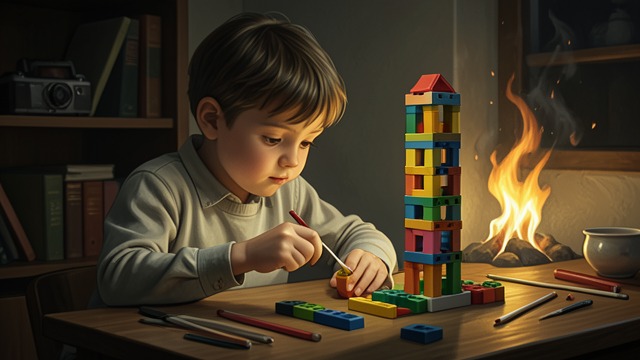
A Child’s Tower
An ordinary project
Bobby Lynn Murray builds a tall Tinker Toy tower and wants to keep working after bedtime. The toy is a small expression of his curiosity and pride in a world he does not yet understand.
A makeshift light
Unable to see the toy’s colors clearly, Bobby uses matches he has saved from a car. He is fascinated by the flame and does not recognize how quickly it can spread.
Danger begins unnoticed
A burning rod ignites the structure and curtains, then spreads to the room. Bobby’s innocent experiment becomes the start of an irreversible disaster.
The Fire Takes Hold
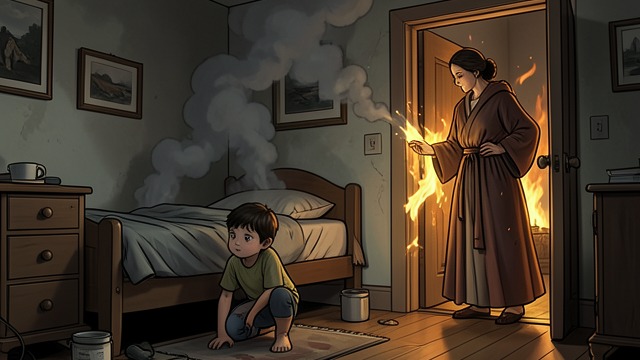
The Fire Takes Hold
A room becomes a trap
The flames move from the toy tower to curtains, carpet, and the wooden interior of the home. Bobby watches in confusion before he understands that the fire is no longer under his control.
A mother rushes in
Judith comes to her child as the fire has already spread through the house. When the door opens, the rush of air drives the flames toward her robe.
A memory without rescue
The episode ends for Bobby beneath the bed, looking out at his mother engulfed in flame. Evan later remembers the scene in detail, including the terror and helplessness that he cannot revise.
Evan Repeats the Fire
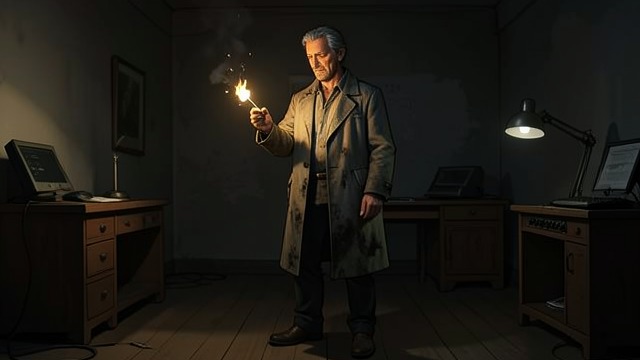
Evan Repeats the Fire
Trauma becomes ritual
Evan discovers that the memory of Bobby’s death returns with unusual force. Rather than letting it fade, he repeatedly recreates fire, claiming that each encounter is on his terms.
Control sought and lost
His controlled arsons promise mastery over the fear of being a helpless child. The ritual also endangers other people and builds a life organized around danger and concealment.
The monster as witness
Evan calls fire both foe and confidant because it remembers the event with him. The image reveals how a trauma can become an identity-forming practice even when the person knows it is destructive.
The Warehouse Inferno
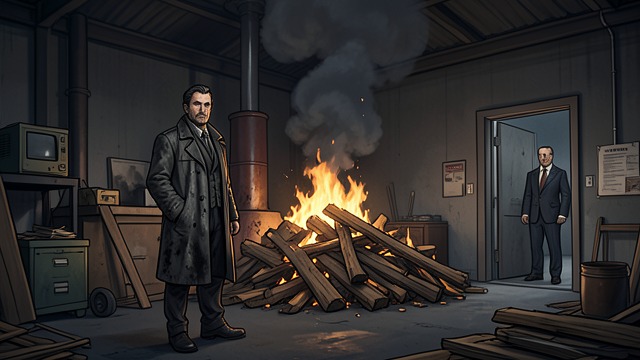
The Warehouse Inferno
A carefully planned job
Evan prepares the warehouse for a fire and arranges an alibi with Henry. His technical care contrasts with the personal compulsion that makes the act feel like a private confrontation.
Memory intrudes
As the fire grows, Evan recalls Bobby’s final moments. The present blaze and the remembered childhood fire collapse into one experience, leaving Evan to see himself as a ghost repeating another boy’s tragedy.
Escape through danger
The fire spreads faster than Evan expects, and he flees through smoke and heat. A police officer spots him, and the escape turns the arson into a crisis that will bring him to Poppy.
Fire Named Before the Panel
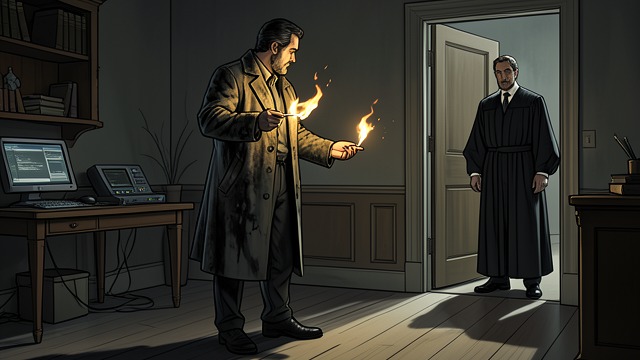
Fire Named Before the Panel
A question with a personal edge
The Egyptian judge asks Evan to speak about fire in general, making clear that he is asking about more than a specific crime. Evan initially resists because he has never explained the compulsion openly.
A candid answer
Evan describes the first encounter as an accident and later fires as deliberate attempts to prove that he is no longer powerless. He acknowledges that the memory has shaped his present behavior.
A burden shared aloud
The account makes his inner history available to the group, rather than leaving it locked in his private ritual. Fire remains a source of danger, but speaking about it allows Evan to see its hold more clearly.
Bobby’s last evening in Macon
Minutes after Bobby lights the match
In Minnesota, after Bobby’s memories arrive
The night Evan burns the Lynnman Warehouse
At Evan’s final Ascension session
