
Time, Progress, and the Lighthouse
The Reincarnationist PapersClovis’s retreat and his repeated writing challenge the members’ faith in progress, asking whether stability is refuge or a slow surrender to the future.
increasing Bearing strength in each event
 decreasing
Bearing strength in each eventdecreasingA Slower World
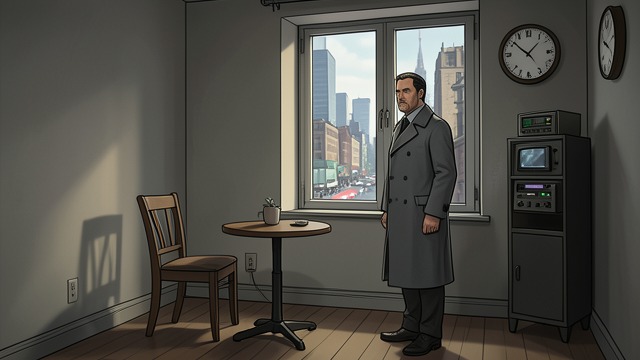
A Slower World
Change becomes a threat
Clovis describes a world that shifted from building on inherited experience to rebuilding itself around expectations of the future. He sees the transition as a cycle that each generation repeats without understanding its costs.
Youth and age in tension
The young seek new forms, while older people worry that established standards will be discarded. Clovis does not claim that one side is wholly right; he emphasizes the pain of watching the same conflict return.
Retreat as a response
His home gives him a place outside the pace of change. Evan recognizes the comfort in that choice but wonders whether such protection has become another form of confinement.
The Lighthouse Mechanism
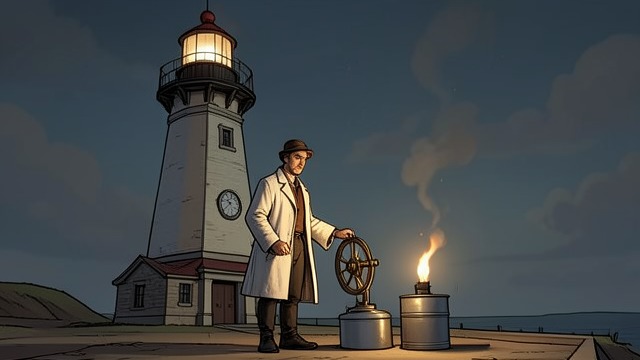
The Lighthouse Mechanism
A working light
Clovis shows Evan the lamp, oil reservoir, lens, and clockwork that keep the lighthouse beacon moving. The process depends on steady manual attention rather than modern convenience.
Fire made useful
Evan lights the wick, while Clovis explains that the lens matters more than the flame’s brightness. Fire is no longer a private monster here but a controlled instrument serving others at sea.
A different relationship to risk
The scene reframes fire from Evan’s destructive ritual into a tool maintained with care. It suggests that the same force can become service when approached through responsibility rather than compulsion.
The Burden of Solitude
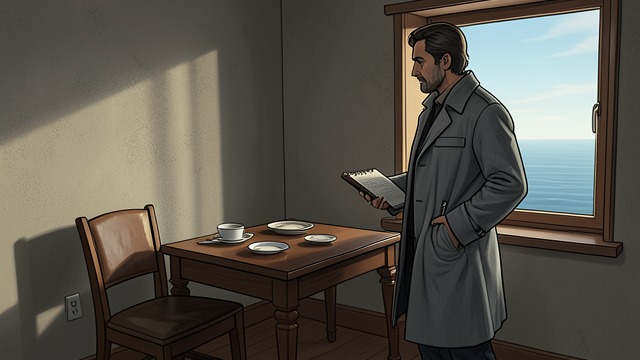
The Burden of Solitude
A home built for one
Clovis lives with limited company, simple meals, and repeated tasks. The sparse household gives him the calm he wants, but also displays the distance he has placed between himself and the Cognomina.
A chair in the dust
Evan notices how long the unused chair has gathered dust. Its condition makes visible the accumulated years of solitude that Clovis does not emphasize in conversation.
Refuge with an edge
The lighthouse is peaceful and beautiful, yet its isolation appears increasingly deliberate. Evan learns that a life can be comfortable while still narrowing around avoidance.
Pages Repeated for Years
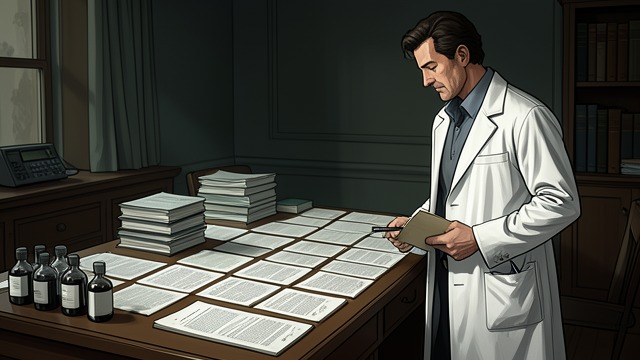
Pages Repeated for Years
A ritual first admired
Clovis practices calligraphy with care, and Evan initially reads the work as a daily attempt at perfection. Their conversation suggests a disciplined life anchored in craft.
Repetition exposed
Evan finds rows of crates filled with nearly identical pages and empty ink bottles. The discovery indicates that Clovis has been copying the same stanza repeatedly rather than moving forward with a larger composition.
Perfection becomes stagnation
The ritual changes from an admirable exercise into a sign of life arrested in repetition. Evan fears that accepting endless calm could mean ceasing to seek anything new.
Evan Rejects the Tower
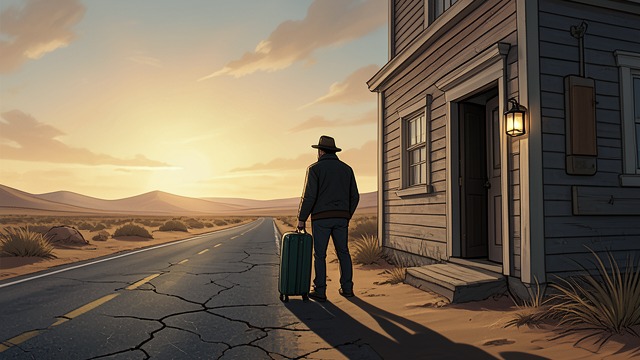
Evan Rejects the Tower
Departure without explanation
Evan packs and leaves the lighthouse without confronting Clovis about the repeated pages. The abrupt exit shows how strongly the discovery has altered his view of the refuge.
A decision made on the road
The journey across the desert becomes a period of reflection on money, risk, and the kind of life Evan wants. He decides to contact Samas and proceed with the art theft.
Freedom remains ambiguous
Evan escapes the lighthouse but chooses another dangerous path. The contrast suggests that leaving a refuge does not guarantee freedom; a person must still decide what he is moving toward.
During Evan’s stay at the lighthouse
At sunset during Evan’s visit
During Evan’s first nights at the lighthouse
On Evan’s fifth day at the lighthouse
Immediately after the discovery
