
Life’s Value Without a Guaranteed Afterlife
The Reincarnationist PapersThe characters’ beliefs about reincarnation, religion, and pleasure develop through competing answers to whether life needs divine judgment to matter.
increasing Bearing strength in each event
 decreasing
Bearing strength in each eventdecreasingMcTaggart’s Argument
McTaggart’s Argument
A Western philosophy discovered
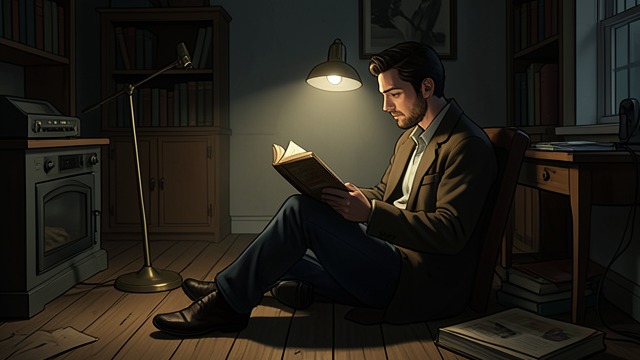
Evan reads Some Dogmas of Religion and finds a discussion of pre-existence and successive lives. The argument differs from the religious accounts of reincarnation he has encountered before.
Skills and character explained
The book suggests that interests and abilities may be inherited from earlier lives. Evan sees a framework that resembles his own experience of language and music returning without present-life training.
Intellectual recognition
The text does not prove Evan’s memories, but it gives him a way to think about them without treating them as an exclusively Eastern doctrine. Reading becomes an early bridge between private experience and broader ideas.
No Karma in Evan’s Experience
No Karma in Evan’s Experience
A doctrine questioned
Evan says he cannot accept the karmic accounting he has encountered in some Eastern traditions. His experiences do not show him that moral virtue improves a later life.
Poppy’s accumulated view
Poppy tells him that the Cognomina have tried different ways of living across many incarnations. She sees no evidence that a divine system rewards or punishes them in the next life.
Experience becomes a challenge
Their claims arise from remembered lives rather than from abstract argument. The novel allows their conclusions to remain viewpoints shaped by experience, not universal proof that no other spiritual possibilities exist.
The Cost of Belief
The Cost of Belief
Religion under criticism
Poppy argues that religious systems use guilt to restrain ordinary desire and offer a promised afterlife as compensation. She believes the arrangement prevents people from taking responsibility for their current existence.
Evan recognizes the force
Evan has already struggled with the thought that good behavior may not be rewarded and bad behavior may not be punished. Poppy gives that unease a sharper and more confrontational expression.
Anger is not certainty
Her words emerge from frustration and accumulated disappointment. The novel shows why her argument matters to her without requiring Evan or the reader to accept it as the only possible account.
Samas Chooses the Present

Samas Chooses the Present
Life measured in experience
Samas tells Evan that meals, conversations, relationships, and ideas compose the world a person actually inhabits. Because he remembers no divine interval between lives, he values what can be experienced now.
Pleasure with reflection
His outlook includes art, food, love, and travel rather than wealth alone. He believes people should enrich their lives because that is the world they can know directly.
A different response to uncertainty
Unlike Poppy, Samas does not primarily express anger at religious ignorance. He permits Zohra to keep her faith and focuses on living according to his own understanding.
Responsibility Replaces Absolution
Responsibility Replaces Absolution
Wrongdoing cannot be outsourced
Samas argues that the members cannot place their responsibility on a divine judge. Their knowledge of repeated lives removes the comfort of imagining that another power will settle every account.
The darker self acknowledged
He describes a dark brother within the self that must be faced and accepted. Evan connects the idea to his own guilt over arson and the possibility that his actions have harmed others.
Freedom remains difficult
The absence of absolution does not make every action acceptable. It means the person must live with choices and confront the identity they reveal, even when no clear moral settlement is available.
During Evan’s first nights in Poppy’s church
During Evan and Poppy’s cemetery conversation
During Poppy’s later dinner argument in Zurich
During dinner at the Moroccan home
During Evan’s discussion of the dark brother
