
Objects That Carry Identity
The Reincarnationist PapersRecurring objects preserve personal histories across lives, linking memory to material evidence, craft, and the danger of mistaking possession for permanence.
increasing Bearing strength in each event
 decreasing
Bearing strength in each eventdecreasingThe Russian Lighter
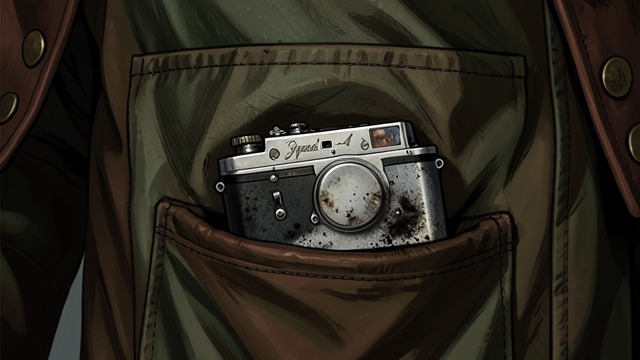
The Russian Lighter
A gift at the threshold
Judith gives Evan a Russian military lighter before he leaves home. Its worn surface connects to his interest in languages and to the fragile affection between mother and son.
Fire carried in the pocket
Evan uses the lighter during his later fires, making it part of his arson ritual. Its practical role ties his new life to the childhood home he has left behind.
A memory made tangible
The lighter lasts where relationships and bodies change. It carries more than utility: it holds a farewell and the danger Evan repeatedly chooses to summon.
The Dragon Cane
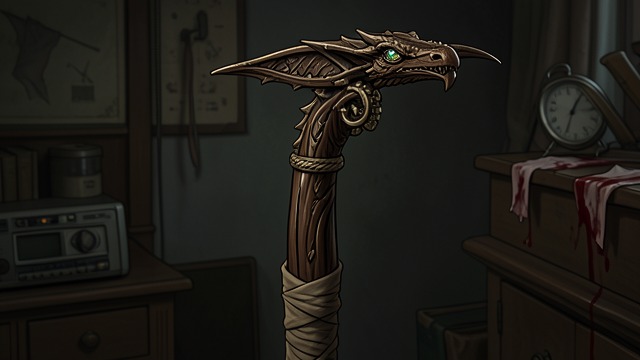
The Dragon Cane
A gift after the duel
Charles Le Brun gives Louis a carved cane after the duel injures his leg. Its craftsmanship and jeweled eyes make it a practical aid and a valuable object.
The object crosses lives
Poppy gives the cane to Evan while he recovers from his own gunshot wound. Its earlier owner’s history makes the gift a silent clue to the continuity Evan has not yet understood.
Recognition in new hands
Evan carries it through the Cognomina and into the Tunisian theft. The cane becomes a portable link between remembered lives, present disability, and a shared social world.
The Embe Mark
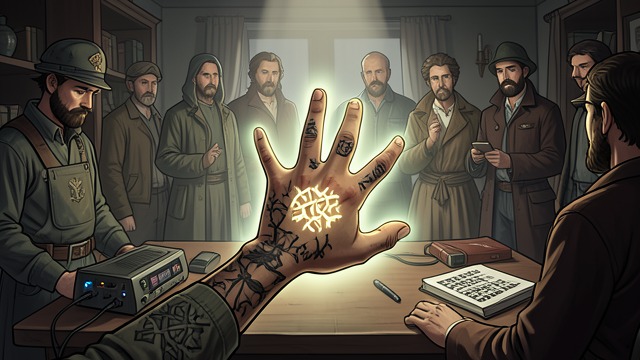
The Embe Mark
An old meeting sign
The Cognomina’s mark originates as a symbol for members gathering at Giza. Its purpose is to help people recognize a continuing identity after the appearance of a new body.
A ritual applied
After Evan’s acceptance, Auda tattoos the Embe on the back of his hand. The process is painful, and the completed mark makes his membership visible to those who know what to look for.
A sign with two meanings
Within the group, the tattoo offers recognition and connection. Outside it, the mark is an identifying clue that can expose a member to unwanted attention, as Evan later discovers at customs.
The Portrait in Its Frame
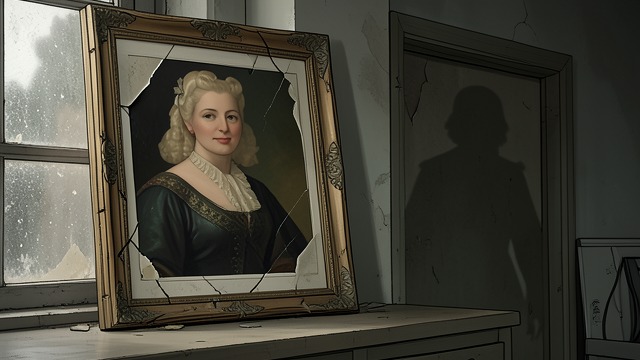
The Portrait in Its Frame
A carefully chosen frame
Emil keeps The Rendezvous in a frame that remains with the work through later transfers. Samas remembers placing it there and can recognize the painting’s history from this physical detail.
A century-spanning object
The portrait moves from a private home through wartime seizure and later museum loans. Its material survival holds together lives and places that have otherwise been separated by time.
Possession contested again
Samas’s knowledge of the frame helps him plan the theft, but the recovery puts the painting in the center of another dispute. The object carries personal meaning while being handled as property and leverage.
The Notebooks as an Heirloom
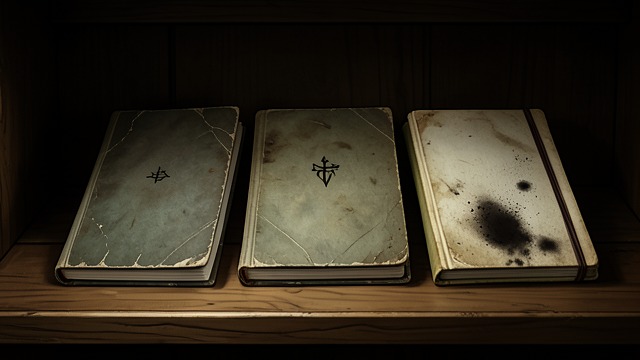
The Notebooks as an Heirloom
A record made by hand
Evan writes his memories in three notebooks while imprisoned. Unlike a bank account or an inherited painting, the manuscript preserves his thoughts and choices in his own voice.
A gift for an unknown future
He asks Reginald to keep the books until a young person comes looking. The intended reader may be a future incarnation who has not yet recovered the memories that would explain the gift.
Continuity entrusted to chance
The notebooks have no institutional guarantee of return. Their survival depends on friendship, time, and a reader willing to recognize the story as more than an abandoned object.
From Evan’s departure from Minnesota onward
From Louis’s injury to Evan’s journey
At Evan’s initiation
From Vermeer’s studio to the Tunis gallery
At the end of Evan’s prison narrative
