
The Cognomina’s Secrecy and Continuity
The Reincarnationist PapersThe collective’s survival depends on rituals, inherited wealth, secrecy, and a recurring struggle to identify its members across new lives.
increasing Bearing strength in each event
 decreasing
Bearing strength in each eventdecreasingThe Giza Meetings
The Giza Meetings
Two people return
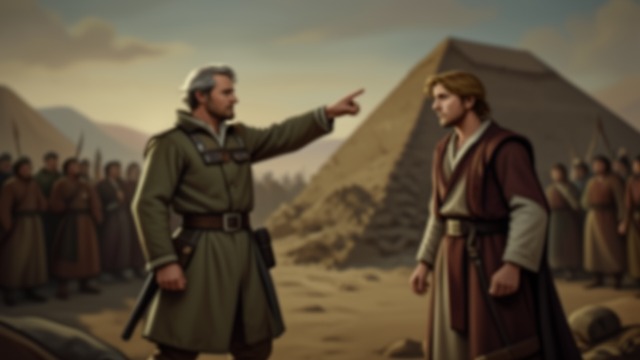
The Cognomina’s remembered origin begins with two members meeting each year at the summer solstice near Giza. Their arrangement gives each a predictable place to search for the other after another death and return.
A mark for recognition
The members adopt a shared symbol based on the pyramids to help identify one another in new bodies. A practical sign becomes an enduring emblem of a much older fellowship.
A gathering grows
A later reunion brings together people who had independently found others like themselves. The story of that meeting explains how a private survival strategy became the beginning of a collective.
Zurich Becomes the Center

Zurich Becomes the Center
A society takes shape
The Cognomina is formally established in Zurich by early members who want a durable way to remain connected. The group gives a name and structure to a relationship that had begun through repeated reunions.
Wealth held in trust
Members develop a system for retaining property and returning it to later incarnations. The arrangement lets inherited experience be matched by inherited resources.
Belonging requires proof
A member must establish identity before reclaiming a place and its benefits. Recognition becomes both the protection of the collective and a test each new life must face.
Disclosure and Massacre
Disclosure and Massacre
A member breaks secrecy
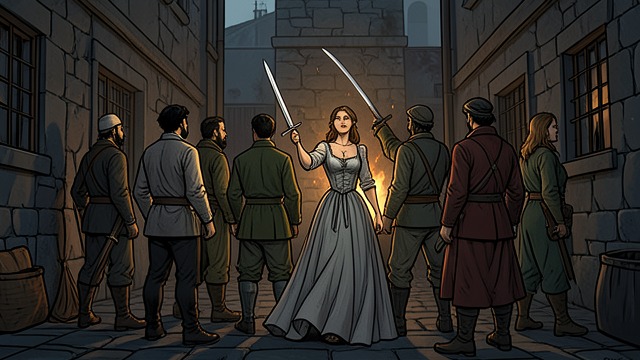
A trustee reveals the Cognomina’s existence to surrounding villages, hoping the members can rule as a continuing royal family. His ambition exposes a group that has relied on concealment.
Violence follows exposure
Villagers kill members and loot the treasury. The loss destroys lives and property while proving that public knowledge can turn difference into a reason for persecution.
A rule hardened by disaster
After the massacre, secrecy becomes a central tradition rather than a matter of convenience. The group’s caution protects its survival but also makes new members face a wall of silence before they can be trusted.
The Ascension Evolves

The Ascension Evolves
A trial by recognition
Older accounts describe candidates being run through with a spear and recognized only if they return and identify their killer. The violent method makes belief in reincarnation a dangerous wager.
Verification becomes procedural
The collective later uses judges, testimony, dates, and verifiable facts. The process still tests identity, but it no longer relies on a candidate surviving a deliberate killing.
Continuity made institutional
Ascension turns private memory into a form of membership that the group can assess. Its procedures reflect both a need for evidence and a persistent fear that false claims could endanger the whole society.
Members Keep Watch

Members Keep Watch
A duty persists
The Cognomina expects members to look for people who remember earlier lives and introduce them to the group. The obligation makes discovery an active responsibility rather than a lucky accident.
Poppy acts on clues
Poppy recognizes Evan through his reaction to death and his knowledge of an outdated slogan. She checks his history and brings him toward the society.
Secrecy and care intertwined
The duty gives Evan a way out of isolation, but it is carried out through tests and incomplete explanations. The Cognomina’s methods show how its need for safety can complicate the welcome it intends to offer.
Beginning in the fourth century
In 839
Around the turn of the first millennium
From the group’s early history to the modern era
When Poppy identifies Evan
