
The Ethics of Returning
The Reincarnationist PapersThe Cognomina’s immortality is practical rather than absolute, and recurring lives force its members to decide what they owe to people who do not share their memories.
increasing Bearing strength in each event
 decreasing
Bearing strength in each eventdecreasingPractical Immortality
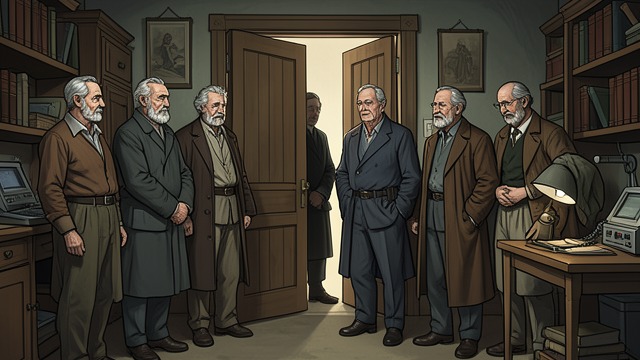
Practical Immortality
Death still occurs
Poppy explains that members die but return in new bodies and retain memories. She prefers a term that emphasizes remembered continuity rather than literal inability to die.
Wealth and knowledge persist
The group passes along property and experience through its trustee system. Members can inherit themselves in a new life after proving who they are.
Limits remain unavoidable
The members still face injury, loss, imprisonment, and separation. Their repeated lives do not make them invulnerable; they change the duration and meaning of consequences rather than abolishing them.
Sterility Revealed

Sterility Revealed
A future questioned
Evan asks whether Samas has children and learns that the members are born sterile. The answer changes the future Evan has imagined for himself.
Continuity without descendants
Samas describes the condition as part of being a hybrid, while Evan initially struggles to understand what it means. The Cognomina’s continuity is carried through the same person’s return, not through ordinary biological family lines.
Loss reframed
Samas argues that members cannot miss what they have never had. The comment does not erase the significance of children, but it shows how the group has developed ways to interpret a permanent limitation.
Bando’s Responsibility
Bando’s Responsibility
Returning changes a community
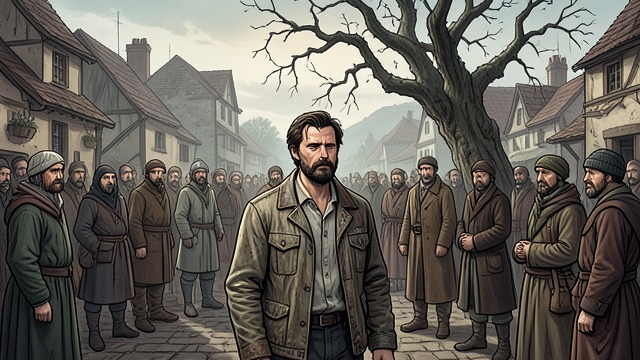
Bando believes he has returned to his first family, but his new body carries a disease that the village has not encountered in the same way. His homecoming becomes entangled with a danger no one intended.
Staying with the people
Bando refuses to leave when illness spreads and villagers turn against him. He accepts a responsibility to the community even though he cannot cure it or guarantee that it will recognize him.
A cost without simple blame
The deaths at Latsei cannot be reduced to a deliberate act by Bando. The episode distinguishes responsibility from culpability and leaves the survivors to carry a harm they did not knowingly choose.
Stealing from the Dead
Stealing from the Dead
Juan sees an opportunity
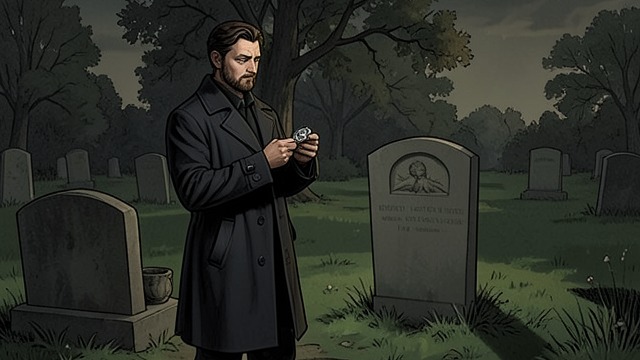
Juan takes jewelry from the dead villagers, reasoning that its owners can no longer use it. The act transforms tragedy into a chance to gain the wealth he has long wanted.
Friendship becomes a moral question
He does so in the same place where his friend has died after choosing to stay. His practical reasoning cannot erase the betrayal felt by the person who remembers what happened.
Wealth with a history
The jewelry helps begin Samas’s later fortune, making present comfort inseparable from a past act of exploitation. The novel asks whether future success can justify what its foundation cost.
Responsibility Across Lives
Responsibility Across Lives
The same self returns
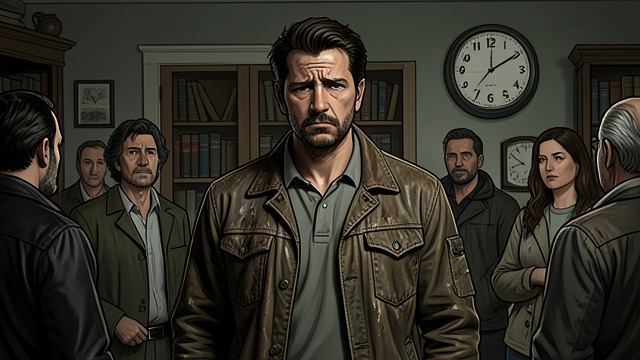
The members’ memories make it difficult to treat past actions as belonging to strangers. A continuing identity carries both the skills and the consequences of earlier lives.
Absolution questioned
Samas argues that a person cannot hand responsibility to an outside judge. Evan recognizes that this leaves no easy mechanism for clearing guilt or transferring blame.
An unfinished moral life
The characters must live with actions that remain part of their memories. Returning offers more time but not automatic repair, making responsibility an enduring part of their continuity.
During Poppy’s account of the Cognomina
During Evan’s first conversation with Samas
During the smallpox crisis at Latsei
After Latsei is devastated
During Evan and Samas’s discussion in Morocco
