Bulgaria
The Reincarnationist PapersBulgaria is the homeland remembered by Vasili Blagavich Arda, whose life becomes part of Evan Michaels’s account of his past-life memories. Its unnamed farming village northwest of Varna is the setting for Vasili’s early life, marriage, and loss of land; later, the Bulgarian language and the wish to see the country again give Evan a concrete connection to a life that is no longer his own. Bulgaria is thus both a remembered landscape and the site of a rupture that drives Vasili into exile.
Rural Life and Wartime Service
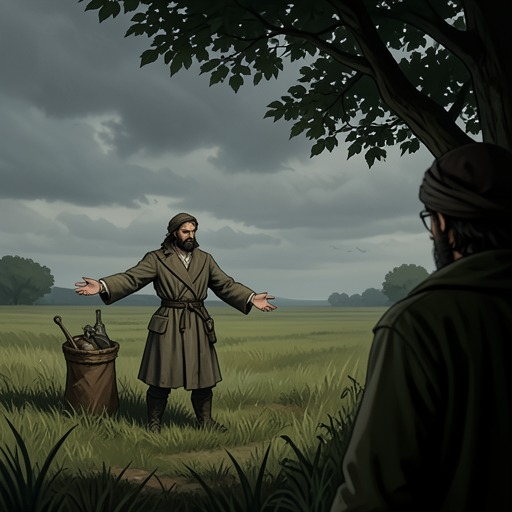
Vasili was born in 1892 in a small farming village northwest of Varna. An only child, he was expected to work with his father and inherit the land rather than choose a different future. He remained on the farm until he was twenty-three, when Bulgaria entered the war against the Allies and the single men of his village were pressed into military service against the Greeks. His service lasted until the Great War ended. In the recollection, the village is defined less by a named landmark than by the close succession of family labor, inherited land, and compulsory departure: the farm that had seemed to determine Vasili’s future also became the place to which later losses were attached.
After the war, Vasili and his father worked together for two more years. When his father died, the land passed to Vasili; he married Vanya the following year. They lived and farmed there for roughly twenty-five years. Their life together gives the country a domestic history as well as a political one: Bulgaria is remembered as the place where Vasili inherited his father’s work and built a shared life with his wife before that life was broken by state action. The account also notes that the couple had no children, leaving the farm and marriage, rather than descendants, at the center of the life Evan recalls.
War, Faith, and Family Division
The experience of war altered Vasili’s relationship with the beliefs in which he had been raised. His father was an elder in an Orthodox Christian sect, and Vasili describes his upbringing as a sheltered world of Christian values. After returning from war, he could no longer regard that world as intact: he had seen what people could do to one another. Within weeks, he and his father were at odds. Their arguments gave way to a narrow arrangement in which they spoke only about the practical operation of the farm. Vasili tried to buy land of his own, but his father died before he could find a suitable place.
This estrangement matters to the Bulgarian story because the farm is at once inherited security and a limit Vasili tries to escape. His father’s death leaves him in possession of the land, but not with the independent life he had been seeking. The later loss of the farm therefore follows an earlier, more intimate disruption: Vasili had already experienced a break with the religious and familial world that shaped his childhood, even while he remained on the family land.
Language as Recovered Memory
Bulgaria persists in Evan’s present through the language he remembers without having learned it in this life. He begins to write and understand a strange script, practicing for a year before he can read and write functionally without slipping back into Vasili’s past. He recognizes features that had first seemed unfamiliar, including backward N’s and R’s and letters absent from the writing system he already knew, and eventually identifies the language as Bulgarian. That skill is harder to demonstrate than his ability to play the organ: Evan writes pages, reads aloud from Bulgarian books ordered from the University of Minnesota, and insists that another Bulgarian would understand what he has written.
His parents do not accept the explanation that these abilities come from another person’s memories. At first they treat the claim as idle fancy; when Evan links his music and language to another life, their amusement turns to annoyance and, especially in his father’s case, anger. The more he tries to explain that he remembers another family, country, and time, the more alienated he becomes. He eventually falls silent, deciding that this was the last opportunity he would give anyone to understand him. In this way, Bulgarian is not simply proof of an unusual talent: it is also the language through which Evan attempts, unsuccessfully, to make his remembered identity legible to his own family.
Communist Takeover and Exile
Vasili and Vanya remained on their farm through the Second World War. When the Bulgarian Communist takeover reached the countryside in 1946, they refused to surrender their land and join the newly organized collective farm. The authorities arrested them and sent them to separate internment camps. Vanya died shortly after entering prison. Vasili served a year and a half, was released in 1948, and escaped across the Turkish border later that year. In the hearing account, he identifies his prison as State Prison No. 4, a number rather than a personal or local name. The separation, Vanya’s death, and the loss of the farm turn the political takeover into the decisive break in Vasili’s Bulgarian life.
In Turkey, Vasili settled in Istanbul, where he spent the final years of that life. He began smoking in prison, first using a Bulgarian state brand, then changed to Lendts cigarettes after arriving in Turkey. The small detail of the changed cigarette brand carries the movement from imprisonment to exile: a habit begun under confinement continues across the border, while its familiar object changes with the country. Evan’s recognition of the Lendts slogan, before he has consciously recalled the full history behind it, shows how fragments of Vasili’s life surface through ordinary details as well as through explicit memory.
A Homeland Evan Cannot Yet Revisit
When Evan speaks about where he would like to return, he distinguishes Istanbul, which he imagines may not have changed much, from Bulgaria, which he longs to see. He wants to read its street signs and speak with other Bulgarians because he misses the language. That wish gives the remembered country a future-facing pull: Evan does not only reconstruct where Vasili lived; he imagines encountering the language and place again in the present. Yet the evidence of the past is mediated through memory rather than an actual return.
Bulgaria also becomes part of the external verification of Evan’s claims. During the Cognomina’s review, an agent is expected to ask a party bureaucrat to search military records for Vasili Blagavich Arda’s service with the 138th under Captain Hoxa in the fall of 1918. The proposed search translates Evan’s private recollection into a testable historical claim. Bulgaria therefore anchors both sides of the memory: the intimate life of a farmer and husband, and the documentary record that might establish that this remembered man existed. Its decisive significance lies in that double role—as Vasili’s lost home and as the place where Evan hopes memory can be confirmed.