Chance
The Reincarnationist PapersChance is a member of the Cognomina whose imposing presence first makes Evan Michaels fear that the society’s old initiation ordeal is about to be repeated. The fear proves to be a prank, but Chance’s introduction establishes the character’s defining combination of physical force, irreverence, and performative confidence. Later stories about his past as King Hazard and his gambling sharpen that portrait: Chance treats risk as something he can master, and insists that winning describes him better than gambling does.
Identity and Entrance
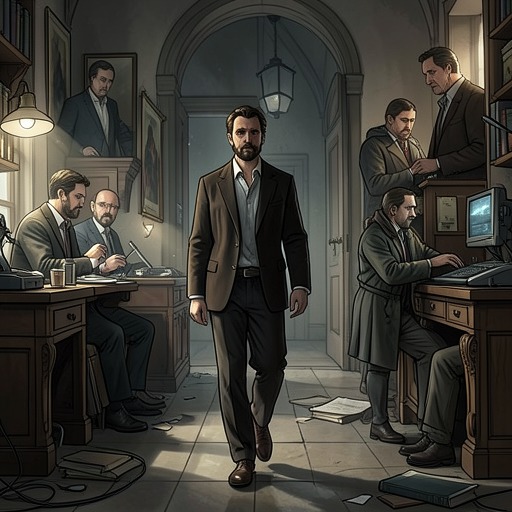
At Evan’s welcome gathering in the Cognomina’s underground chamber, Chance emerges from behind a curtain as a notably large man, almost a foot taller than Evan. He wears red silk trousers and a tasseled fez, and introduces himself as Hazard, adding that everyone there calls him Chance. His French-Creole accent accompanies a booming voice that carries over the musicians’ folk song. The paired names immediately suggest a character accustomed to making an entrance: Hazard recalls a former identity, while Chance is the name by which the gathered members know him.
Chance belongs to a society whose members recognize one another across successive lives. Its candidates undergo Ascension, a trial in which they must persuade a panel that they are the same person they were before. The group’s old method, Evan has already learned, involved a spear and recognition after reincarnation. Chance is not identified as one of the judges in Evan’s hearing, but he becomes a conspicuous participant in the welcome that follows Evan’s acceptance. His role belongs to the community’s social life as much as to its formal structure.
Evan’s Welcome and the Spear Prank
Evan’s admission is announced by a four-to-one vote. After his relief and Samas’s embrace, the members arrange themselves in two lines. Chance steps forward while an Egyptian member takes a spear from the wall. Chance restrains Evan as the spear is brought toward him, reviving the very threat Evan had worried about. The scene turns the society’s historical test into a staged joke: Evan has passed the present-day review, yet the old danger remains available as theatrical play.
The prank is explained moments later. The Egyptian says that Mr. Diltz told him Evan was concerned about the spear, and that they decided to have some fun with it. Chance’s participation makes him the physical instrument of the joke, but the explanation places its planning with the others as well. He apologizes and asks whether he has hurt Evan; later, he slaps Evan on the shoulder that was strained during the restraint. The episode presents his strength as both a source of intimidation and part of the group’s rough, teasing welcome. The welcome does not end with the prank: Poppy presents Evan with the fingerless leather gauntlet used in the tattooing, and the gathering proceeds into a festival. Chance’s part in the sequence helps move Evan from anxious candidate to member among familiar faces.
Place in the Cognomina’s Social Life
Once the musicians begin, Chance moves among them and spins a young tambourine player. The incident, set within a larger festival of singing and dancing, shows him at ease as a conspicuous, physical presence in the celebration. When he later introduces himself to Evan, he asks for no formal deference; the two exchange a handshake, and Chance again asks whether there are hard feelings. His humor can be provocative, but he also makes a direct effort to reset the relationship after the initiation joke.
Chance is also credited with finding Samas. In a conversation about who made the members’ tattoos, Samas says that Chance found him; the brief exchange offers no further circumstances, but it places Chance in the society’s work of locating or bringing in its people. That association complements his role at Evan’s welcome. He is not shown conducting Evan’s formal review, yet he appears on both sides of the community’s continuing life: finding a member and helping receive another.
Hazard, King of the Umo
Ramsay recounts an episode from two lives before the present one, when Chance, then known as Hazard, encountered the Umo, an isolated Indonesian people described as living in Stone Age conditions. He gained acceptance by presenting himself as a deity and eventually became their king. Ramsay says that he demanded a sexual tribute from the women of the village, claiming it was needed to appease the gods he represented. This history is presented as an exploitative abuse of his position, not as evidence of genuine divine authority.
The anecdote complicates the welcoming entertainer seen at the festival. Chance’s ease with the story and his agreement that his rule had worked show that he does not disavow the past as Ramsay tells it; he recalls the episode under the name King Hazard and calls it fun. The contrast between his apparently playful manner and his misuse of power makes his charm an unreliable guide to his conduct. The account also demonstrates how the Cognomina’s members carry lives of very different kinds into their present relationships: for Chance, a former kingship is a story told among friends, while for Evan it is an unsettling measure of what a remembered past can contain.
Gambling and Self-Image
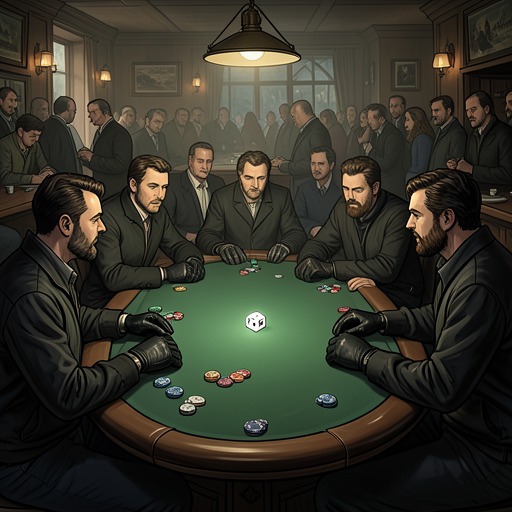
Chance’s confidence resurfaces in a card-game scene. He proposes a game with Ramsay and Auda, and six people agree to play. When he learns that Evan has the lucky dice, Chance offers him one thousand dollars to borrow them for a few hours. Auda immediately offers Evan two thousand dollars not to lend them, turning Chance’s request into a contest over the dice and the newcomer’s choice. Chance’s willingness to stake a large sum on a short loan makes gambling one of his visible social habits, while the others’ readiness to counter him shows that his appetite for play is familiar to the group.
Chance later explains that he won his home in a baccarat wager against a man with whom he plays periodically; he adds that this is why he learned to fly. When Evan repeats that Samas considers him a gambler, Chance rejects the description. Gambling, he argues, is what he does; being a winner is what he is. The distinction is more than a boast: it recasts chance itself as a secondary matter, subordinated to an identity founded on success. Across his stories, Chance repeatedly treats danger, games, and social attention as arenas in which he can prevail. His confident self-definition remains memorable precisely because the Umo episode shows that a winner’s success may come at other people’s expense.