Divinity and the self
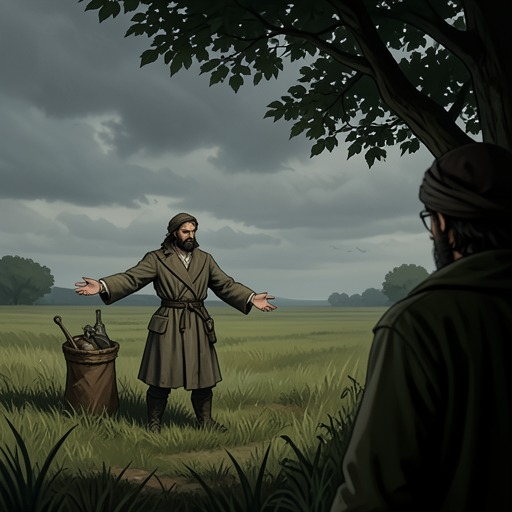
The Reincarnationist PapersDivinity and the self names a conflict at the heart of Ramsay’s account of reincarnation: the possibility that reincarnates embody a challenge to humanity’s invented gods, and the possibility that human beings have made divinity in their own diminished image. The argument moves between cosmic purpose and individual selfishness, then turns back on itself when Ramsay wonders whether the goal attributed to divinity is ambitious enough. It offers an explanation for what the reincarnates are, but leaves their purpose—and the ethics of revealing it—unsettled.
Divinity as an explanation for the self
Ramsay first frames the reincarnates’ existence as a challenge to human authority over the sacred. He calls them “creatures inspired by a divinity that desires to question the authority of mankind's contrived Godheads.” In this account, reincarnation is not simply proof that a soul survives death. It suggests a force that unsettles religious systems made by people and the authority those systems claim. Ramsay presents this as the explanation he has found for their condition, not as a settled doctrine supported by evidence he can demonstrate in the conversation.
His account then describes a gradual withdrawal of God and religious teaching, which he calls hierology, until the self is all that remains. The slowness matters: this is not a sudden rejection but a change that most people, within their brief earthly lives, would not recognize. Ramsay describes selfishness as taking the place left by Godlessness. That formulation makes the self both a remainder and a danger: as divine authority recedes, the individual is not necessarily liberated into wisdom, but may become governed by self-interest.
Yet the diagnosis carries an ambition beyond the individual. Ramsay thinks the reincarnates may eventually be meant to enlighten humanity and lead people out of what he calls their self-imposed darkness. His proposed role is therefore not merely to survive successive lives or guard private knowledge. It is to make a truth available beyond their own community. The tension is already present: the group would challenge human beings’ religious authority while claiming responsibility for their enlightenment.
Human gods and the failure of belief
Ramsay’s later account complicates the idea that people simply lose faith because religion is false. He recalls that the Greeks and Egyptians of his youth believed in the transmigration of the soul, and in reincarnates, or at least in their possibility. In his telling, those beliefs once served the reincarnates well, but failed the people who held them. He locates the failure in the standards the beliefs set: their goals were too low and too tangible.
The image he uses is one of aspiration collapsing through proximity. If ordinary people can reach the top of the portico on tiptoe, they can seem to dwarf the gods above it. Once divine beings appear attainable on human terms, the religious system loses its value and hope. Ramsay describes people who had once shown courage by trying to stand as tall as their gods, but who later turned away from the mirror in loathing. The mirror is a pointed reversal: the gods disappoint not because they remain unreachable, but because their flaws resemble those of their worshippers.
Ramsay makes the human role in this failure explicit: people reinvent themselves in the image of the gods they invented. The process that once raised divine figures above ordinary life eventually brings them back down to human scale. In his account, religious disillusionment is therefore recursive. People create an ideal, approach it, discover their own limitations reflected there, and lose faith in the ideal they shaped. The difficulty is not only that gods may be human inventions; it is that human invention may be unable to produce a god sufficiently unlike humanity to offer lasting hope.
Prophets, renewal, and repetition
Ramsay extends this cycle through the recurring figure of the prophet. In his description, common people interpret a world that has left righteousness behind as needing a new savior to set their disappointed hopes right. They follow the prophet while his presence still feels revolutionary. Familiarity then drains that force; disillusioned followers return to their previous ways, and the pattern begins again with another invented virgin, prophet, and promise of hope.
The sequence offers no lasting resolution. A new religious figure appears to renew a failing order, but the hope attached to that figure is vulnerable to the same process that undermined the old one. Ramsay’s language stresses repetition rather than historical progress: each fresh promise risks becoming familiar, and each failure invites another attempt built from the same human materials. The prophet may begin as an answer to disappointment, but cannot escape the possibility of becoming one more image through which people reproduce their own expectations.
The reincarnates as divine outsiders
When Evan asks Ramsay what the reincarnates are, Ramsay answers in mythic terms: “We are the singers of goat songs.” He also calls them the sons of Zeus’ Dioscuri, then revises the grandeur of that lineage by describing them as victims and hostages. Their identity thus combines elevation with captivity. They are associated with divinity, but that association does not make them masters of the world they inhabit.
This language sharpens the loneliness attached to their existence. Ramsay says their condition is inherently lonely, and describes a changed world in which it has become difficult to know where they stand in the larger picture. The older beliefs that once made the possibility of people like them intelligible have passed away; their divine or mythic significance no longer guarantees a recognized place among ordinary people. The concept therefore joins metaphysical difference to social isolation: being tied to divinity does not ensure that anyone else will understand what that means.
A doctrine left in doubt
Ramsay does not end by insisting that his account is complete. He argues that humanity’s view of divinity sets too modest a goal, then admits that he has begun to wonder whether the critics are right. That hesitation unsettles his earlier certainty that the reincarnates are meant to enlighten humanity. If existing religious ideals are inadequate because they remain too close to human limits, the reincarnates’ proposed mission may also fall short of the scale their condition demands.
Ramsay’s account consequently holds two uncertainties open at once: whether humanity can imagine a divinity beyond its own reflection, and whether the reincarnates themselves understand the purpose of their difference. His ambition to guide humanity is challenged by the warning that people may be happier in their own world, while his own later doubt questions whether the goal of divinity has been set high enough. Divinity and the self is not a settled answer to those problems; it is the unresolved space between the gods people make, the selves they discover in them, and a possible purpose that even the reincarnates may not yet be able to name.